
Live Rates at 06:44 am put 22K gold at ₹6,673/g and 18K at ₹5,464/g, so every gram counts. To choose perfect wedding ring with confidence, decide your budget, pick a metal and karat that suit your skin and daily wear, choose plain or stone-set, get a professional size, and verify hallmark and certification.
This is a forever piece. It must last, feel right, and hold value in 2026 and beyond. So, I’ll teach you how to weigh purity against hardness, how ring width changes comfort, and how to check BIS hallmarks and diamond grades in minutes. You’ll finish with a simple 7‑step plan, clear price math, and a shortlist you can act on this week.
 , platinum 950, and silver 925 with pros and cons for durability, color, price, and maintenance; minimal icons; white background; modern typography)
What Makes a Wedding Ring Worth Buying? The Core Factors That Matter
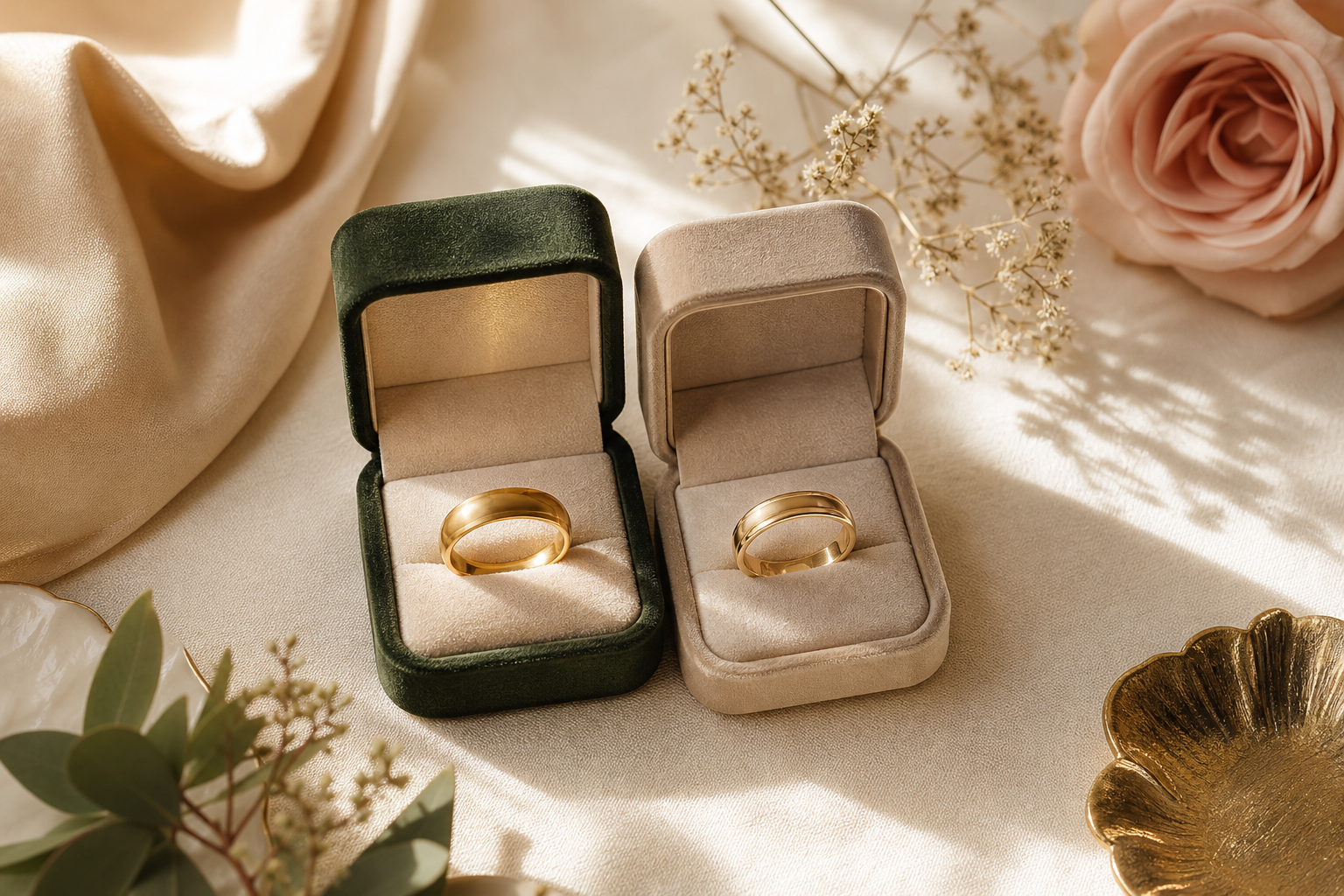
A great wedding band balances purity, strength, and proof. Start with metal. In gold, 22K (916) is richer in color but softer; 18K (750) trades a little gold for more hardness and daily durability. Platinum 950 is dense, hypoallergenic, and stays naturally white. Silver 925 is budget‑friendly but needs more care.
Next, look at width and profile. A 2–3 mm band feels light and stacks well. A 4–6 mm band reads bolder and can spread wear evenly. Moreover, the profile matters: comfort-fit bands have curved inner edges that glide over the knuckle, while flat-fit bands sit lower but can feel snug.
Then, decide plain band versus gemstone. A plain 18K or platinum band is timeless and easy to maintain. However, if you love sparkle, ensure diamonds are graded. IGI & GIA certified diamonds give you cut, color, clarity, and carat data you can trust. For small accent stones (melee), ask how they’re graded and set.
Proof and Fit
Crucially, verify purity. In India, 100% BIS hallmarked gold and silver mean the alloy meets declared fineness. Each piece carries a unique 6-digit HUID you can check on the BIS portal or via the BIS CARE app. That code links to the item’s hallmark record, so you know the karat you paid for is the karat you got. For background, see Bureau of Indian Standards hallmarking.
Finally, match the ring to your lifestyle. If you work with your hands or at the gym, 18K gold or platinum 950 resists dings better than softer 22K. If you type a lot, a low‑profile bezel or channel setting snags less than high prongs. As you weigh these, remember the goal: choose perfect wedding ring that suits how you live every day, not just how it looks in a photo.
Quick Specs That Matter
- Gold choices: 22K (916) = richer color; 18K (750) = tougher daily wear.
- Platinum 950: dense, hypoallergenic, naturally white.
- Width guide: 2–3 mm subtle; 4–6 mm bold and balanced.
- Proof: BIS hallmarked for purity with a verifiable 6‑digit HUID; IGI or GIA diamond docs.
Step-by-Step: How to Choose Your Wedding Ring in 7 Steps
Start with order and you’ll avoid stress. This path is clear, fast, and works in 2026 with volatile metal rates.
1.
Decide a ceiling first. Price = Metal value (live rate × net weight) + Making charges + Stone charges + GST. In India, a clear model used by reputable retailers is: Total = Metal value + Making charges + Stone charges + 3% GST on jewelry + 5% GST on making charges. Therefore, ask for a written breakup.
2.
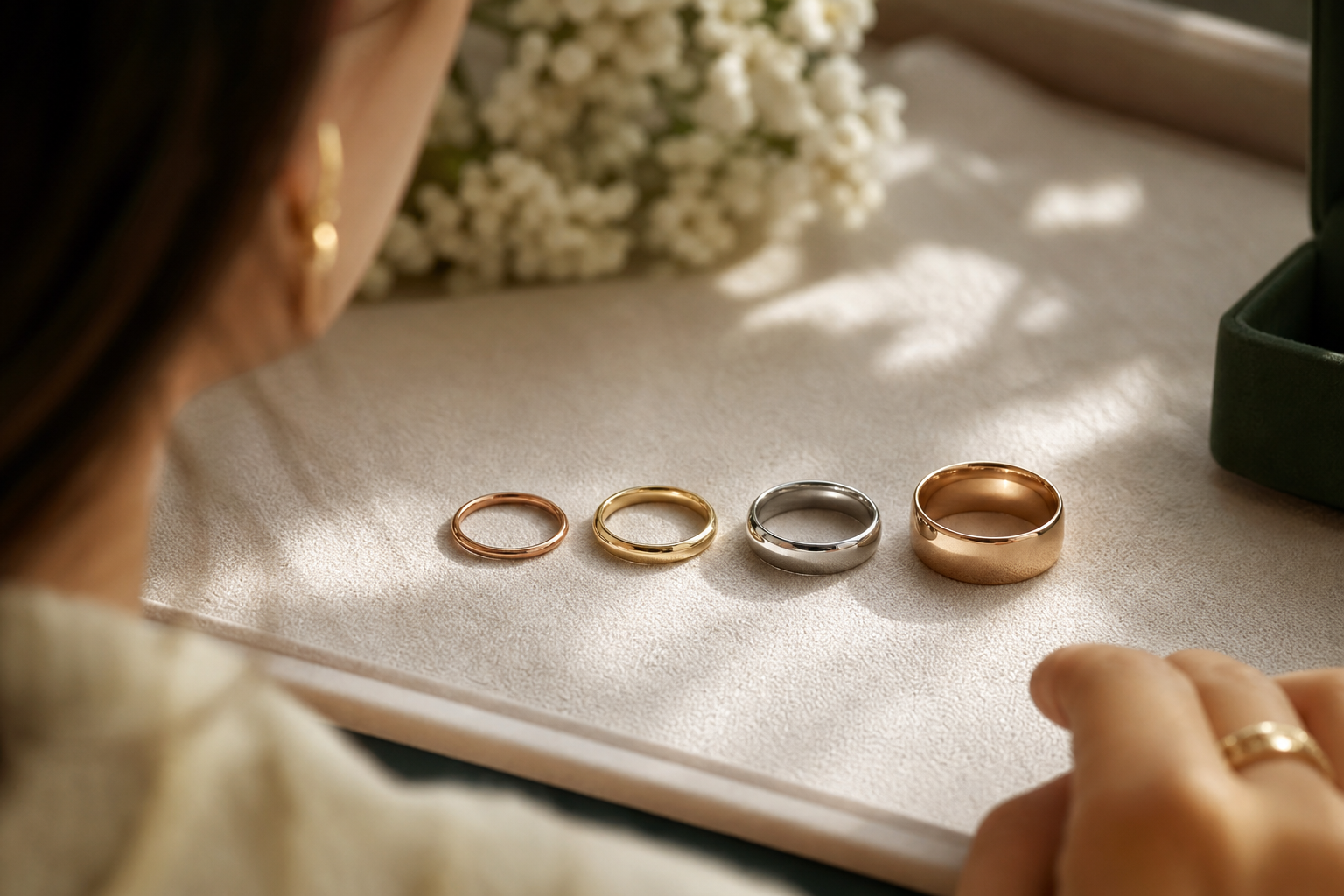
Pick 22K for a warm hue and heirloom feel; choose 18K for strength and daily use; pick platinum 950 for a cool, weighty band. If you have sensitive skin, platinum 950 or high‑purity gold helps. This is where you choose perfect wedding ring foundations.
-
Decide plain vs.
Plain bands are low‑care. If you add diamonds, ask for IGI or GIA certification for natural diamonds above 0.18ct. Moreover, confirm the setting style and guarantee on lost stones.
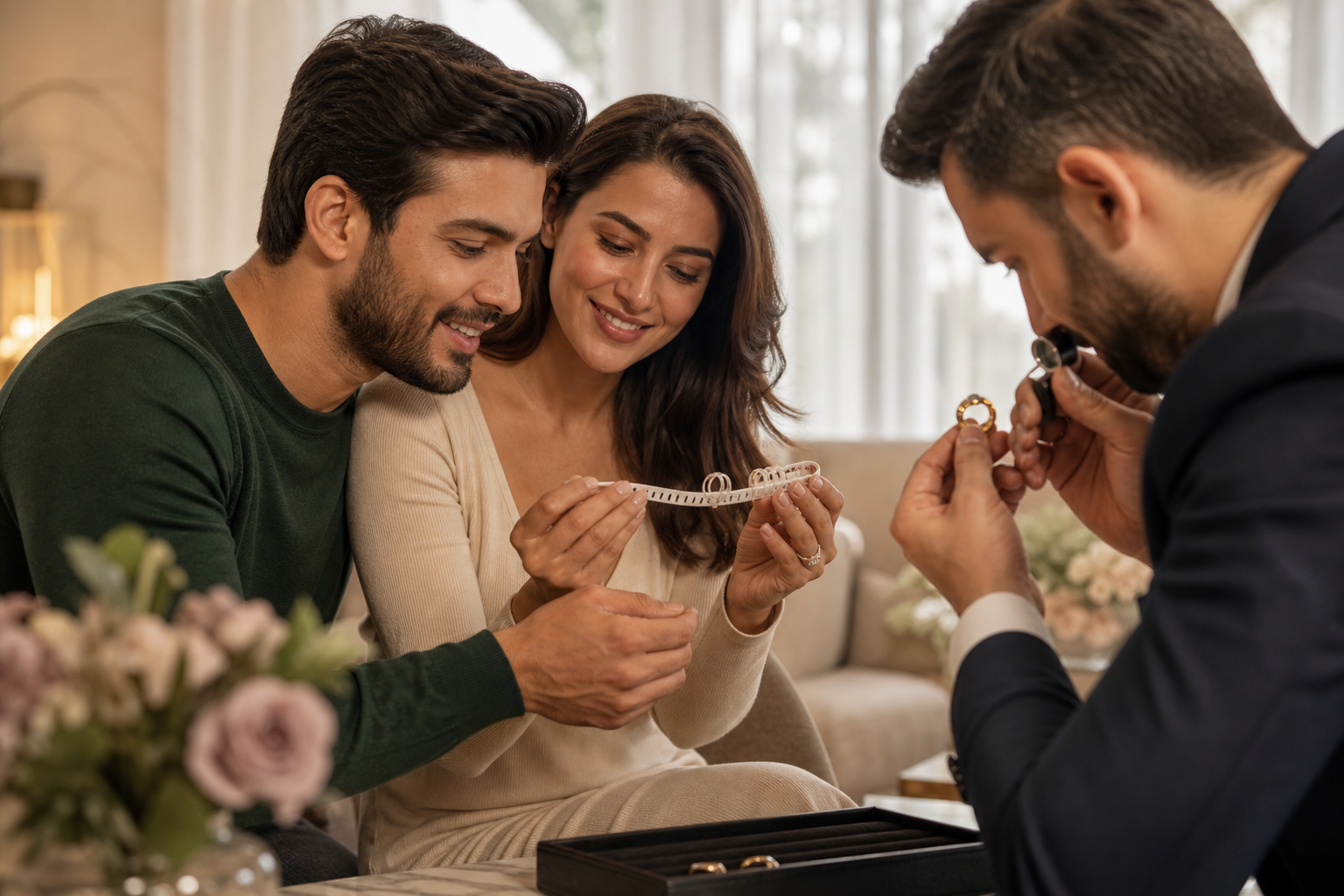
Have both of you sized late in the day when fingers are warm. In addition, test half sizes and ring widths you’re likely to buy, since width changes fit. A comfort-fit interior can let you size down slightly.
5.
Check the BIS hallmark and the unique 6‑digit HUID via the BIS CARE app. Then match diamond grades to the certificate number. Keep copies of both records.
6.
Look for transparent making charges, 365-day free insured returns, and a lifetime exchange policy. As a result, you can swap sizes or styles without risk if life changes.
7.
Allow 2–4 weeks for sizing, engraving, or custom tweaks. For custom bands with 3D previews, add a few more days to sign off the design.
Furthermore, keep one eye on live metal rates. Gold 916 at ₹6,673/g and Gold 750 at ₹5,464/g (Live Rates, 06:44 am) affect the final bill gram by gram.
Also Read!
How to Choose an Emerald Ring: A Complete Buyer’s Guide
The Complete Guide to Tennis Necklaces: How to Choose, Style, and Buy One
5 Common Mistakes Couples Make When Buying Wedding Rings
First, skipping hallmark checks. If you don’t verify the BIS hallmark and the 6‑digit HUID, you can’t prove purity later. Therefore, always scan the HUID on the BIS CARE app before you pay.
Second, ignoring proper sizing. A tight ring turns into a drawer piece. In addition, a 6 mm comfort‑fit band can feel looser than a 2 mm flat‑fit in the same size. Try the actual width/profile you plan to buy.
Third, choosing style over daily wear. A tall prong can catch on clothes. On the other hand, a low channel setting glides through gym and office life. Pick the build that fits your day, not just the photos.
Pricing and Policies
Fourth, not understanding making charges. Ask the jeweler to itemize: Metal value (live rate × net weight) + Making charges + Stone charges + GST. Transparent making charges let you compare apples to apples across stores.
Fifth, buying without safety nets. Look for risk‑reversal terms like 365‑day free insured returns, a lifetime exchange policy, a buy-back guarantee at the prevailing rate, and a commitment to refund twice the difference if purity is below standard. As a result, you protect both your budget and your peace of mind as you choose perfect wedding ring.
“The bridal set I bought for my wedding was breathtaking. Craftsmanship is top and the BIS hallmark gave me total peace of mind.” — Priya Sharma, Mumbai
Quick Fixes
- Verify BIS hallmark + HUID on the spot.
- Get sized late afternoon; test the exact width/profile.
- Pick settings that fit your daily routine.
- Demand a written price breakup and return/exchange terms.
Tools and Resources for Finding the Right Wedding Ring
Good tools make this search simple. Start with verification. The BIS CARE app lets you confirm the hallmark and the unique 6‑digit HUID tied to your ring. If the code and karat don’t match, walk away. For diamonds, the GIA site explains the 4Cs in clear detail; it’s a solid primer before you compare stones (GIA diamond education).
For sizing, use a printable ring sizer plus a plain stacking ring you already own to cross‑check. Moreover, visit a local jeweler to try 2–6 mm widths across flat and comfort profiles. You’ll feel the difference in minutes.
If you want help shortlisting, video consultations can save time. A live consultation with a designer before purchase lets you see metal colors on skin tone and compare widths on hand. Tools that offer custom jewelry design with a 3D mockup make decisions faster because you can approve the exact profile and engraving in advance.
You can shop locally or online. Local jewelers are great for on‑hand sizing and same‑day polish. Online platforms like Caratflow are one option among several if you want BIS hallmarked pieces, IGI or GIA certified diamonds, transparent making charges, and international shipping to 30+ countries via Brinks, fully insured. In 2026, that kind of shipping assurance means you can gift or relocate without worry.
Handy Checklist
- BIS CARE app for hallmark/HUID verification
- GIA and IGI sites for diamond grading knowledge
- Printable ring sizer + in‑store mandrel check
- Video or live design consult for side‑by‑side metal/width views
- 3D mockups for custom bands and engravings
 in 22K yellow gold, 18K rose gold, and platinum 950 on diverse skin tones; neutral studio light)
What to Do This Week: Your Wedding Ring Action Plan
Day 1–2: Measure at home. Print a ring size guide and confirm with a ring you wear on the same finger. Then note the width that felt best in-store (e.g., 3 mm comfort‑fit).
Day 3: Set a firm ceiling. Write it down. Use this breakup: Metal value (live rate × net weight) + Making charges + Stone charges + GST. Therefore, you’ll compare quotes fast.
Shop and Verify
Day 4–5: Visit 2–3 jewelers. Try 22K vs. 18K vs. platinum 950 on your skin in daylight. Moreover, test low‑profile settings if you’re active with your hands.
Day 6: Shortlist 3 designs. Verify the BIS hallmark and the 6‑digit HUID via BIS CARE for each. For diamond bands, match the cert number to the stone details.
Day 7: Place the order with buffer. Allow 2–4 weeks for sizing or engraving. If you’re going custom, approve a 3D mockup. Use a site that allows filtering of jewelry by metal type, purity, price range, and weight range to keep your search tight.
As you do this, keep your aim clear: choose perfect wedding ring that feels like “you” on day one and still fits your life in five years.
Key Takeaways
- Verify purity and identity: BIS hallmark + 6‑digit HUID.
- Pick metal for your lifestyle: 18K or platinum 950 for daily wear, 22K for richer hue.
- Demand proof: IGI or GIA certification for diamonds above 0.18ct.
- Price math matters: Metal value + Making + Stones + GST, with transparent making charges.
- Protect yourself: returns, lifetime exchange, and buy‑back at the prevailing rate.
**Book a Free Design Consult →
As rates move. Gold 999 at ₹7,285/g and Silver 999 at ₹89/g, with noted daily changes, your knowledge is your hedge. Use it, and you’ll sign for a ring you love and trust.