Start by matching the necklace to the occasion, then pick a style, metal, and certified diamonds that balance cut, color, and budget. Use this choose diamond necklace complete guide to compare the 4Cs, verify hallmarks, and avoid costly mistakes.
Buying a diamond necklace can feel high stakes. You want sparkle that holds up in daylight, at dinner, and in every photo. Yet the details, cut, color, clarity, carat, chain length, and price math, can be a lot. This 2026 guide simplifies each choice so you can focus on what you’ll love wearing.
Moreover, you’ll see how pendant diamonds differ from ring stones, how total carat weight affects look and cost, and how to check hallmarks and certificates. As a result, you’ll shop with a clear plan, not guesswork.
What Makes a Diamond Necklace Worth Buying?
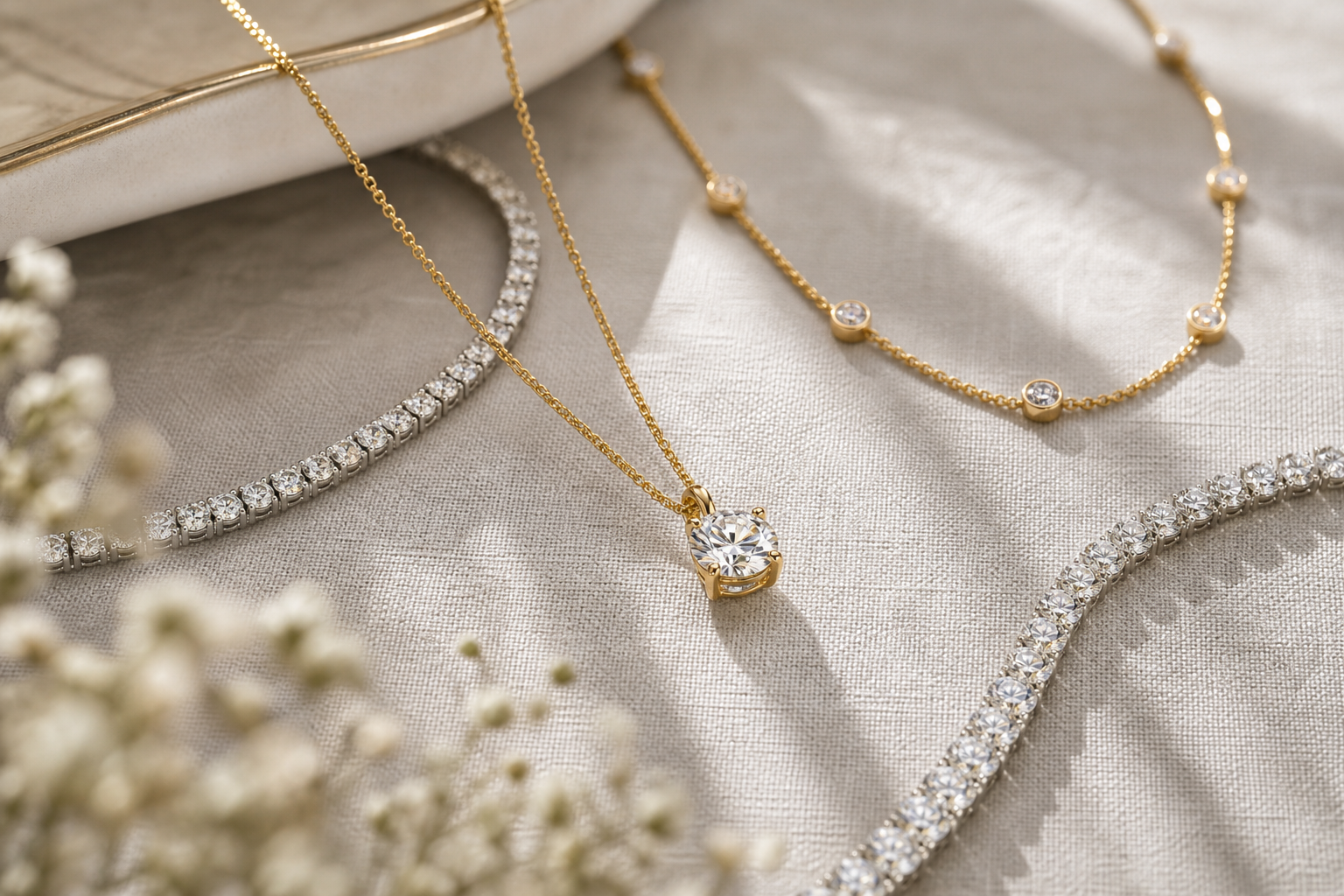
A good necklace balances beauty you can see from a few feet away with value that holds up on paper. For that, the 4Cs still matter, but they work a bit differently for neckwear than for rings. This section in your choose diamond necklace complete plan zeroes in on those differences so you don’t overpay for invisible upgrades.
Cut, Color, Clarity, Carat: Necklace-Specific Tips
-
Cut: Sparkle needs to read at chest level, not just under a jewelry loupe. Therefore, prioritize Very Good to Excellent cut for solitaires and well-cut melee for tennis or station pieces. Specifically, well-matched stones with tight proportions keep the “line of light” intact across a necklace.
-
Color: Pendants sit against skin or colored fabric, so tint shows sooner than it does on a hand. In white metals, aim for near-colorless (G–H) to avoid warmth. In yellow gold, you can drop to I–J without obvious tint because the metal’s hue masks warmth.
-
Clarity: Distance and movement are your friend. For pendants, eye-clean SI1–SI2 can look pristine to viewers. For tennis/station necklaces, inclusions scatter across many small stones; in-house grading for melee diamonds helps ensure uniform clarity and sparkle.
-
Carat: Learn the difference between single-stone size (e.g., a 0.50 ct solitaire) and total carat weight (TCW) used for multi-stone pieces (e.g., a 5.00 ct tennis necklace made up of many small stones). As a result, TCW affects price and presence, but each individual stone may be small.
Certification and Sourcing That Back the Beauty
Moreover, ask for IGI & GIA certified diamonds for center stones, and IGI or GIA certification for natural diamonds above 0.18ct. For smaller melee, many quality retailers use in-house grading for consistency. In addition, look for natural diamonds and ethically sourced gemstones if your design mixes stones.
“The bridal set I bought for my wedding was breathtaking. Craftsmanship is top and the BIS hallmark gave me total peace of mind.” — Priya Sharma, Mumbai
Finally, insist on BIS hallmarked metal for purity assurance (and a unique HUID you can verify). With the 4Cs tuned for neckwear plus strong paper trails, you’ll know the piece is worth buying, and worth gifting.
Step-by-Step: How to Pick the Right Diamond Necklace
This choose diamond necklace complete roadmap walks you through six clear steps. Follow them in order to remove stress and comparison fatigue.
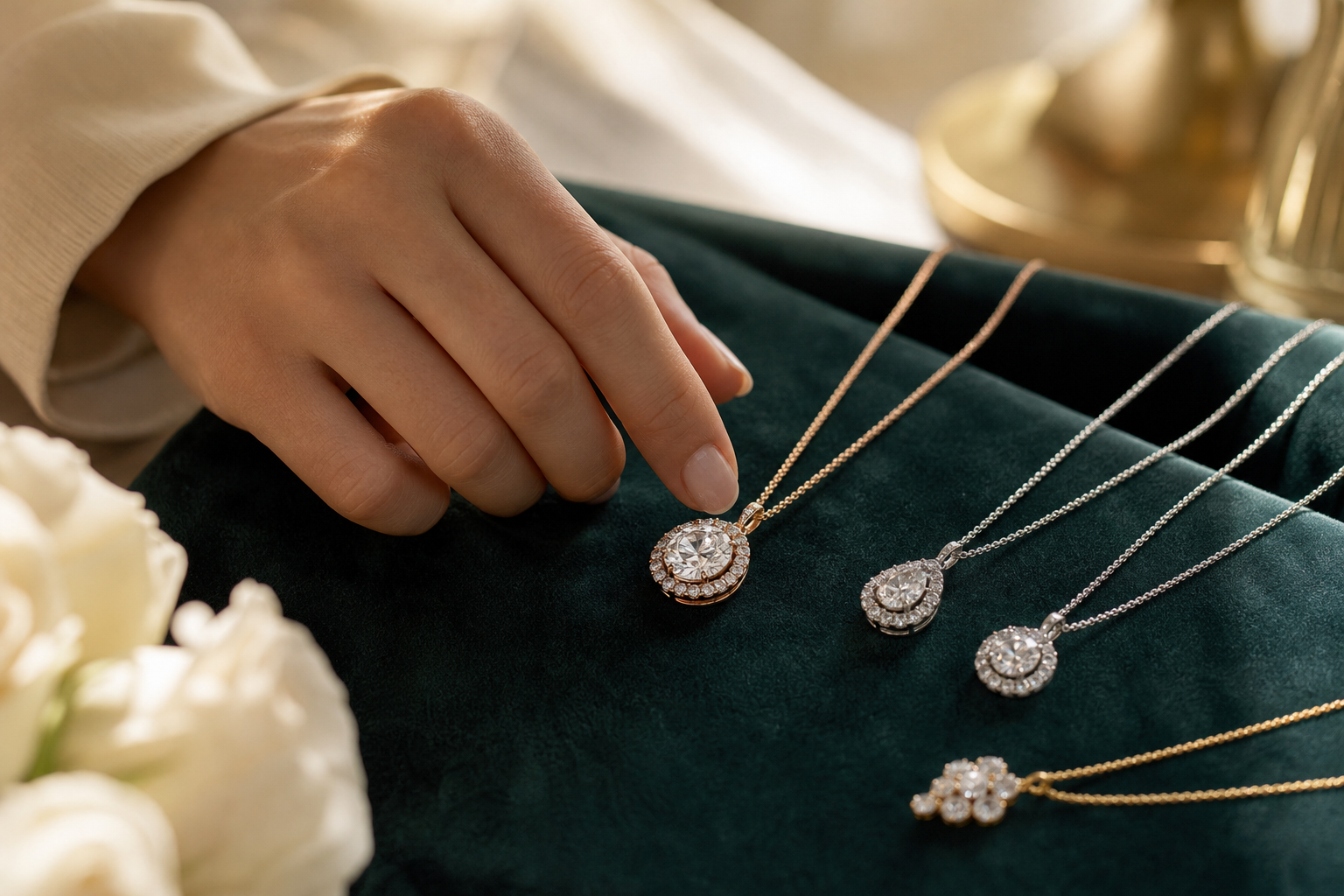
- Define the occasion
First, decide where it will live in your life.
- Everyday: Think light pendants or station necklaces that won’t snag sweaters.
- Bridal: Consider rivière or tennis for bold presence in photos.
- Gifting: Pick timeless silhouettes like a solitaire or bezel pendant; add a chain length they’ll use (16–18 in are most worn).
- Choose the style
Second, match look to use:
- Solitaire pendant: One diamond, max sparkle per rupee.
- Tennis: Continuous line of matched stones; presence increases with TCW.
- Rivière: Graduated stones, larger at center for a graceful arc.
- Choker: Sits higher; pairs well with modern necklines.
- Station: Dots of sparkle along a chain; easy for daily wear.
- Select the metal
Third, pick a metal that flatters skin and wardrobe.
- Handcrafted jewelry in 22K & 18K gold: 22K is richer in hue; 18K balances strength and luster.
- White gold vs platinum: White gold is bright and cost-effective; platinum is denser and hypoallergenic.
- BIS hallmarked for purity: Confirm the hallmark and the unique 6‑digit HUID stamped on the piece.
- Set a budget using a clear pricing formula
Fourth, avoid sticker shock by running the math that reputable retailers publish:
- Price is calculated as: Total = Metal value (live rate x net weight) + Making charges + Stone charges + 3% GST on jewelry + 5% GST on making charges
For reference, recent live rates list 22K Gold at ₹6,673/g and 18K Gold at ₹5,464/g, with Silver at ₹89/g. Use those as a baseline and adjust for your date.
-
Verify certifications
Fifth, check that center stones have IGI or GIA reports for natural diamonds above 0.18ct. For multi-stone necklaces, ask how melee are graded and matched. Request PDFs or report numbers in advance. -
Check return/exchange policy
Sixth, read the fine print. Transparent making charges, a lifetime exchange policy, and 365-day free insured returns remove risk. In addition, a buy-back guarantee at the prevailing rate adds long-term flexibility.
“I love that I can book a video consultation before buying. The designer walked me through three options over a call. Bought on the spot.” — Kavita Reddy, Hyderabad
Also Read!
How to Choose the Perfect Wedding Ring: A Complete Buyer’s Guide
5 Common Mistakes When Buying a Diamond Necklace
Even smart shoppers slip on the same five issues. This choose diamond necklace complete section shows each trap, and how to dodge it fast.
-
Ignoring diamond certification
Skipping reports invites guesswork on cut and color. Ask for IGI or GIA certificates for natural diamonds above 0.18ct and keep copies. For melee, confirm in-house grading standards and matching tolerances. -
Overlooking metal purity hallmarks
BIS hallmarked metal carries a unique 6‑digit HUID on each piece, verifiable via the BIS portal or the BIS CARE app. If you can’t read or verify the mark, pause the purchase. -
Choosing based on carat alone
Carat without cut yields dull sparkle. For pendants, choose Excellent or Very Good cut so light returns at chest level. For tennis or station pieces, insist on well-matched stones; uneven cuts break the “river” of light. -
Not checking return and buyback policies
High-value buys need safety nets. Look for 365-day free insured returns, a lifetime exchange policy, and a buy-back guarantee at the prevailing rate. These protect you if taste or needs change. -
Skipping video or in-person inspection
For big spends, see the actual piece (or model) in motion. Request a short daylight video and a loupe view. If you’re remote, book a live consultation with a designer before purchase to sanity-check proportions and color.
Quick Fixes You Can Apply Today
- Save report numbers and HUID photos in your phone.
- Compare two chain lengths on video before you pay.
- Note the return window end date on your calendar the day you order.
Tools and Resources for Diamond Necklace Shoppers
You don’t need to memorize gemology to shop smart in 2026. Instead, build a short toolkit, then check each box in your choose diamond necklace complete plan.
Authority Resources
- GIA’s diamond education explains the 4Cs with visuals and clear definitions. Start here: GIA Diamond Quality Factors.
- For hallmark verification in India, the BIS CARE app lets you validate the 6‑digit HUID on BIS hallmarked pieces. Learn more at the BIS official site.
Retailer Tools (Compare and Shortlist)
- Shortlist 2–3 certified retailers you trust. Names like Tanishq and BlueNile are well known, and tools like Caratflow offer IGI/GIA certified pieces, custom jewelry design with 3D mockup, video consultation, live consultation with a designer before purchase, and international shipping to 30+ countries via Brinks, fully insured.
- Use transparent price breakdowns. The clearest shops show metal rate per gram, making charges, stone charges, plus GST lines exactly as billed.
- Track market context. GemPriceIndex and public gold rate dashboards help you sense timing for metal costs.
Moreover, ask each retailer to share a short daylight video of the exact piece or sample. Therefore, you compare sparkle, not just spec sheets.
What to Do Before You Buy
Preparation saves money and regret. In this choose diamond necklace complete checklist, you’ll lock key details before you click “pay”.
Quick Pre-Purchase Checklist
- Check today’s metal rates. For example, recent live rates show 22K Gold ₹6,673/g and 18K Gold ₹5,464/g. Note the date when you capture them.
- Shortlist 2–3 certified retailers and request diamond certificates upfront (IGI or GIA for natural stones above 0.18ct).
- Verify purity: confirm the BIS hallmark and the unique 6‑digit HUID via the BIS CARE app.
- If buying online, book a video consultation to compare chain lengths and how the diamond reads on skin.
- Review policies in writing: look for 365-day free insured returns, a lifetime exchange policy, and a buy-back guarantee at the prevailing rate. Save screenshots.
Furthermore, ask for transparent making charges and the exact formula: Total = Metal value (live rate x net weight) + Making charges + Stone charges + 3% GST on jewelry + 5% GST on making charges. As a result, you’ll know what you’re paying for, and why.
Compare transparent pricing now →
Key Takeaways
- Cut drives sparkle at chest level; color shows faster in pendants, especially in white metals.
- Total carat weight shapes presence in tennis and rivière pieces; single-stone size shapes pendants.
- Certificates matter: IGI/GIA for natural diamonds above 0.18ct; verify BIS hallmark and 6‑digit HUID.
- Use the full pricing formula and live rates to set a clear budget and spot fair making charges.
- Strong safety nets—365-day free insured returns, lifetime exchange, and buy-back at the prevailing rate—reduce risk.
What to Do This Week
Pick your occasion and style, then request two quotes with the full price formula and matching IGI/GIA reports. Verify the BIS hallmark HUID on one in-stock piece via the BIS CARE app, and book a short video call to confirm length and sparkle in daylight. By next weekend, you’ll be ready to order with confidence.