This complete guide gold anklets gives you the short answer: pick 18K or 14K (solid) for daily wear because they resist scratches better; choose 22K (solid or well-built semi-solid) for bridal and special days if you want a richer yellow. Price scales with net gold weight at the live rate plus making charges, stones (if any), and GST, decide where you’ll wear it first, then match karat and build.
**Visit Caratflow, hallmarked designs →
Gold 916 cost ₹6,673/g with a change of +0.57%, while Gold 750 was ₹5,464/g (+0.59%), per live 2026 rates noted at 06:44 am. This complete guide gold anklets gives you clear rules to choose karat, construction, and weight that match daily life and budget. Here’s the short answer: pick 18K or 14K (solid) for daily wear because they resist scratches better; choose 22K (solid or well-built semi-solid) for bridal and special days if you want a richer yellow; and remember price scales with net gold weight at the live rate plus making charges and GST.
- More gold (higher karat and higher grams) means a deeper yellow and a higher bill.
- Durability improves as you go from 22K to 18K to 14K because harder alloys shrug off dings.
- Solid construction costs more than hollow but survives daily knocks far better.
- Decide where you’ll wear it first, then choose the karat and build that fit.
What Makes a Gold Anklet Worth Buying?
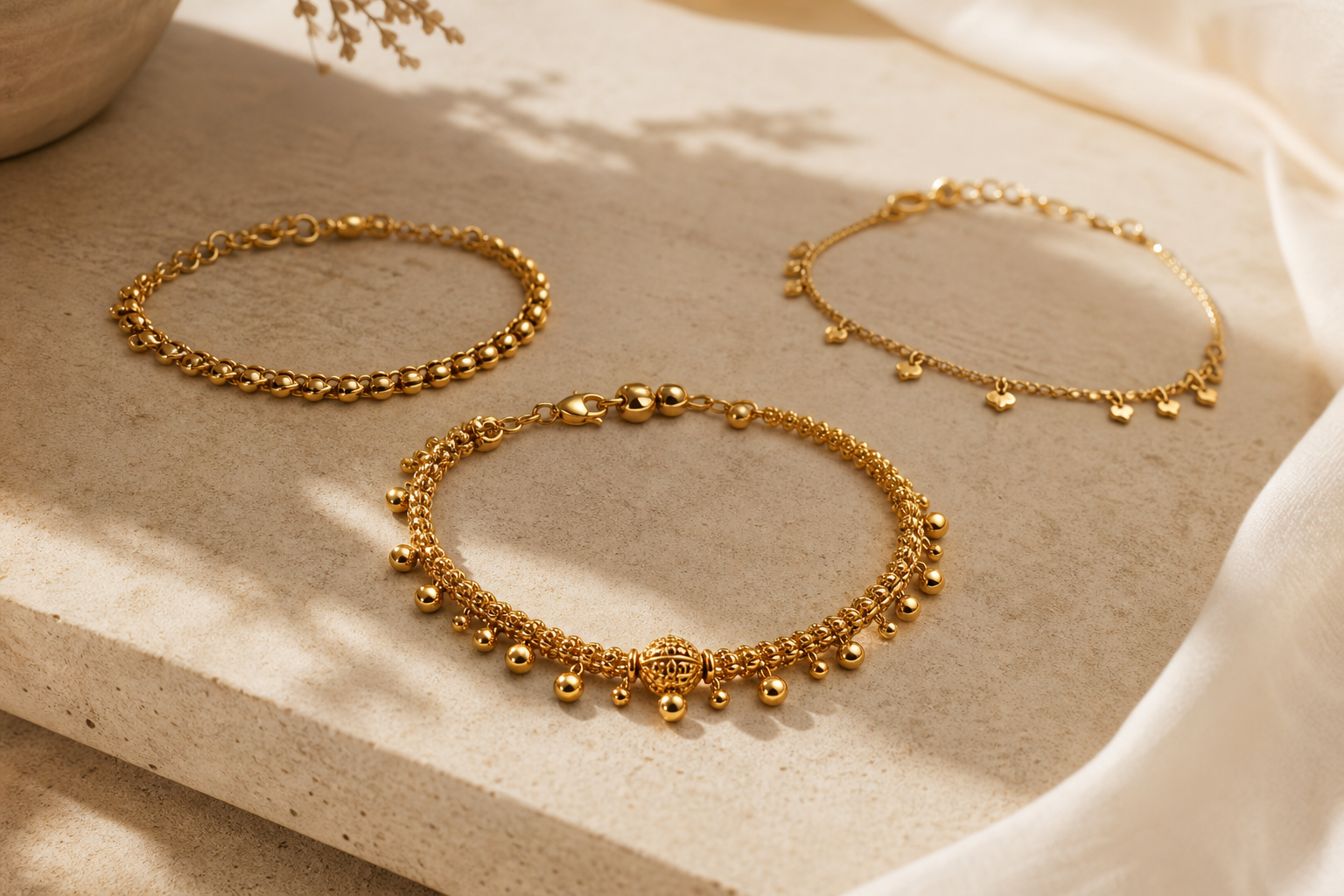
A gold anklet worth your money balances purity, strength, feel, and verified authenticity. Start with purity. 22K (916) is about 91.6% gold. It glows a rich yellow and looks luxe on skin, which is why bridal shoppers love it. Yet it’s softer, so fine links and hollow tubes can dent if you wear them hard.
By contrast, 18K (750) is about 75% gold. It keeps a warm yellow tone, holds diamonds and charms securely, and offers a good strength‑to‑beauty mix. For daily wear, this is the sweet spot. If you’re very active, 14K (585) goes one step further on toughness. It’s more scratch‑resistant, with a paler yellow that some people prefer, and the metal value per gram is lower than 22K and 18K.
Construction matters as much as karat. Solid chains feel substantial, sit better on the ankle, and stand up to scuffs. Hollow tubes cut weight and cost but can flatten under pressure and are harder to repair cleanly. Semi-solid or textured “lightweight solids” try to split the difference, but for true daily use, solid wins.
Karat vs. Daily Use
- 22K: Best for bridal, gifting, and occasional wear where color and heritage shine.
- 18K: Best for regular wear with a balance of strength and glow.
- 14K: Best for rough use, travel, and anyone who wants fewer scratches.
How Weight Affects Price and Feel
- Price follows net gold weight × live rate. Then add making charges, stones (if any), and GST.
- Heavier pieces drape better and feel luxe. Lighter pieces suit minimal looks and tight budgets.
- Retail weight filters often group designs by bands (for example: under 5 g, 5–10 g, 10 g+), which helps you compare feel and cost at a glance.
“Handcrafted jewelry in 22K & 18K gold” with “BIS hallmarked for purity” signals care in build and verified metal content. Look for these exact phrases on product pages and invoices to save yourself headaches later.
| Factor | 22K (916) | 18K (750) | 14K (585) |
|---|---|---|---|
| Color | Deep, rich yellow | Warm yellow | Slightly paler yellow |
| Durability | Softer, more prone to dings | Stronger, daily‑friendly | Strongest of the three |
| Best For | Bridal, heirloom, festive | Daily wear + stones/charms | High‑activity daily wear |
| Price/gram | Highest | Mid | Lowest among the three |
| Build Pairing | Solid or semi‑solid | Solid preferred | Solid preferred |
For this complete guide gold anklets, the bottom line is simple: match karat to lifestyle, choose solid for longevity, and let weight guide budget and drape.
Also Read!
The Complete Guide to Men’s Jewelry: What to Wear, How to Style It, and What to Buy
The Complete Guide to Tennis Necklaces: How to Choose, Style, and Buy One
How to Choose the Right Gold Anklet: A Step-by-Step Framework
Use this simple plan so you buy once and love it for years. This complete guide gold anklets framework keeps you focused and shields you from surprise fees.
- Determine the occasion
Decide if it’s for daily wear, bridal, or gifting. For daily, durability wins. For bridal, color and design can take the lead.
Occasion and Karat
- Pick the karat for your needs
- Daily wear: 18K or 14K for strength and fewer scratches.
- Festive/bridal: 22K for the iconic yellow, as long as the build is sturdy.
- Mixed‑stone styles: 18K is a common choice because it holds diamonds and gems well.
-
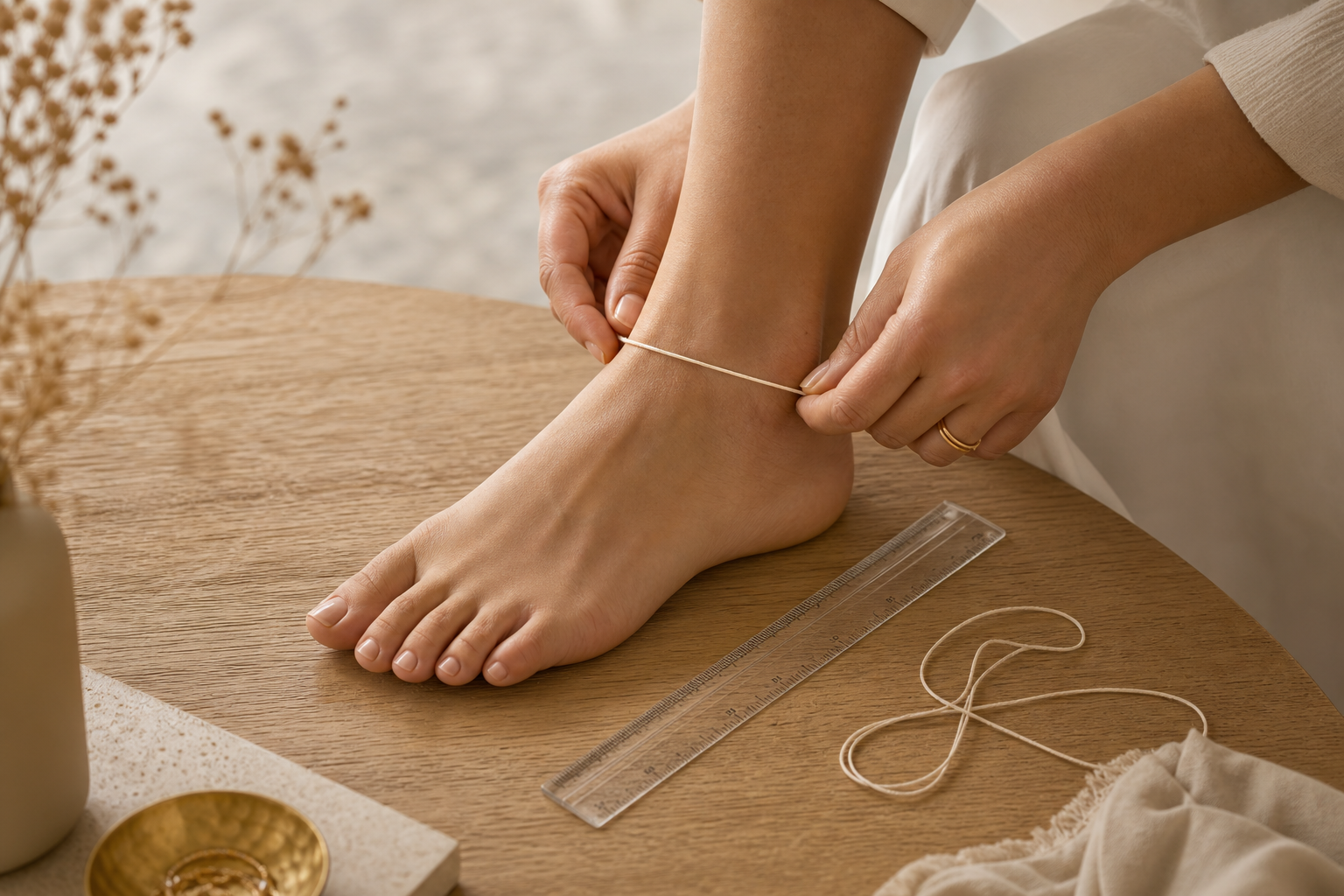
Measure your ankle the right way (string method)
Wrap a string where you want the anklet to sit. Mark the overlap. Lay it flat against a ruler. Add 0.5–1.0 inches for easy movement and to fit over the heel when clasping. If you prefer a snug look, add closer to 0.5 inches; for charm styles, add closer to 1.0 inch. -
Choose your style
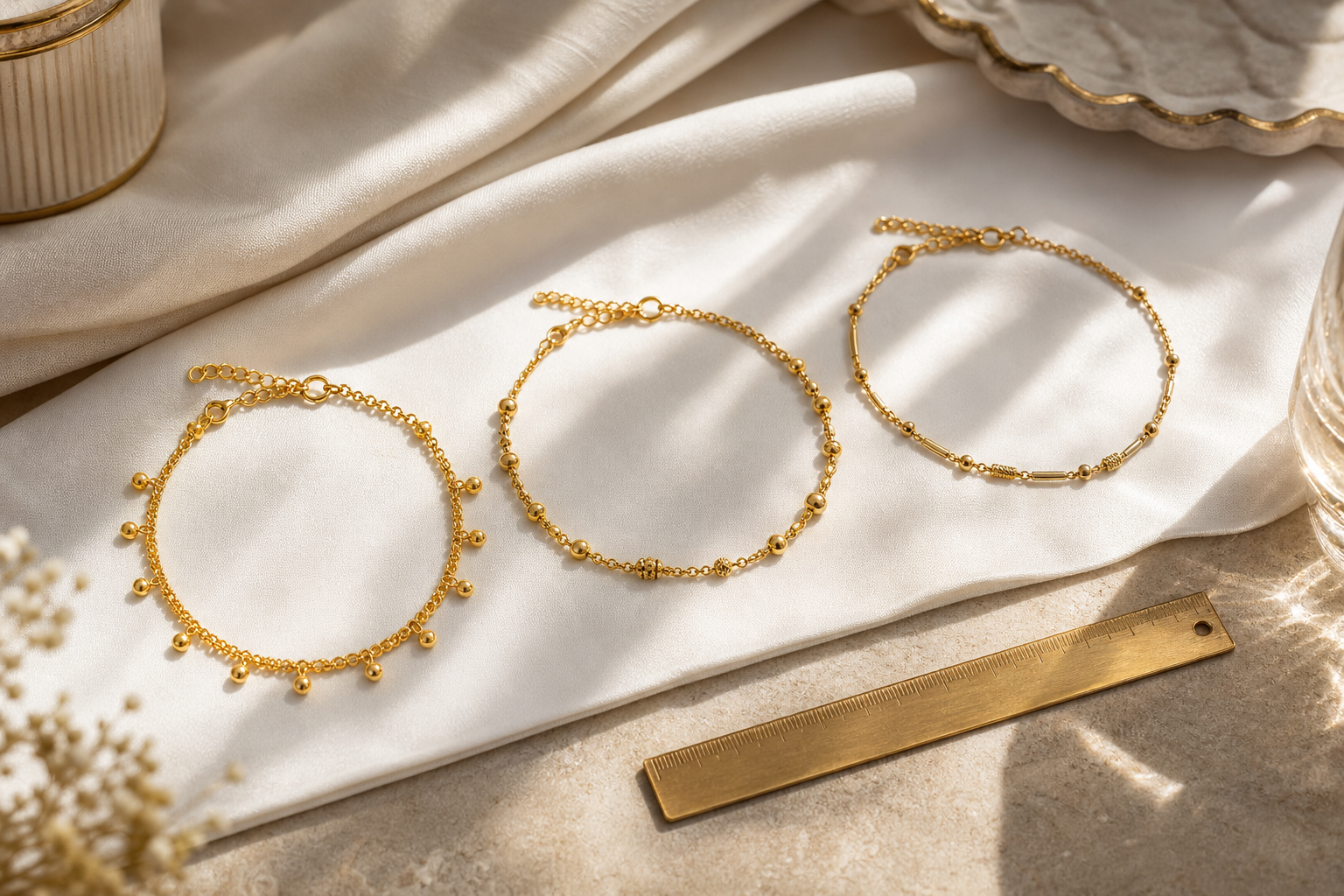
- Chain-only: cable, box, rolo for clean, timeless lines.
- Charm or station: pendants spaced along the chain; looks great at 18K for strength.
- Cuban/rope: bolder links; choose solid to preserve shape.
- Verify hallmark and certification
Check for the BIS hallmark and the Unique 6‑digit HUID on the tag or invoice. You can verify the HUID via the BIS portal or the BIS CARE app on your phone. A quick scan takes under a minute and avoids doubts later about purity.
Price and Transparency
- Compare price the right way
Insist on transparent making charges shown apart from metal value. The math most jewelers use is: Price = Metal value + Making charges + Stone charges + GST. In many stores, the breakdown follows: Total = Metal value (live rate × net weight) + Making charges + Stone charges + 3% GST on jewelry + 5% GST on making charges. When you see the math, you control the spend.
Furthermore, match the clasp to the use. A lobster clasp is secure and easy to handle. In addition, ask for an extra safety ring if you wear boots or train hard. Finally, keep notes: karat, net weight, making charge per gram, and your measurement. Those four lines turn you into a confident buyer in 2026.
**Visit Caratflow, get live rates today →
5 Common Mistakes People Make When Buying Gold Anklets
Buying fast can cost you later. This complete guide gold anklets list will help you dodge the pitfalls that jewelers see every week.
-
Ignoring hallmark verification
If you don’t check the BIS hallmark and the 6‑digit HUID, you’re flying blind. Always verify the HUID via the BIS CARE app before you pay. It’s a 60‑second step that protects a decades‑long heirloom. -
Choosing the wrong karat for daily wear
22K looks lush but dings faster. For gym days, travel, or desk‑to‑dinner life, 18K or 14K keeps its shape better. Pick the glow you love, but don’t trade away strength if you plan to live in it. -
Not measuring correctly
Too tight rubs the skin and can snap links. Too loose slips off. Use the string method, then add 0.5–1.0 inches for comfort and clasp room. If in doubt, ask for a short extender section. -
Overlooking making charges in the total price
If you only compare “price per gram,” you miss half the bill. Ask for transparent making charges. You have the right to see metal value, making, stones, and GST as separate lines. -
Buying online without safety nets
Before you order, confirm two things on the product page: certification and returns. Look for 100% BIS hallmarked gold and silver jewelry and a 365‑day free insured returns policy. That gives you time to check fit at home.
“The bridal set I bought for my wedding was breathtaking. Craftsmanship is world‑class and the BIS hallmark gave me total peace of mind.” — Priya Sharma, Mumbai
As an extra guardrail, some retailers promise a commitment to refund twice the difference if purity is below standard. That’s a strong risk‑reversal and a sign they stand by their hallmark. Keep that clause in your back pocket while you compare.
Also Read!
The Complete Guide to Amethyst: How to Buy, Identify, and Care for This Purple Gemstone
How to Choose the Perfect Wedding Ring: A Complete Buyer’s Guide
Tools and Resources for Buying Gold Anklets Online
Good tools make you a smarter buyer in minutes. This complete guide gold anklets section covers the two most useful: hallmark verification and live rates.
- BIS CARE app for hallmark verification: Use it to validate the 6‑digit HUID on your anklet. You can also learn about hallmarking at the official site: BIS hallmarking with HUID. One scan cuts through doubt.
- Live gold rate trackers: Check 22K (916) and 18K (750) rates before you add to cart. For reference, live 2026 snapshots have shown 22K Gold ₹6,673/g and 18K Gold ₹5,464/g (timestamp: 06:44 am). Cross‑check the date and time on any rate you see.
Tools like Caratflow are one option among several because they combine transparent pricing breakdowns with hallmark assurance. In addition, video consultation is available, and you can book a live consultation with a designer before purchase to walk through chain types, link gauges, and charm spacing. Moreover, the site allows filtering by metal type, purity, price range, and weight range so you can shortlist fast by your budget and preferred drape.
For extra learning on purity and alloys, see the basics on Karat (gold purity). While that page is global, your buying decision still comes down to the same trio: karat, construction, and verified hallmark.
What to Do Before Your First Gold Anklet Purchase
A tiny plan now saves hours later. Follow this complete guide gold anklets checklist this week to move from “thinking” to “ready.
- Measure your ankle with the string method and write the number down. Add 0.5–1.0 inches for comfort.
- Check today’s live 22K and 18K gold rates. Note the time stamp so your math matches the price quote.
- Set a budget band by karat and target weight band (for example, “18K, mid‑weight”). Keep a small buffer for making charges and GST.
- Shortlist 2–3 retailers with BIS hallmark on every gold piece. Ask them to show the 6‑digit HUID on video or in photos.
- Confirm safety nets before you pay: a lifetime exchange policy and a buy‑back guarantee at the prevailing rate. That’s how you keep value over time.
If you’re choosing between two designs, aim for the one that’s solid built and uses a reliable clasp. In addition, ask which servicing is covered. Lifetime free polishing and re‑plating for mixed‑metal designs is a thoughtful extra that keeps pieces fresh. Finally, put the invoice, hallmark photo, and HUID code in your records. Future you will thank present you.
Key Takeaways
- Match use to karat: 18K/14K for daily strength, 22K for rich color on special days.
- Pick solid over hollow if you want an anklet that lasts and resists dents.
- Always verify the BIS hallmark and 6‑digit HUID via the BIS CARE app before buying.
- Demand transparent math: Price = Metal value + Making charges + Stone charges + GST.
- Use this complete guide gold anklets to plan weight, budget, and fit with zero guesswork.
What to Do This Week
Measure your ankle, check live 2026 rates for 22K and 18K, and set a clear budget band. Then shortlist three BIS‑hallmarked options, ask for the HUID, and compare making charges line by line. Book a quick video consult to confirm style, clasp, and fit, and buy with confidence knowing returns, lifetime exchange, and buy‑back are in writing.
**Visit Caratflow, book a designer consult →