You don’t need to spend a fortune to own a rich purple gem that stands up to real, daily wear. This complete guide amethyst buy shows you how to spot a quality stone, avoid common traps, and care for it like a pro in 2026.
Here’s the short answer first: choose amethyst with vivid, even color; make sure it looks “eye-clean” (no visible inclusions); pick a lively, well-cut stone; and protect it from harsh heat, rough knocks, and long sun exposure. Clean it in warm soapy water, store it softly, and have settings checked twice a year. Do this, and your amethyst will stay bright for years.
Amethyst is a variety of quartz with a hardness of 7 on the Mohs scale, so it resists scratches better than many colored gems. According to Wikipedia’s amethyst entry, it has been cherished for centuries and is also the birthstone for February. In 2026, demand remains strong because it’s both beautiful and practical, ideal for everyday studs and rings as well as statement, fine-jewelry pieces.
What Is Amethyst and Why Does It Remain One of the Most Popular Gemstones?
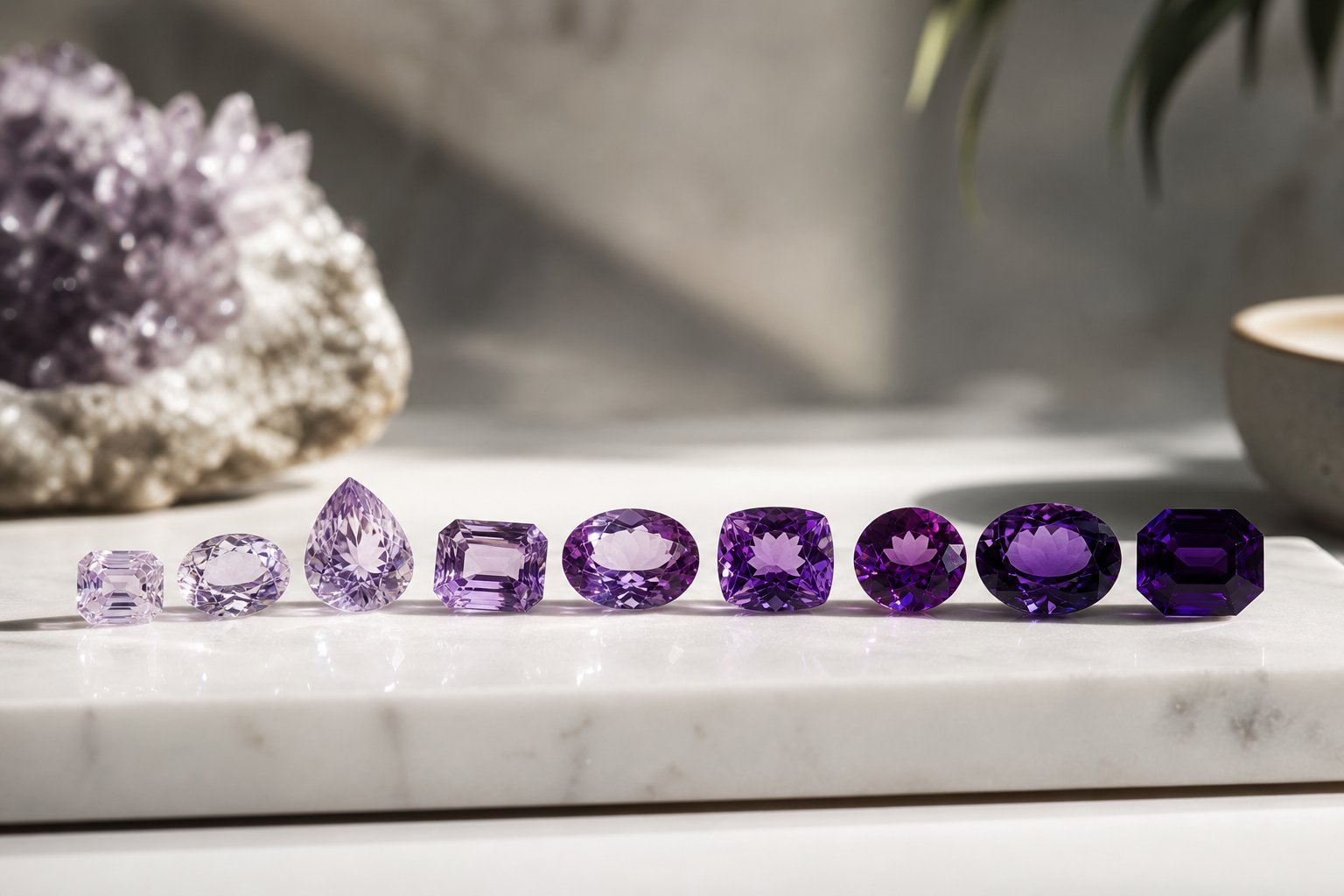
Amethyst is the purple variety of quartz. You’ll see shades that range from pale lilac to deep, saturated “Siberian” purple with hints of red and blue. Because quartz sits at 7 on the Mohs hardness scale, amethyst holds up well in rings, pendants, earrings, and bracelets you wear every day. That practical toughness is a big reason it stays popular year after year.
Historically, amethyst carried royal and spiritual meaning across cultures. Roman elites carved it into intaglios. Medieval clergy prized its dignified hue. Today, it’s still a February birthstone that feels personal yet easy to style. Moreover, it pairs well with both yellow and white metals, from sterling silver to platinum, and shines alongside natural diamonds and ethically sourced gemstones as accents.
In addition, the color range helps you match your taste. Do you love a soft, romantic pastel? Or do you prefer a dramatic, rich purple that pops across a room? Because amethyst forms in large crystals, cutters can shape it into classic rounds and ovals or bold fantasy cuts without scarce rough driving prices out of reach.
Furthermore, quartz’s stable chemistry means you can enjoy amethyst in settings that see real life, keyboards, light knocks, and an occasional brush against a zipper, so long as you avoid harsh impact and extreme heat. As a result, it suits both everyday jewelry and fine heirloom designs. This complete guide amethyst buy will help you weigh those choices with clear, plain-language criteria.
Why Mohs 7 Matters for Daily Wear
- It resists common scratches from dust and everyday contact.
- It’s strong enough for rings and bracelets, not just pendants.
- It still needs care: avoid hard blows and thermal shock.
- It cleans up well with warm water, mild soap, and a soft brush.
For deeper background on history, color, and formation, the GIA Amethyst page offers clear, lab-backed fundamentals you can trust.
Also Read!
How to Design Custom Jewelry with 3D Preview for the Perfect Gift
Best GIA Certified Diamond Jewelry for Jewelry Gifts in 2026
How to Evaluate Amethyst Quality: A Step-by-Step Buyer's Framework
Choosing well is simple once you know what to look for. Use this complete guide amethyst buy framework to compare stones side by side with confidence.
-
Color Saturation
Aim for medium to medium-dark purple with a lively look. Premium stones show a pure purple body color with slight red and blue flashes. However, avoid stones that look “inky” or so dark they go flat indoors, light can’t bounce, and the gem loses life. On the other hand, pastels can be lovely, but they’re priced for their lighter tone, not top saturation. -
Clarity
You want “eye-clean,” meaning no inclusions visible without magnification. Small needles and crystals are common in quartz, but if you can see them at arm’s length, pass. For rings and solitaires, clarity matters more because your eye lingers on one stone. In multi-stone pieces, you can be a touch more flexible. -
Cut Quality and Brilliance
Well-cut amethyst looks bright even in soft light. Check symmetry: facets should match across the axis, and the outline should be even. Then tilt the stone.
Do you see light return from the center, or is there a dark “window” you can see through? Windows waste color and value. A great cut makes medium color look richer and gives you that “wow” sparkle.
-
Carat Weight vs.
Because amethyst grows in large crystals, bigger sizes don’t explode in price the way rare gems do. Still, fine, clean stones above certain sizes cost more per carat. Focus on face-up size and performance, not just the carat number. If two 8×6 mm ovals look similar, buy the one with better color and cut, even if it weighs a fraction less. -
Origin (Zambian vs. Brazilian vs.
Origin affects hue and how the color “reads” in different lights:
- Zambian: Often a rich, bluish-purple with strong saturation.
- Brazilian: Widely available, sometimes lighter or with visible zoning.
- Uruguayan: Known for deep color; choose stones that don’t go too dark indoors.
Price-Per-Carat: How to Compare Fairly
Instead of chasing a single “right” price, ask each dealer for the per-carat price in writing and compare apples to apples.
- Entry: Lighter tones, commercial cuts, minor visible zoning.
- Fine: Eye-clean, even color, bright cut, pleasing medium to medium-dark tone.
- Premium: Vivid body color with red flashes, top clarity and make, excellent symmetry.
Moreover, calculate stone value for jewelry by separating metal and making costs. For example, many retailers price jewelry as: Total = Metal value (live rate x net weight) + Making charges + Stone charges + 3% GST on jewelry + 5% GST on making charges. If you remove the metal and making line items, you’ll see the stone’s actual charge and can compare per-carat across options.
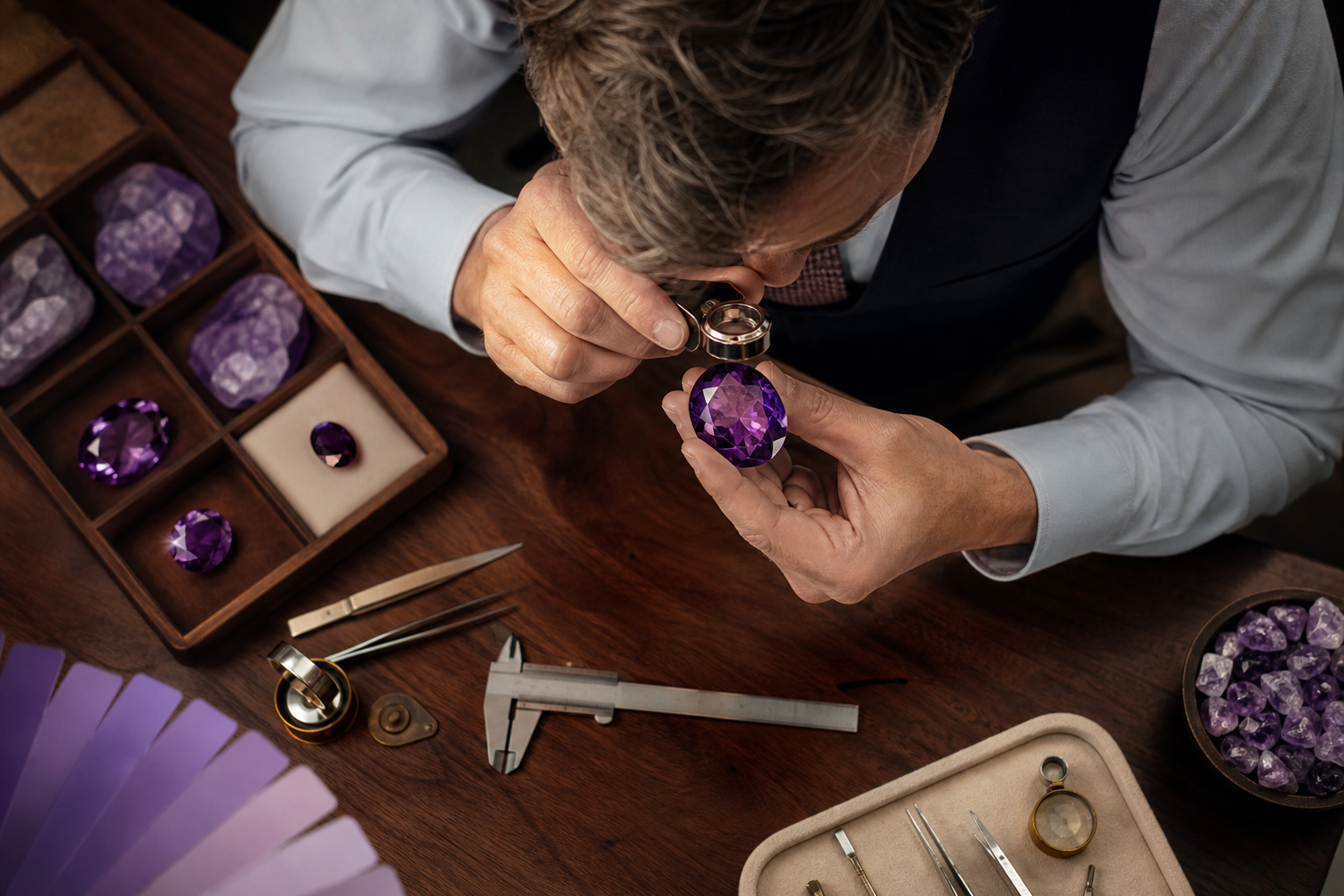
Pro tip: View stones under daylight, office LEDs, and warm lamps. Great color should stay appealing in all three.
**Get expert color matching today →
Common Mistakes When Buying Amethyst
Even smart buyers can slip. Here are the traps this complete guide amethyst buy helps you avoid.
First, confusing heat-treated citrine or mixed stones sold loosely as “ametrine” without disclosure. Ametrine is a natural mix of amethyst and citrine colors in one stone, but you should expect clear disclosure and a fair price for the actual material. If the seller hedges, walk.
Second, overpaying for very large stones. Amethyst is abundant, so a jump from 5 to 15 carats should not vault the price the same way a rare sapphire would. Focus on color, cut, and clarity first. Big and bland is not a win.
Third, ignoring color zoning. Zoning looks like bands or patches of lighter and darker purple. Some zoning is normal in quartz, but heavy zoning distracts the eye. View the stone face-up and from the side; tilt it and check both ends of an oval for evenness before you buy.
Documentation and Disclosure
Fourth, buying synthetic material without disclosure. Lab-grown quartz exists and is fine if priced and labeled as such. But undisclosed synthetics are not okay. Ask the seller for a written statement of natural origin. For higher-value pieces, request a report from a reputable lab (for example, GIA or IGI) and keep the paperwork.
Fifth, skipping certification and metal hallmarks on valuable jewelry. For pieces where the metal adds real value, insist on BIS hallmarked gold or silver for purity assurance, and match any diamonds to their documents (IGI & GIA certified diamonds are standard). In addition, look for notes such as “IGI or GIA certification for natural diamonds above 0.18ct” so you know what’s covered.
Finally, assuming darker is always better. Very dark stones can look dead indoors. You want glow, not gloom. Choose medium to medium-dark with a lively face-up, your eyes will thank you.
Quick Pre-Buy Checklist
- Ask origin and treatment; get it in writing.
- Check eye-clean clarity and even color.
- Inspect for windows, chips, and zoning under neutral light.
- Verify metal as BIS hallmarked for purity on finished jewelry.
- Keep lab reports for higher-value stones and diamond accents.
Also Read!
How to Buy Indian Jewelry Online with International Shipping for Celebration Gifts
Tools and Resources for Buying Amethyst with Confidence
You don’t need a gem lab at home to make strong choices. Instead, pair clear guidance with a few simple tools and credible references. The resources in this complete guide amethyst buy will keep your shortlist tight and smart.
Start with trusted education. The GIA Amethyst page and the broader GIA gemstone encyclopedia explain color, clarity, cut, and care using lab-tested insights. For documentation on a specific stone, IGI gem reports and GIA reports (plain text references here) provide independent verification of identity and any detectable treatments.
Next, add low-cost tools:
- 10x jeweler’s loupe: Check for inclusions, chips, and facet polish.
- Neutral light source: A daylight-balanced LED helps you judge hue and saturation.
- White card: Place under a loose stone to spot zoning or windows.
- Soft gem cloth: Keep surfaces clean while you inspect.
Moreover, buy from certified gemstone dealers and platforms that publish their standards. One option is Caratflow, which offers ethically sourced gemstones, BIS hallmarked gold and silver jewelry, and diamond accents that come with IGI or GIA certification for natural diamonds above 0.18ct. As a buyer, this level of documentation and hallmark assurance removes guesswork.
“I love that I can book a video consultation before buying. The designer walked me through three options over a call.” — Kavita Reddy, Hyderabad
In addition, policies matter. Look for clear, written returns and exchanges. For instance, features like a Lifetime exchange policy or 365-day free insured returns signal that a seller stands behind their work. International shipping via insured carriers and transparent making charges also help you compare total value, not just the headline price.
How to Care for and Store Your Amethyst Jewelry
Care is simple and makes a visible difference fast. Use these steps from this complete guide amethyst buy to keep your pieces bright, secure, and ready to wear.
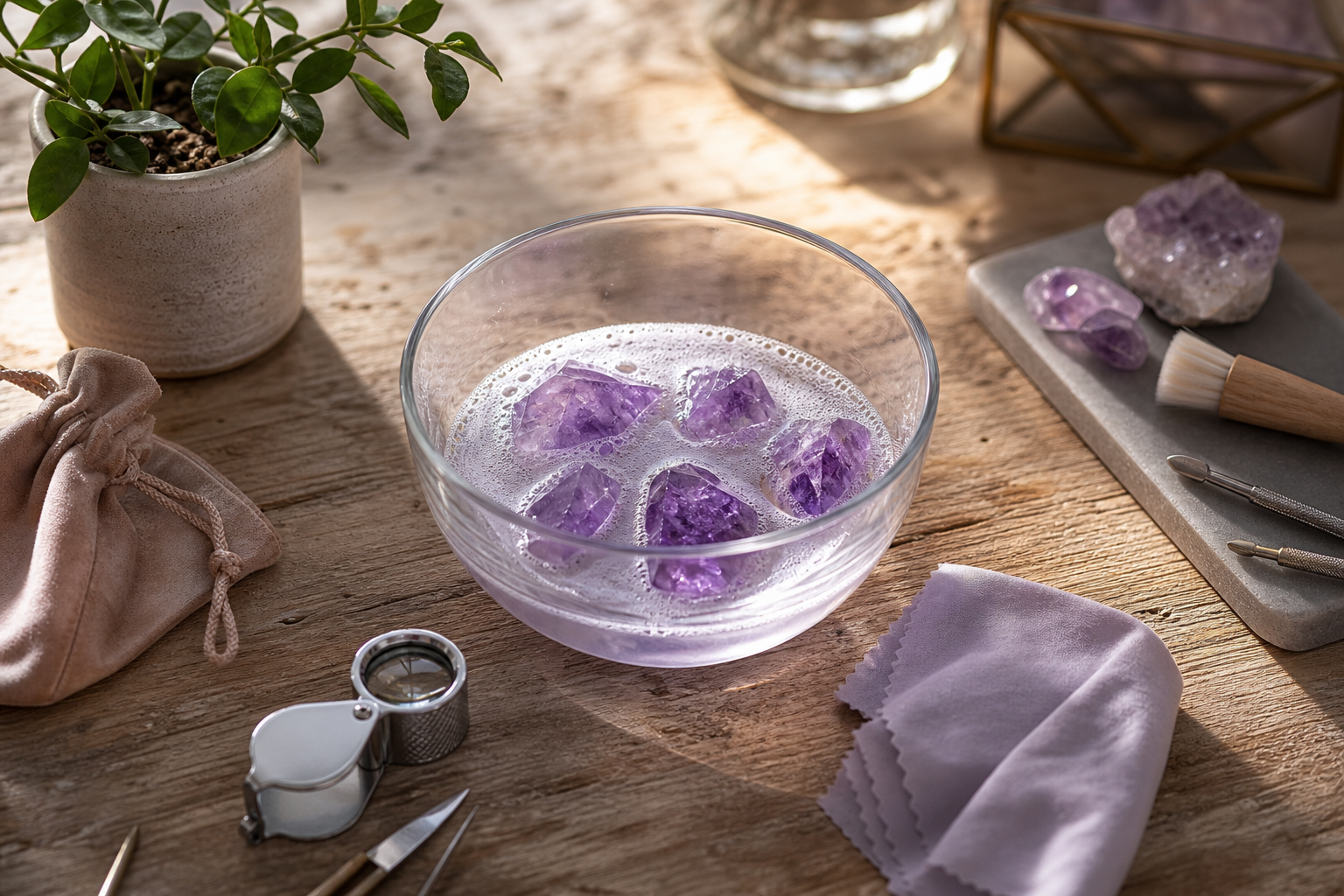
First, clean gently. Use warm water with a drop of mild dish soap and a soft brush. Rinse well and pat dry with a lint-free cloth. Avoid steam and ultrasonic cleaners; amethyst can have internal features that react to heat or vibration.
Second, limit sunbathing. Prolonged, strong sunlight can lead to color fading over time. Wear your jewelry out in the world, of course, just don’t leave it on a sunny windowsill for days. Store it in a cool, dark place when you’re not wearing it.
Third, protect from scratches. Although quartz is 7 on the Mohs scale, higher-hardness materials like sapphire or diamond can scratch it. Keep amethyst in a soft pouch or a separate slot in your jewelry box. Do not toss it in a dish with keys, coins, or other gemstones.
Protection and Maintenance
Fourth, maintain settings. Twice a year, inspect prongs and bezels for snagging or gaps. Gently tap near your ear; if you hear a rattle, the stone may be loose.
Take it to a bench jeweler for tightening. For white gold, ask about rhodium re-plating every 12–24 months. Many sellers include Lifetime free polishing and re-plating, which keeps your piece fresh at no extra cost.
Fifth, refresh the surface. Light scuffs on quartz can be buffed by a pro. If your stone looks hazy after years of wear, ask a jeweler about re-polishing the crown facets. It’s a minor, planned service that can restore crisp sparkle.
Key Takeaways
- Choose lively, medium to medium-dark purple with red flashes; keep it eye-clean and well cut.
- Compare per-carat by asking for written quotes and separating metal/making from stone charges.
- Avoid undisclosed synthetics, heavy color zoning, and “inky” too-dark stones.
- Use trusted sources like GIA and request lab reports for higher-value stones.
- Clean with warm soapy water, store in shade, and check settings twice a year.
What to Do This Week
- Shortlist three stones you love and view them under daylight, office LED, and warm lamp.
- Ask each seller for written per-carat quotes and origin/treatment disclosure.
- Verify BIS hallmarks on finished pieces and match any diamond accents to IGI or GIA papers.
- Schedule a quick pro check of your current settings and plan routine polishing.
Do this, and you’ll buy with clarity, wear with joy, and keep your amethyst glowing through 2026 and beyond.