Before you spend, anchor your search to the best gia certified diamond standards so your choice is verifiable and stress-free. This guide shows first-time buyers exactly how to compare, confirm, and purchase with confidence in 2026. You’ll learn how to read a certificate, check HUID, decode pricing, and build a plan that protects both your money and your peace of mind.
Whether you’re buying a first diamond pendant, a ring, or a gift, small decisions stack into big confidence. Think of this as your step-by-step companion rather than a sales pitch.
[Start your free trial →]
Snapshot: what this guide covers at a glance
- How to verify a GIA or IGI report number and match it to your diamond
- BIS hallmarking basics, HUID lookups, and what “916/750” actually mean
- A transparent pricing formula with worked examples you can recalc at home
- Practical specs for first-time buyers that balance beauty and budget
- Returns, exchanges, shipping insurance, and how to stay protected
- Real-world case study and a printable pre-purchase checklist
Why Buying GIA Certified Diamond Jewelry Online Feels Overwhelming for First-Time Buyers
You’re making a big purchase you can’t touch. That alone raises your heart rate. You may fear overpaying or getting a stone that looks dull compared to the photos. You may also worry that the “certificate” won’t mean much once it’s in your hand.
Let’s name the core anxieties and take power away from them.
Breaking down the top worries
First, price. Without a clear formula, the total can look like guesswork. You should see each cost: metal, making, stones, and tax. If you don’t, your brain fills the gaps with worst-case scenes. That stress is fair.
Second, quality mismatch. A diamond can look bright on a screen but arrive with a different fire. This is where lab grading matters. A GIA report grades four basics, the “4Cs”: cut (how well the stone is shaped and polished), clarity (how free it is from small marks inside or on the surface), color (how colorless it is), and carat (its weight). Without a reputable lab report, you’re comparing words, not facts.
“A good report turns opinions into facts you can compare. That’s when decisions get easier.”
Third, the alphabet soup. GIA (Gemological Institute of America) and IGI (International Gemological Institute) are respected labs. In-house grading can be fine for tiny accent stones (called melee), but you want an independent report for any single diamond of real size. If you don’t know the difference, it’s hard to judge the listing.
Fourth, metal purity. In India, BIS (Bureau of Indian Standards) hallmarking is the official purity mark for gold and silver. Each piece also carries a HUID (Hallmark Unique Identification) number, a 6-digit code you can check on the BIS CARE app or portal. If you don’t see hallmark details, you’re right to pause.
Fifth, returns and exchanges. You need time to live with the piece. Try it in your light. Ask friends. If the window is short, you feel trapped. If the process isn’t insured, you worry from the moment you click “buy.
Quick recap of the real fears:
- Price without a breakdown triggers doubt. – Quality mismatch becomes likely without a reputable lab report. – Acronyms (GIA vs IGI) confuse, especially if you’ve never compared reports. – Purity feels uncertain unless you check HUID on BIS CARE or bis.
gov. in. – Short or uninsured returns add pressure you don’t need.
 , Returns, Shipping Insurance with simple icons; contemporary 2026 palette)
Common first-time mistakes to avoid
- Buying uncertified diamonds above ~0.
- Skipping hallmark checks or ignoring HUID verification
- Not reading the 4Cs on the grading report, especially cut grade
- Missing the price breakdown and only looking at the final number
- Accepting vague return terms for a high-value item
- Overlooking diamond fluorescence and how “Strong Blue” can sometimes make lower color grades look whiter in sunlight
- Assuming “bigger is better” instead of optimizing cut quality and face-up diameter for visual size
- Forgetting to ask whether the center diamond has a laser-inscribed report number on the girdle
- Failing to confirm whether the diamond is natural or lab-grown if you care about resale and long-term tradition
- Not checking the store’s servicing policy for free cleaning, prong inspections, and re-plating
If any of these hit close to home, you’re not alone. You don’t need to become a gemologist overnight. You only need a clear checklist and the courage you already have.
“Clarity comes from process. The moment you can verify the report and the HUID yourself, the fear drops.” — Customer Success Team
Also Read!
What to Look for When Buying GIA Certified Diamond Jewelry Online: A First-Timer's Checklist
Here’s your calm, practical filter for any seller. Use it line by line.
Certification and report verification
First, certification for the diamond. For any meaningful center stone, look for a GIA or IGI report above ~0.18 carat. The report covers the 4Cs, cut, clarity, color, and carat, plus polish, symmetry, fluorescence, proportions, and measurements.
To verify a GIA report, enter the unique report number on GIA’s official website; you can look up the lab name and number printed on the card. Many GIA-graded stones also have the report number laser-inscribed on the girdle, which you can confirm with a jeweler’s loupe. If you want background on the institution itself, see the overview on GIA (Gemological Institute of America) for context.
For very small diamonds used as accents (melee), in-house grading is standard because certifying each tiny stone is impractical. Sellers should say this clearly and keep the melee range consistent, such as GH color and VS-SI clarity.
GIA vs IGI: what matters for you
Second, understand GIA vs IGI. GIA is known worldwide for strict, consistent grading. IGI is also reputable and widely used, especially in India. If you’re new, either lab report for diamonds above 0.18ct gives you a solid baseline.
What matters more is that you can verify it. A legitimate report number should resolve instantly on the lab’s site and match your stone’s measurements. When that match is perfect, your confidence rises because the “best gia certified diamond” you picked is backed by traceable data, not guesswork.
Tip: Save the PDF of the report from the lab website and store it alongside your invoice so you’re never dependent on a misplaced card.
Metal purity and hallmarking
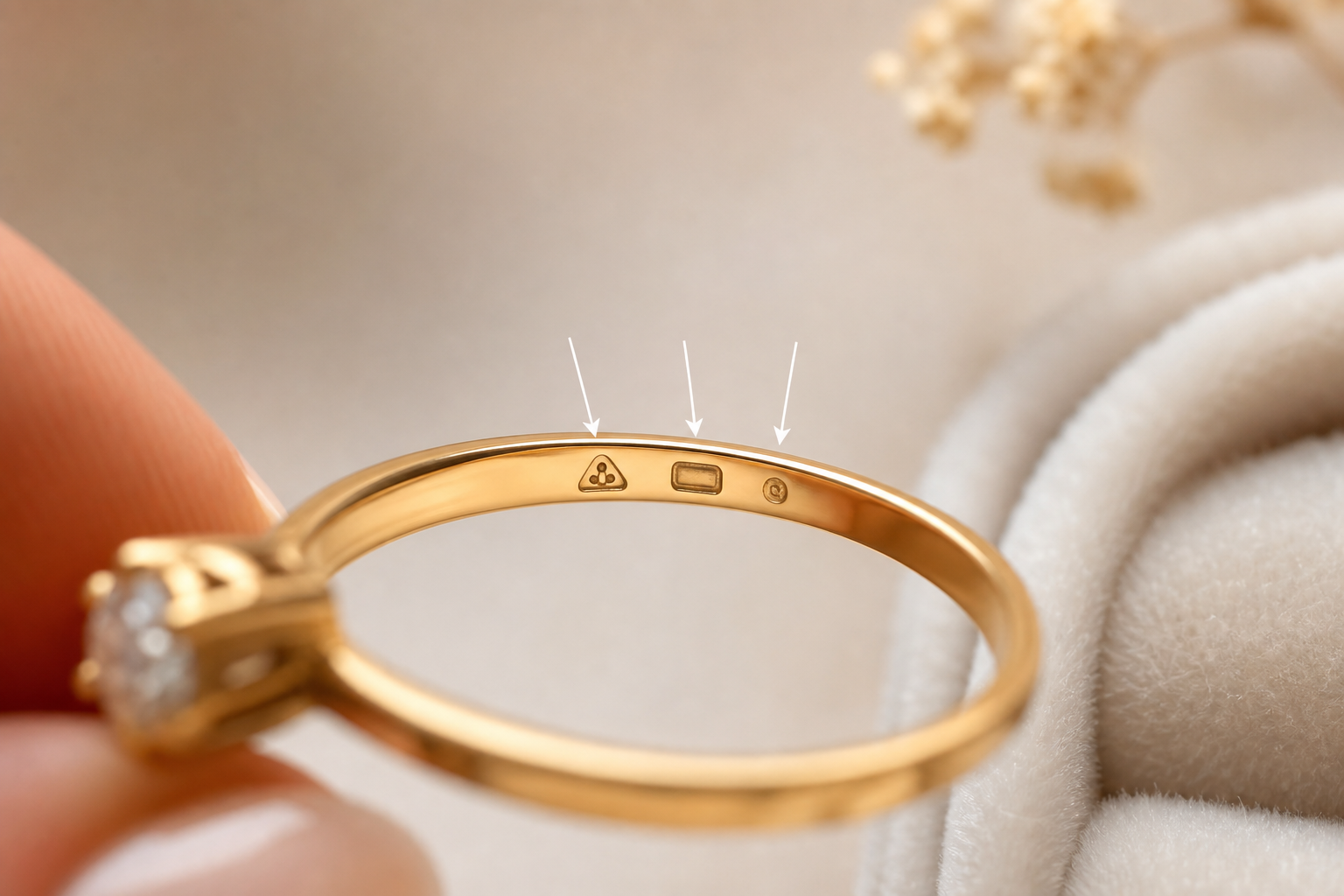
Third, metal purity and hallmarking. In India, 22K (916) and 18K (750) gold are common for fine jewelry. “916” and “750” show parts per thousand of gold. BIS hallmarking is the government-backed purity seal.
Each piece should have a unique 6-digit HUID you can check on the BIS CARE app or at bis. gov. in. This step unlocks real peace of mind because it’s independent of the seller. Save a screenshot of your result for your records.
Recommended first-time buyer specs
- Cut: Excellent/Ideal cut, Excellent polish, Excellent symmetry (prioritize cut first)
- Color: G–H for white metals, H–J for yellow/rose gold to save without visible warmth
- Clarity: VS2–SI1 for value; ensure “eye-clean” at normal viewing distance
- Carat: Choose a visual size target; compare face-up diameter rather than weight alone
- Fluorescence: None–Faint–Medium is typically safe; Strong can be great value if the stone remains clear in sunlight
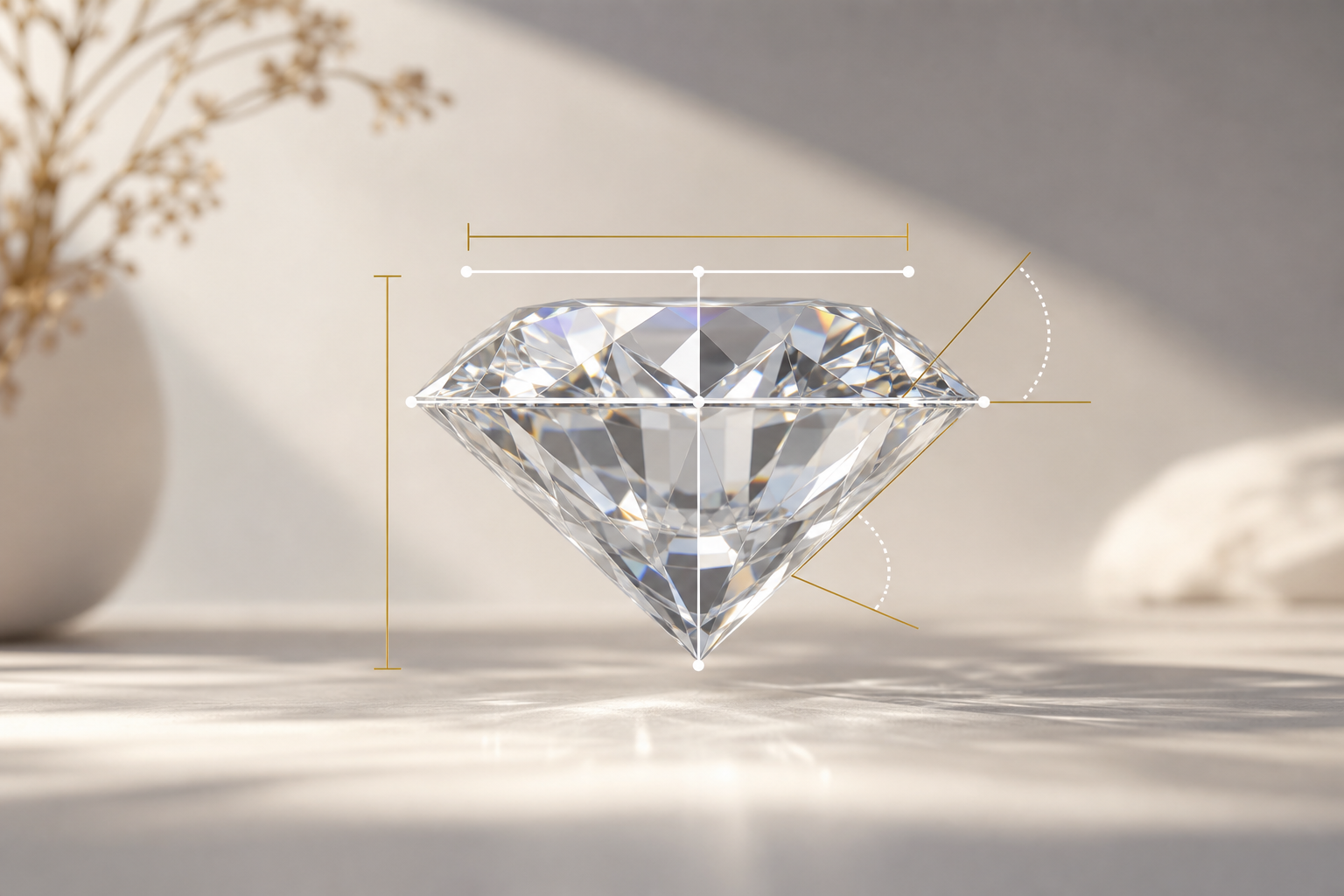
- Proportions: For rounds, aim for 54–58% table and ~59–62% depth; crown angle ~34–35° and pavilion angle ~40.6–40.9° usually perform well. Always confirm light performance in videos.
- Bonus tip: For skinny fingers or delicate settings, a lower carat with top-tier cut often looks larger due to bright edge-to-edge light return.
Shape-specific tips for first-timers
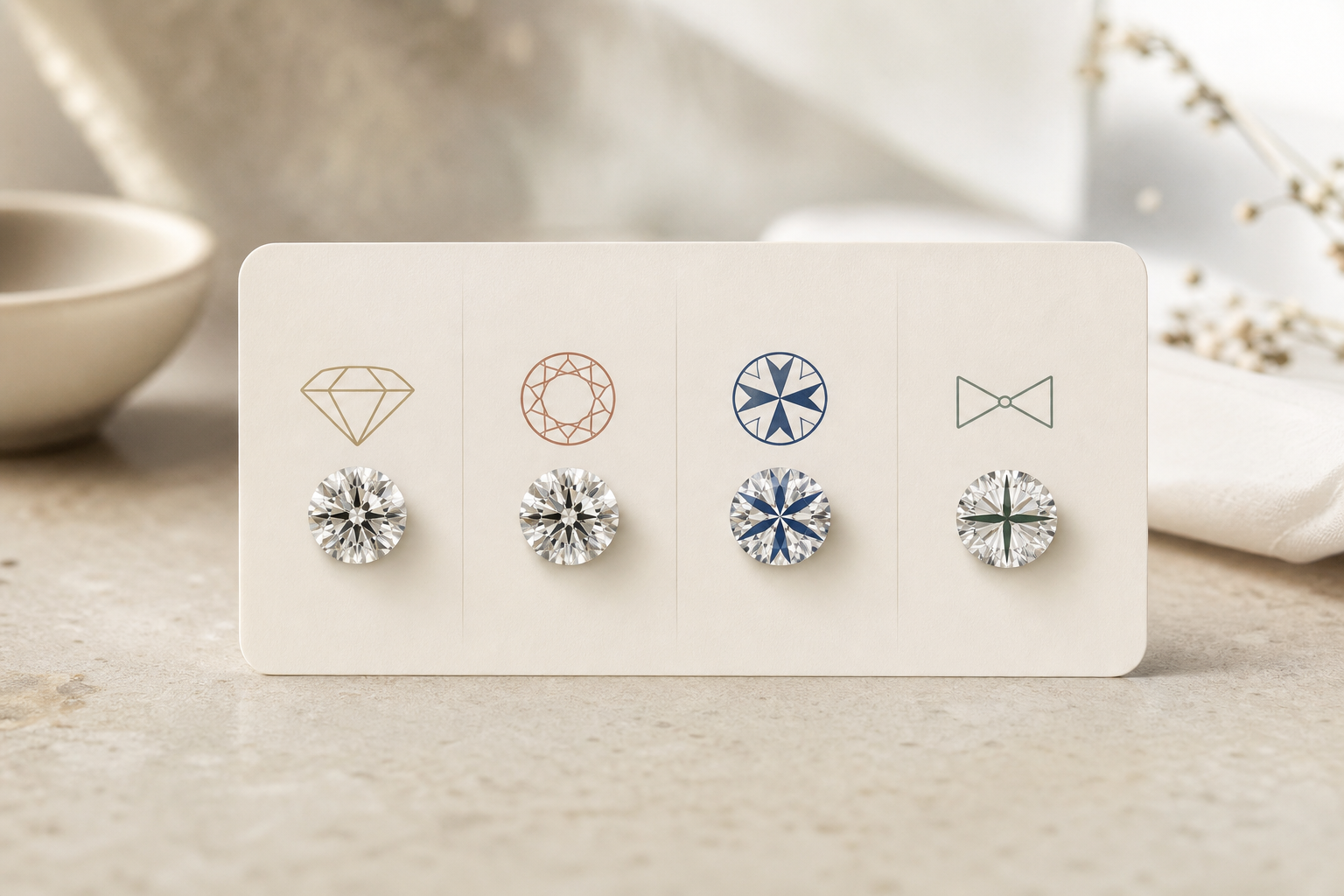
- Round Brilliant: Easiest to compare; prioritize cut grade and verify symmetry with hearts-and-arrows if available.
- Oval: Watch for bow-tie; ask for videos at multiple angles and check length-to-width between 1.30–1.45 for a balanced look.
- Cushion: Many facet styles exist; request ASET/ideal-scope or comparison videos to gauge light return.
- Princess: Ensure reliable prongs on all four corners and check for feather inclusions near edges.
- Emerald: Step cuts reveal inclusions; consider VS1–VS2 clarity and pay attention to a crisp hall-of-mirrors effect.
- Pear/Marquise: Symmetry matters; confirm the point is protected, and check that the bow-tie isn’t overly dark.
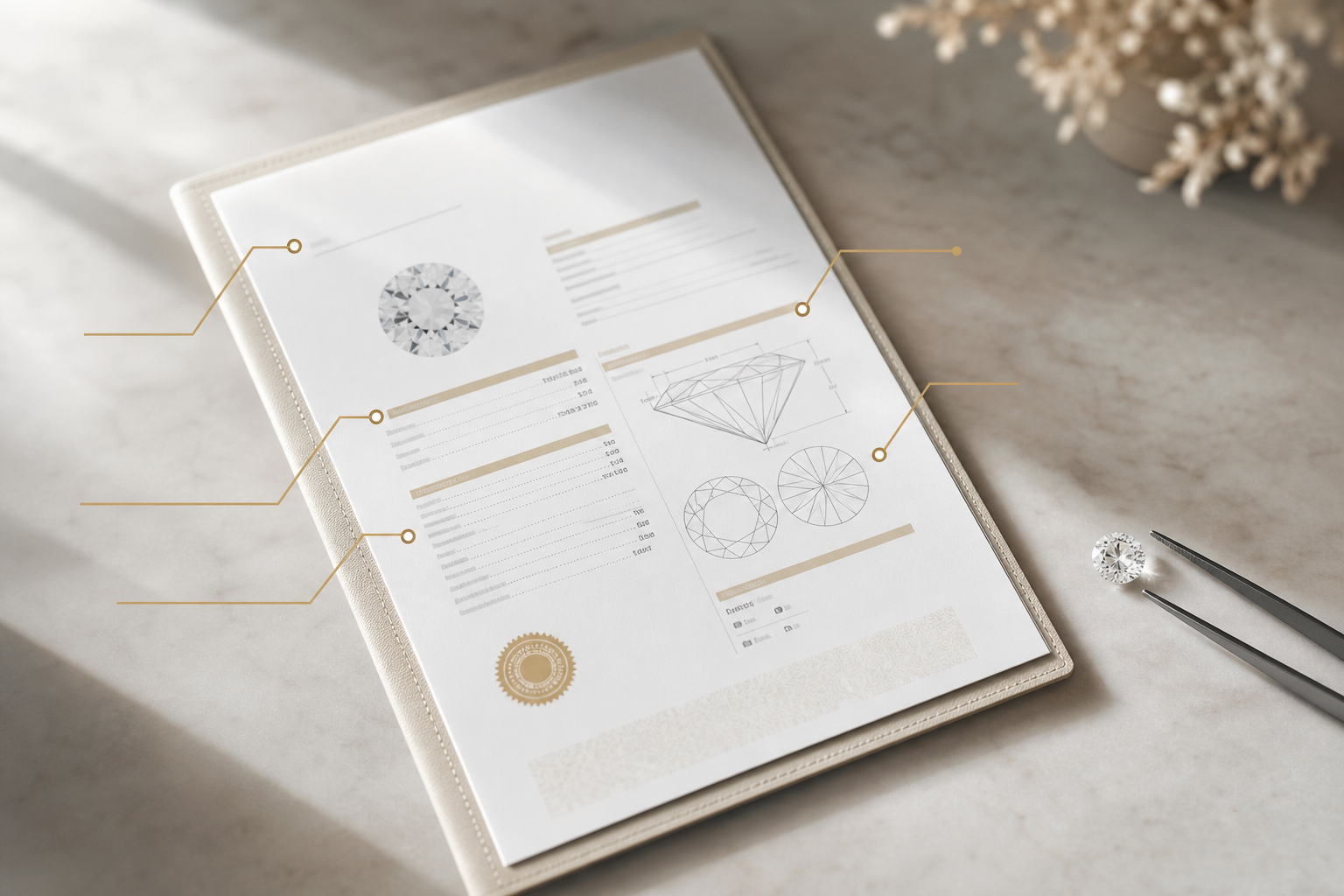
How to read a GIA report line by line
-
Identification: Report number and date (save the PDF and match the laser inscription on the girdle). 2) Shape/Cutting Style: Round Brilliant, Oval Modified Brilliant, etc. 3) Measurements: Millimeters (e. 99 mm). These determine face-up size.
-
Carat Weight: Exact to two decimals or more. 5) Color Grade: D (colorless) to Z (tinted). G–H is a great first-timer range. 6) Clarity Grade: From Flawless (FL) to Included (I). VS2–SI1 often balances value.
-
Cut Grade (rounds only): Excellent down to Poor; prioritize Excellent. 8) Polish & Symmetry: Aim for Very Good to Excellent. 9) Fluorescence: None, Faint, Medium, Strong; verify look in sunlight for Strong. 10) Proportion Diagram & Clarity Plot: Note where inclusions sit; avoid chips at the girdle.
Pricing clarity you can check yourself
Price is calculated as: Total = Metal value (live rate x net weight) + Making charges + Stone charges + 3% GST on jewelry + 5% GST on making charges.
- Metal value uses the live rate (for example, 22K gold ₹6,673/g; 18K ₹5,464/g; silver ₹89/g at 06:44 am IST).
- Making charges cover craft and finishing.
- Stone charges cover diamonds and colored gems.
- GST adds tax in two parts as shown above.
If a seller can’t show this breakdown, that’s a red flag. Transparency saves you from guesswork and helps you compare apples to apples.
For illustration, consider a simple example using indicative rates and weights:
-
0.28 ct, H/VS2 melee set in 18K gold (center not included in this line-item example).
-
3.80 g gold @ ₹5,464/g = ₹20,763 (illustrative).
-
Making charges for 3.80 g @ ₹700/g = ₹2,660 (illustrative).
-
Diamonds 0.28 ct H/VS2 @ ₹65,000/ct = ₹18,200 (illustrative).
-
Subtotal: ₹20,763 + ₹2,660 + ₹18,200 = ₹41,623.
-
GST: 3% on jewelry (₹1,249) + 5% on making (₹133) = ₹1,382.
-
Total estimate: ₹43,005 (your live rates may vary).
To go one level deeper, ask for:
- Net metal weight vs gross weight (so you know what you’re paying for)
- Per-gram live rate reference and timestamp
- Per-carat diamond rate and grade bands (e. g.
- Any design surcharges (e. g.
- Insurance and handling line items for high-value shipments (if applicable)
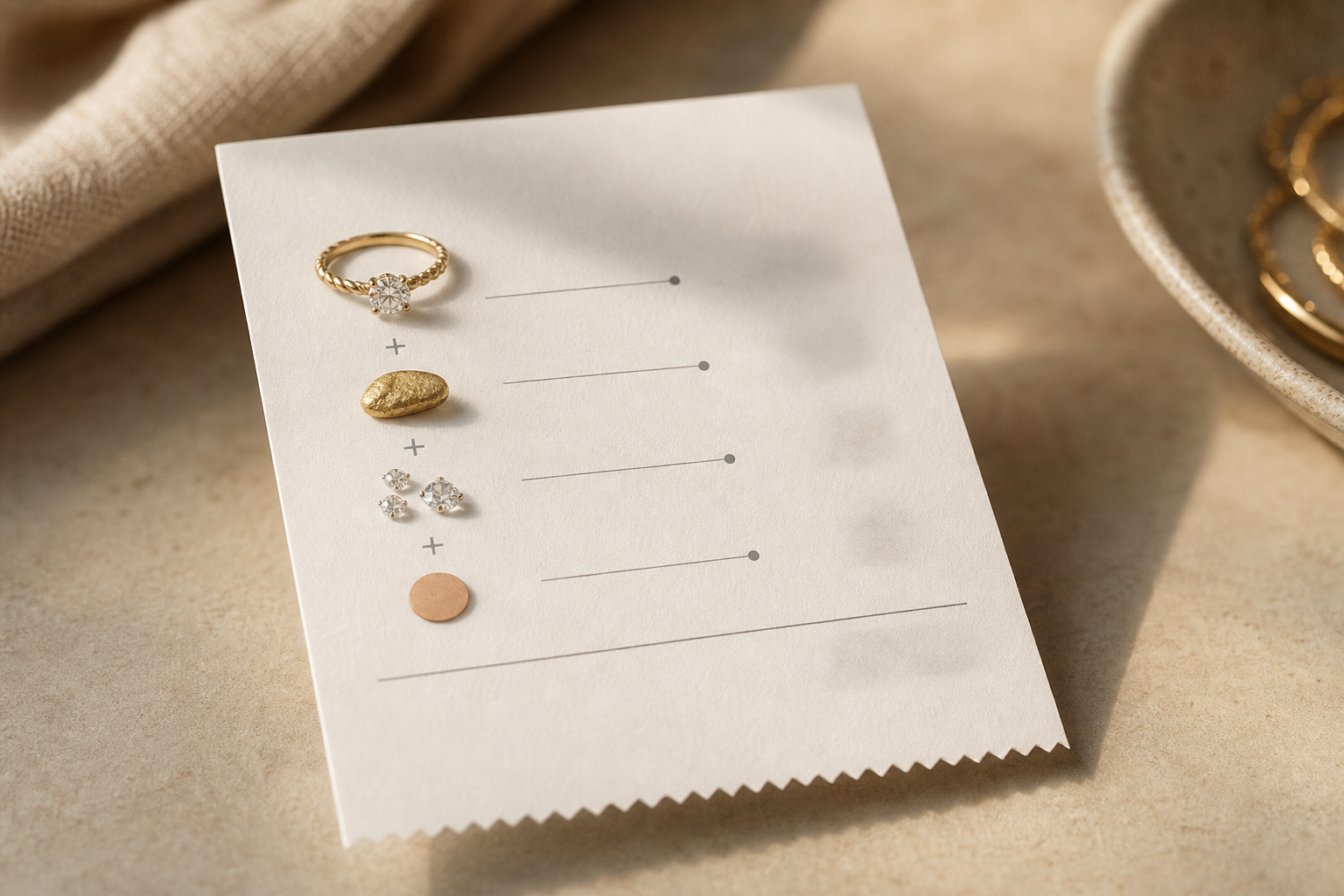
Example 2: solitaire ring with center diamond
- Center diamond: 0.
- Gold: 18K, net 3.
- Making: 3.
- Side stones: none
- Subtotal: ₹149,545
- GST: 3% on jewelry (₹4,486) + 5% on making (₹128) = ₹4,614
- Total estimate: ₹154,159 (illustrative; live rates may vary by day and market)
Keep a simple spreadsheet with columns for metal rate, weight, making, stone rates, and GST. Changing only the live rate or per-carat price lets you re-price any design in seconds.
Returns, exchanges, consults, and shipping
Returns and exchanges protect your upside. A strong policy gives you time and removes fear. A 365-day free insured return window beats the 30-day industry norm and suits first-time online buys.
A lifetime exchange policy and buy-back at the prevailing rate let you upgrade later without anxiety. In addition, ask for a live video consultation. A 10–20 minute call with a designer lets you see the actual piece, watch it move in light, and compare options.
It shrinks the sight-unseen risk. For high-value shipments, ask for full shipping insurance and a specialized carrier. International buyers should look for secure logistics to 30+ countries and written insurance coverage.
If you want to see design ideas paired with rupee figures, check the practical examples here: diamond rings. Seeing form and price together speeds up your decision.
Quick pre-checkout list:
- Confirm the lab report number on the seller’s page matches the stone shown on video.
- Ask for a screenshot of the BIS CARE HUID lookup before dispatch.
- Get return instructions in writing (labels, pickup, insurance, timelines).
- Save your invoice and any repair/servicing commitments for future use.
Book a free video consult →, we use in-house grading with clear disclosure. The goal is simple: a fair, verifiable standard where it matters most.
We encourage you to confirm the report online and, if possible, view the laser inscription on the girdle during your video consult. That way, the certificate connects to the exact stone you’re choosing.
Sample timeline for an insured return
- Day 0: Email request; receive prepaid label and pickup date.
- Day 1–3: Courier pickup with tamper-proof packaging and insurance note.
- Day 4–7: Quality check on return; confirmation email sent.
- Day 7–10: Refund processed to the original payment method.
Purity, hallmark, and HUID
For metal purity, all pieces are 100% BIS hallmarked in both gold and silver. Each item carries a unique 6-digit HUID you can verify on the BIS CARE app or BIS portal. Our listings state 22K & 18K options, so you can choose the balance of purity and strength that fits your daily wear.
If you’re gifting or building a trousseau, engraving and FSC-certified packaging are available. Your piece is traceable, responsibly packed, and future-ready.
“I checked the HUID in the BIS CARE app before the parcel even shipped. It matched instantly and set my mind at ease.” — A verified customer
Transparent pricing without guesswork
On pricing, we stick to a transparent structure: metal value at the live rate times net weight, plus making charges, plus stone charges, plus GST (3% on jewelry and 5% on making charges). Additionally, making charges are published clearly, not as a lump sum. That way you can compare us to anyone with math, not marketing.
Beyond the structure, you’ll see how different diamond grades move the price. For example, moving from H/VS2 to G/VS1 may lift the budget meaningfully, but you’ll see whether the visual difference is worth it on a live call.
To make side-by-side choices easier, consider this quick lens:
- Hold cut quality steady at Excellent; compare color and clarity changes in natural daylight.
- Ask to see the mm measurements on-screen; they reveal real face-up size.
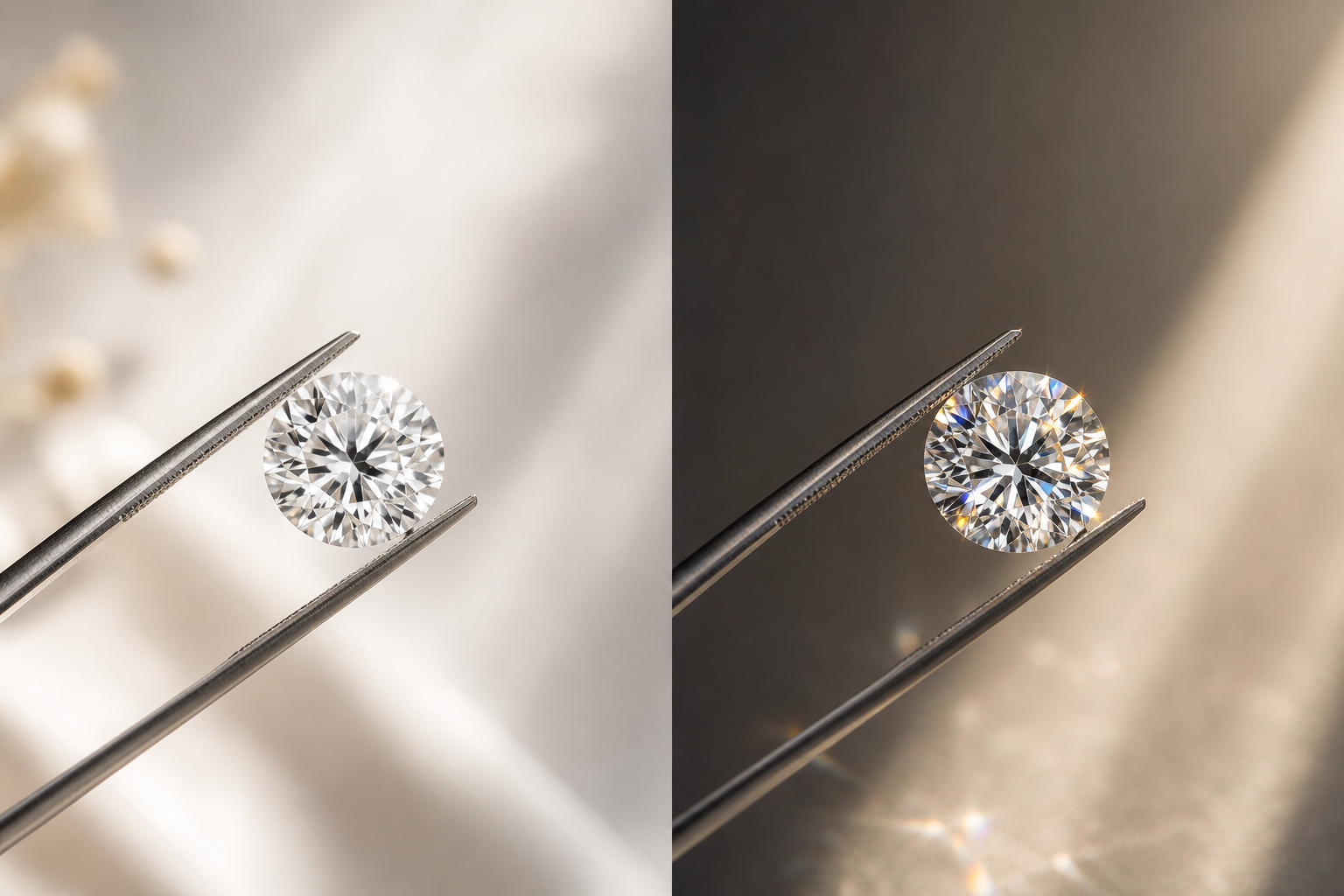
- Request short clips in soft light and direct light to gauge fire and brilliance.
Risk reversal and long-term confidence
On risk reversal, the policy includes 365-day free insured returns. You can try the piece in your light for a full year. There’s also a lifetime exchange policy and a buy-back guarantee at the prevailing rate, so your investment has a clear exit.
If purity ever tests below the standard, the commitment is to refund twice the difference, written and honored. That promise is on paper, not just chat.
“Ordered a diamond pendant for my mother’s 60th. It arrived beautifully packaged, with a certificate and a personal handwritten note.” — Ananya Iyer, Bengaluru
Personal design support before you buy
Support before you buy matters. You can book a live video consultation with a designer. On the call, the actual piece is shown and rotated under soft and direct light, and you’ll walk through alternatives for cut, color, and size.
If you want something unique, the custom design team creates a 3D mockup so you can approve proportions and stone layout before we craft anything. Ring sizing, chain lengths, and daily-wear durability can be discussed in the same session.
“I love that I can book a video consultation before buying. The designer walked me through three options over a call. Bought on the spot.” — Kavita Reddy, Hyderabad
Payment and fully insured logistics
Finally, on payment and delivery: COD is available for orders up to ₹50,000 if you prefer to pay on delivery. For larger orders and international shipments, Brinks handles logistics with full insurance to 30+ countries.
We craft with natural diamonds and ethically sourced gemstones, and lifetime free polishing and re-plating help keep your piece bright for years. Minor prong inspections and routine cleaning are free in-store by appointment.

[Explore Caratflow Designs Today →]
Security and packaging checklist on delivery
- Confirm tamper-evident seal is intact before opening.
- Unbox over a soft surface and record a brief video for your records.
- Locate the hallmark, karat stamp (750/916), and HUID tag.
- Verify HUID on BIS CARE; screenshot the result.
- Store the invoice, report, and screenshots together.
Side-by-side comparison: our standards vs common alternatives
| Feature | This retailer | Typical alternative |
|---|---|---|
| Diamond certification | IGI or GIA for natural diamonds above 0.18ct; in-house only for melee | In-house grading even for center stones |
| Metal hallmark | BIS hallmark with unique 6-digit HUID, verifiable on BIS CARE | Seller-declared purity, no external verification |
| Return window | 365-day free insured returns | 7–30 days, not insured |
| Pricing transparency | Clear breakdown: metal value + making + stone + GST | One lump-sum price, no line items |
| Pre-purchase consult | Live video call with a designer | Email only, no live viewing |
| Shipping | Brinks or equivalent, fully insured, 30+ countries | Standard courier, unclear insurance |
| After-sale care | Lifetime free polishing and re-plating; lifetime exchange | Paid servicing, limited exchange |
Unlike many large online retailers that rely on in-house grading or shorter return windows, this framework sets a higher bar. It centers your right to verify.
“The bridal set I bought for my wedding was breathtaking. Craftsmanship is top and the BIS hallmark gave me total peace of mind.” — Priya Sharma, Mumbai
Moreover, look for a buy-back guarantee at the prevailing rate. That policy makes future changes easier. Also, confirm a clear promise on metal purity, ideally a commitment to refund twice the difference if any gap appears in testing. These aren’t perks. They’re the guardrails that let you focus on design, not defense.
Natural vs lab-grown: quick perspective for first-time buyers
| Factor | Natural diamond (GIA/IGI) | Lab-grown diamond (GIA/IGI) |
|---|---|---|
| Price per carat | Higher | Lower (often 40–70% less) |
| Visual performance | Equivalent at the same cut/grade | Equivalent at the same cut/grade |
| Certification | Widely available | Widely available |
| Resale norms | More established | Emerging/variable |
| Ethics profile | Varies by source | Low-impact production improving; energy source matters |
| Best use case | Heirloom, tradition focus | Size-up for budget, fashion-forward |
Either path can be the best gia certified diamond choice for your goals—match the decision to your values, budget, and timeline.
Also Read!
Trust Signals That Matter: Certifications, Guarantees, and Verified Credentials
Real trust stacks, it doesn’t shout. We use a triple-layer approach: BIS Hallmarked metal, GIA or IGI certified diamonds, and FSC-certified packaging. The first two protect the piece. The third shows care for the planet your heirloom will live on.
How to verify HUID in minutes
HUID verification is your independent purity check.
- Locate the 6-digit HUID on your jewelry tag or invoice. 2) Open the BIS CARE app or go to the BIS portal at bis. gov.
in. 3) Enter the HUID and verify that the karatage (like 916 for 22K or 750 for 18K) and jeweler match your piece. 4) Save a screenshot for your records and store it with your invoice.
If purity ever falls short of the standard, we honor a commitment to refund twice the difference. That’s on paper, not just in chat.
For diamonds, you get IGI or GIA certification for natural stones above 0.18ct, and clear disclosure on melee grading. That dual verification. HUID for metal, lab report for the diamond, anchors your confidence.
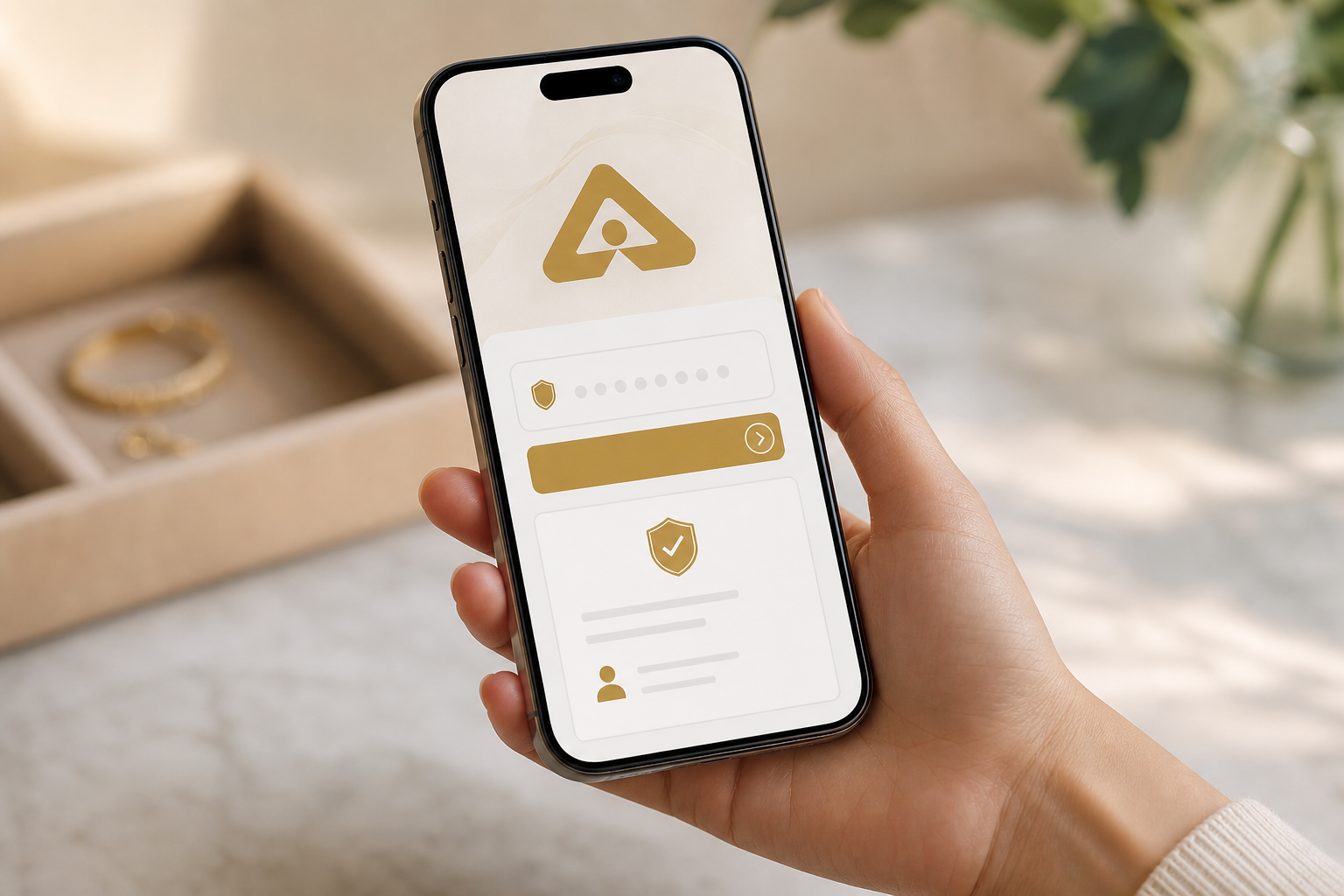
We ship internationally to 30+ countries via Brinks with full insurance. That means the piece is covered door to door. In addition, we work with natural diamonds and ethically sourced gemstones, and we keep care simple with lifetime free polishing and re-plating.
Ready to browse? Use filters by metal type, purity, price, and weight to narrow fast. You’ll also see curated designs across gold, silver, diamonds, platinum, gemstones, and kundan to spark ideas without overwhelm.
For background on India’s hallmarking standards, you can read the Bureau of Indian Standards overview on bis. gov. in once; it helps make sense of HUID and purity marks.
Extra context first-time buyers appreciate
- GIA reports include a plot of clarity features for stones above certain sizes; use it to understand where inclusions sit.
- “Eye-clean” is a viewing standard, not a lab grade. Ask to verify eye-clean status at 25–30 cm in bright, diffused light.
- Hearts & Arrows images can indicate precise symmetry in round brilliants; ask for them if you care about optical precision.
- For daily wear, 18K gold often balances strength and color better than 22K in stone-set pieces.
- Fancy shapes don’t carry a single “cut grade.” Evaluate length-to-width ratio, bow-tie, and symmetry; request videos from multiple angles.
- When choosing the best gia certified diamond for white metal settings, a G color often looks crisp without paying the D–F premium.
- If your skin tone is warm, an I–J color center stone in rose gold can look luxe while saving budget.
- Strong Blue fluorescence sometimes discounts price; confirm it adds a pleasant “glow” without cloudiness by checking a quick outdoor clip.
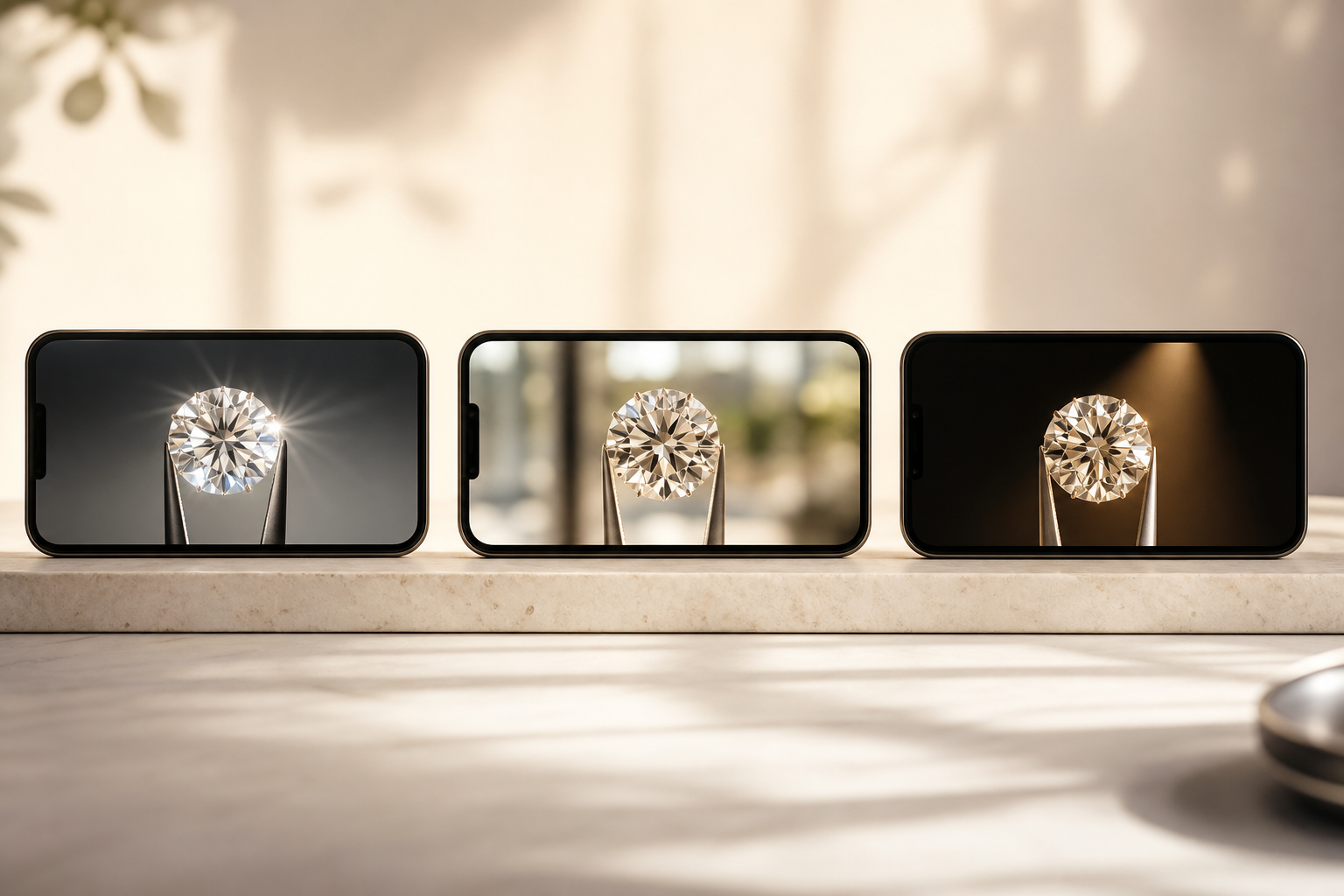
A quick case study: turning anxiety into clarity
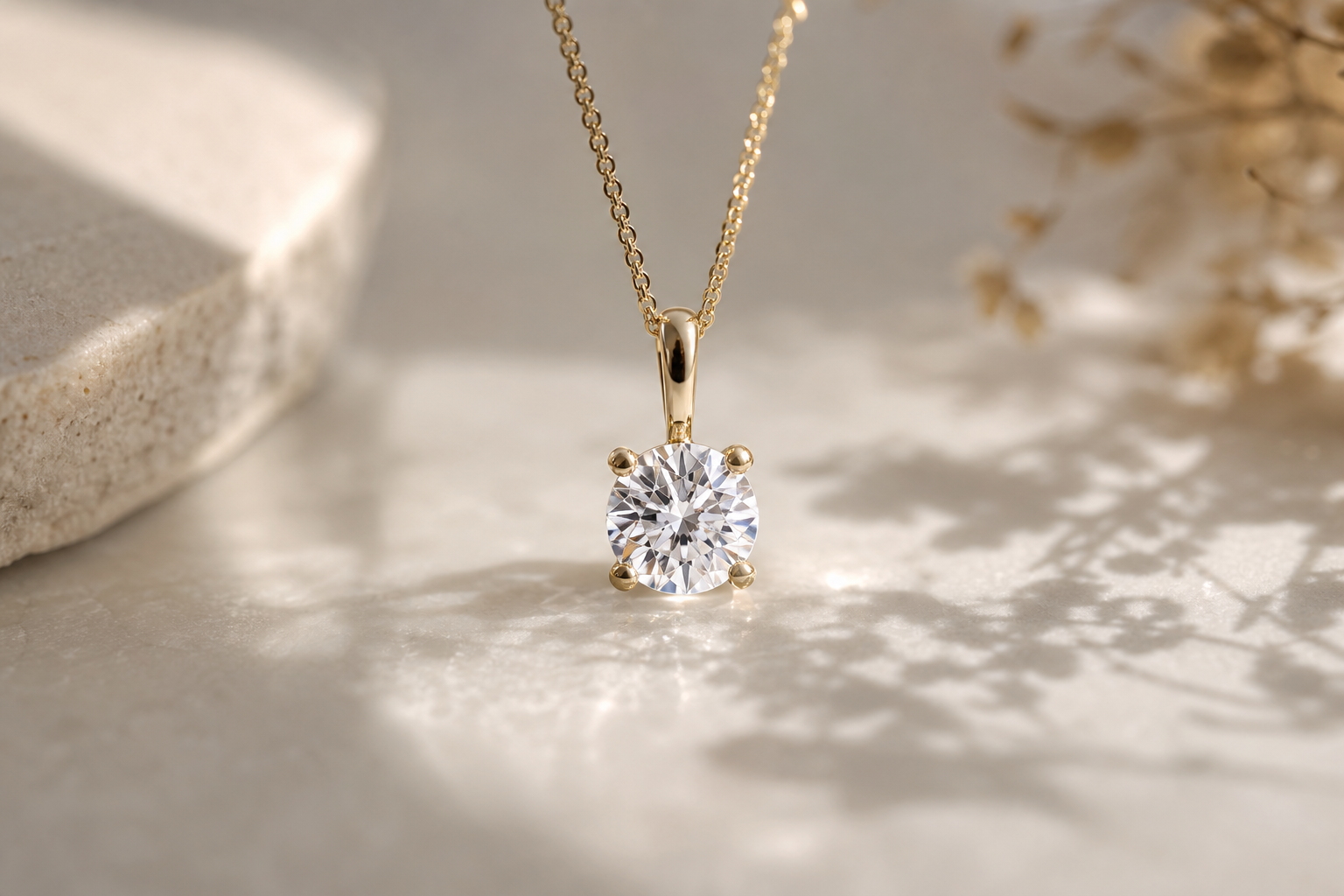
Meera wanted a classic solitaire pendant under a fixed budget. She felt lost comparing listings because everything looked “excellent” online.
- She short-listed a 0.70 ct round, Excellent cut, H color, VS2 clarity.
- The listing showed measurements of approximately 5.7 mm, in line with expectations for a 0.70 ct round.
- The retailer showed a price split: 18K gold at the live rate times net weight, transparent making charges, and stone charges with per-carat math.
- A short video consult let her compare the H color to a pricier G color. In her white gold setting, H looked perfectly white to her eye.
- On delivery, Meera verified the HUID on BIS CARE and saved a screenshot with her invoice.
- Three months later, she booked a free polish and prong check. The piece still looks new.
Her words: “I stopped guessing and started checking. That’s when I knew I’d made the right call.
Getting Started: Your Step-by-Step Guide to Buying GIA Certified Diamond Jewelry Online
You don’t need to rush. Follow these steps at your pace.
-
Set a comfortable budget. Total = Metal value (live rate × net weight) + Making charges + Stone charges + 3% GST on jewelry + 5% GST on making charges. Keep a small buffer for ring size tweaks or chain length changes if needed.
-
Narrow your shortlist with smart filters. Focus on metal type, purity (22K/18K), price, and weight so the designs you see already fit your plan.
-
Open the product’s certificate details. Note the lab (GIA or IGI) and report number, then verify on the lab’s website. Confirm 4Cs, fluorescence, and measurements match the listing.
-
Book a free video consultation with a designer. Ask them to rotate the piece in soft and direct light. Compare two or three diamond grades to see how color and clarity change the look and the price.
-
Explore custom design if you want unique proportions. A quick 3D mockup helps you approve setting height, prong style, and stone layout before crafting begins.
-
Choose how to pay with confidence. COD is available for orders up to ₹50,000 if that feels safer. For larger orders, use the secure gateway and store your invoice.
-
Verify BIS hallmarking on arrival. Use the BIS CARE app to match the 6-digit HUID and karatage to your piece and jeweler name. Take a photo of both the hallmark and the verification screen.
-
Know your safety net and care plan. You have 365-day free insured returns, lifetime exchange, and lifetime free polishing and re-plating. For price benchmarks while you browse, these real-world figures help: diamond rings.
Pro tips while you browse:
- Watch for “face-up” size in mm; a well-cut 0.90 ct round can look almost like a 1.00 ct and save budget.
- For rose gold, H–J color often appears pleasantly warm; for platinum, G–H reads crisp and white.
- If fluorescence is Strong, ask for a short outdoor video to ensure no milky haze under sunlight.
- Confirm the laser inscription location (usually the girdle) so you know how to spot it with a loupe later.
[Start Your Free Consult At Caratflow →] GIA (Gemological Institute of America) is known as the most stringent and globally recognized diamond grading lab. IGI (International Gemological Institute) is also reputable and widely used, especially in the Indian market. For a first-time buyer, either certification provides assurance of diamond quality and an independent way to verify grades. This retailer provides IGI or GIA certification for all natural diamonds above 0.18ct, while smaller melee diamonds receive in-house grading so you’re still informed.
For context on IGI’s history, see the summary on International Gemological Institute once; it clarifies why both labs are trusted.
Mini-glossary for quick confidence
- Melee: Very small accent diamonds, usually below ~0.18 ct each, used around a center stone or in pavé.
- Eye-clean: Inclusions not visible to the naked eye at ~25–30 cm under good lighting.
- HUID: Hallmark Unique Identification number issued by BIS for hallmarking verification.
- Hearts & Arrows: A pattern seen in precisely cut round brilliants, indicating strong symmetry and optical precision.
- Bow-tie: A dark band across the middle of certain fancy shapes (oval, pear, marquise) when cut proportions or angles cause light leakage.
- Faint/Medium/Strong Blue: Levels of fluorescence; assess impact with an outdoor video when labeled Strong.
- Face-up size: The dimensions you see from above, measured in millimeters; often more meaningful than carat alone.
Visual tests you can do at home
- Sunlight walk: View the diamond outdoors for 10–20 seconds; ensure no milky fog under direct UV.
- Diffused light check: Under a lampshade or softbox, confirm edge-to-edge brightness without dead zones.
- Tilt test: Rock the stone 15–45° and watch for consistent scintillation (on/off sparkle) across the table.
- Finger test: Place it on your finger and step back to 30 cm; verify it appears eye-clean and faces up to size.
Also Read!
Frequently Asked Questions
How can I verify that my diamond jewelry is genuinely GIA certified?
Each GIA-certified diamond has a unique report number printed on the card. Enter that number on GIA’s official site to confirm the stone’s details match your piece. Many GIA stones also carry a microscopic laser inscription of the report number on the girdle, ask to view it on video or at pickup.
For metal, BIS hallmarked jewelry includes a unique 6-digit HUID that you can verify via the BIS portal or BIS CARE app. This dual check, lab for the diamond, BIS for the metal, gives you independent proof.
What happens if I'm not satisfied with my GIA certified diamond jewelry after buying online?
You’re covered with 365-day free insured returns, which far exceeds the 30-day industry standard. Take your time, try the piece in different light, and decide with confidence. If your style shifts later, the lifetime exchange policy keeps the door open. There’s also a buy-back guarantee at the prevailing rate, so your money is never trapped in a piece you no longer wear.
How is the price of GIA certified diamond jewelry calculated online?
There’s a clear formula: Total = Metal value (live rate × net weight) + Making charges + Stone charges + 3% GST on jewelry + 5% GST on making charges. Metal value changes with the live rate (for example, 22K gold ₹6,673/g and 18K ₹5,464/g at 06:44 am). Transparent making charges mean you see the craft cost on its own line. This is better than a lump sum because you can compare sellers line by line.
Is it safe to pay for expensive diamond jewelry online?
Your caution is wise. COD is available for orders up to ₹50,000 so you can pay on delivery if that feels right. For higher-value orders, secure payment gateways are used and every shipment is fully insured. International shipping is handled via Brinks to 30+ countries with the same insurance, so distance doesn’t add risk.
Can I see the jewelry before buying if I'm purchasing online for the first time?
Yes. You can book a live video consultation with a designer to see the actual piece and ask questions about the diamond and certificate. You can also compare options for cut, color, or setting style in real time. As Kavita Reddy shared, “The designer walked me through three options over a call,” which made choosing simple for a first-time online order.
What if the gold purity doesn't match what was advertised?
You’re protected by a written purity promise. If the gold purity falls below the stated standard, the retailer commits to refunding twice the difference. Every piece is 100% BIS hallmarked and carries a unique HUID number you can verify independently on the BIS CARE app. This combo makes false purity claims extremely unlikely and easy to challenge.
Do I need to worry about diamond fluorescence?
Not necessarily. Fluorescence is a natural reaction to UV light. In most cases, None to Medium fluorescence has no negative effect and can even help slightly warmer colors appear whiter outdoors. If fluorescence is Strong, inspect the stone in sunlight or ask for a video to ensure there’s no haziness.
Which shapes offer the best value for a first-time buyer?
Rounds are the most standardized and easiest to compare by cut grade. Fancy shapes like oval, cushion, and pear can offer more face-up size per carat and great value, but they don’t have a single “Excellent” cut grade. For non-rounds, review length-to-width ratio, bow-tie effect (for ovals and pears), and overall symmetry.
Are lab-grown diamonds also GIA certified, and should I consider them?
GIA now grades lab-grown diamonds, and IGI does as well. Lab-grown can offer larger sizes for the same budget. If your priority is maximum visual impact today, lab-grown may be compelling. If you value long-term tradition and typical resale norms, natural diamonds with GIA or IGI reports remain the classic route for a best gia certified diamond choice.
How do I quickly read a GIA report without getting overwhelmed?
Start with the 4Cs line: cut, color, clarity, carat. Then check proportions (for rounds, table and depth) and polish/symmetry. Review fluorescence and the measurements in millimeters; they tell you face-up size. Finally, confirm the report number matches the laser inscription on the girdle when possible.
What documents should be in the box when my order arrives?
Expect the IGI or GIA certificate (for qualifying stones), the invoice with line-item pricing, a hallmark tag with the 6-digit HUID, and any warranty or after-care leaflets. Keep a copy of your BIS CARE verification screenshot with the invoice. Together they form a complete record for your piece.
How can I make sure my ring or pendant holds up for daily wear?
Choose 18K for stone-set daily pieces, and ask for low-profile settings or protective bezels if you’re very active. Schedule prong checks once or twice a year and take advantage of lifetime free cleaning/polishing. Simple habits, like removing jewelry during intense workouts, go a long way.
Can I upgrade my diamond later without starting from scratch?
Yes. A lifetime exchange policy lets you trade in your current piece and apply the value toward a new one. Pair this with buy-back at the prevailing rate and you’ll have a clear, flexible path to a larger or higher-grade diamond in the future.
What’s the difference between exchange and buy-back policies?
Exchange credits your piece toward another item from the same retailer, keeping your value in the ecosystem. Buy-back provides cash at the prevailing rate based on metal and diamond values per the policy. Both are useful, and the right choice depends on whether you’re aiming to upgrade or exit.
How do I measure ring size accurately at home?
Use a printable ring sizer or measure an existing ring’s inner diameter in millimeters and compare with a size chart. During a live consult, ask for guidance and confirm the final size before production. When in doubt, choose slightly larger for wide bands or plan a free resize if included.
Should I get an appraisal for insurance in addition to the GIA report?
A GIA or IGI report verifies the diamond’s grades; an appraisal assigns a value for insurance. Many insurers require an appraisal for high-value items. Request one when you order so the policy is ready on arrival, and keep the invoice, report, and appraisal together.
Will I have to pay customs or duties for international shipments?
Possibly. Duties and taxes depend on your country. A reputable seller will ship DDP (Delivered Duty Paid) where available or guide you on estimated fees. Ensure the parcel is fully insured door to door, and keep all documents handy for customs clearance.
How can I compare two diamonds with the same grades?
Look at actual videos under different lights, check the measurements in mm (not just carat), compare table/depth and crown/pavilion angles for rounds, and verify eye-clean status at 25–30 cm. If both are GIA or IGI certified, subtle differences in cut precision and optical symmetry can still affect sparkle.
Can the best gia certified diamond still be affordable on a tighter budget?
Absolutely. Optimize cut first, then target G–H color and VS2–SI1 clarity for balance. Consider 0.80–0.95 ct ranges where prices often step down compared to the next whole-carat mark. Strong-but-clean Blue fluorescence can further improve value without hurting appearance.
What about care and maintenance over the years?
Routine maintenance keeps jewelry secure and brilliant. Plan a prong inspection every 6–12 months, clean gently with warm soapy water and a soft brush, and re-plate white gold rhodium as needed. Many retailers, including this one, offer lifetime free polishing and re-plating, so use the benefits.
How do I spot misleading listings?
Watch for vague “certificate available” claims without a report number, inconsistent carat/measurement details, heavy use of filters in product videos, and missing hallmark or HUID information. Always validate the report on the lab site and the HUID on BIS CARE, and insist on a clear price breakdown.
Can I insure my jewelry after purchase, and what do I need?
Yes. Most insurers offer personal articles policies. You’ll typically need an invoice, the GIA/IGI report, an appraisal (for higher-value items), and clear photos. Keep digital copies in cloud storage, and update the appraisal every 3–5 years to reflect market changes.
How do I maintain sparkle between professional cleanings?
At home, soak the piece in warm water with a drop of mild dish soap for 10–15 minutes, then use a soft toothbrush to gently clean under the prongs and behind the stone. Rinse with lukewarm water and pat dry with a lint-free cloth. Avoid harsh chemicals and ultrasonic cleaners if your diamond has feather inclusions near the girdle.
Is platinum better than white gold for a first-time buyer?
Platinum is denser and hypoallergenic, with a naturally white color that doesn’t require rhodium plating. However, it’s pricier and shows patina over time. 18K white gold is lighter, more budget-friendly, and can look equally bright with periodic re-plating. Choose based on budget, metal sensitivity, and maintenance preference.
Before You Checkout: Key Takeaways for 2026
You’re not overthinking this. You’re making a careful, smart call. In 2026, the best path to the best gia certified diamond is simple checks, not blind trust.
Choose a GIA or IGI graded center diamond above ~0.18ct and verify the report number yourself on the lab’s site. Confirm BIS hallmarking and match the 6-digit HUID in the BIS CARE app. Read the price breakdown: metal value at the live rate times net weight, plus making, stones, and GST.
Compared to alternatives that hide line items or limit returns, a 365-day free insured return window, lifetime exchange, and buy-back at the prevailing rate remove pressure from your choice. Full insurance via Brinks for international orders keeps your piece safe the whole way. Ethically sourced gemstones and FSC-certified packaging show care beyond the sale.
If you want a fast way to link design and budget, study real numbers beside real pieces here: diamond rings. Then book a short video call, see your favorite sparkle in live light, and choose with calm.
Your caution is an asset. Your plan is clear. Your jewelry should be, too.

Printable pre-purchase checklist
- Verify the lab report number on GIA/IGI and save the PDF.
- Confirm the diamond’s mm measurements match the listing.
- Ask for a daylight and a soft-light video of your exact stone.
- Check BIS hallmark and run HUID verification on BIS CARE.
- Review price line items and cross-check live metal rates.
- Clarify return window, pickup process, and insurance in writing.
- Book a sizing consult; confirm ring size or chain length.
- Store invoice, report, HUID screenshot, and warranty together.
“Measure twice, pay once. The best gia certified diamond choice comes from simple, verifiable steps—not from rushing or guessing.”