**Explore Caratflow tools today →
Approving a wedding set you’ve never held is a leap of faith. For NRIs in 2026, custom jewelry design with 3d rendering removes that fear by letting you “see” your exact piece before it’s made. Here’s the answer in one line: a 3D preview (CAD render) is the digital stand-in for holding the ring, bangle, or mangalsutra in your hand, before you pay for final production.
As someone who has commissioned heirloom pieces from India while living abroad, I’ll share the process I use, the checks that protect your money, and the small details that make a big difference.
You’ll also find concrete tools, a 7-step plan, and an action list you can finish this week.
For context, the Bureau of Indian Standards regulates hallmarking in India; read more about its role on the Bureau of Indian Standards. And to ground your price math later, remember this snapshot of live rates: “22K Gold ₹6,673/g, 18K Gold ₹5,464/g, Silver ₹89/g” (Live Rates as of 06:44 am).
Those numbers change, but the pricing formula you’ll use does not.
What Is 3D Jewelry Preview and Why Does It Matter for NRIs?
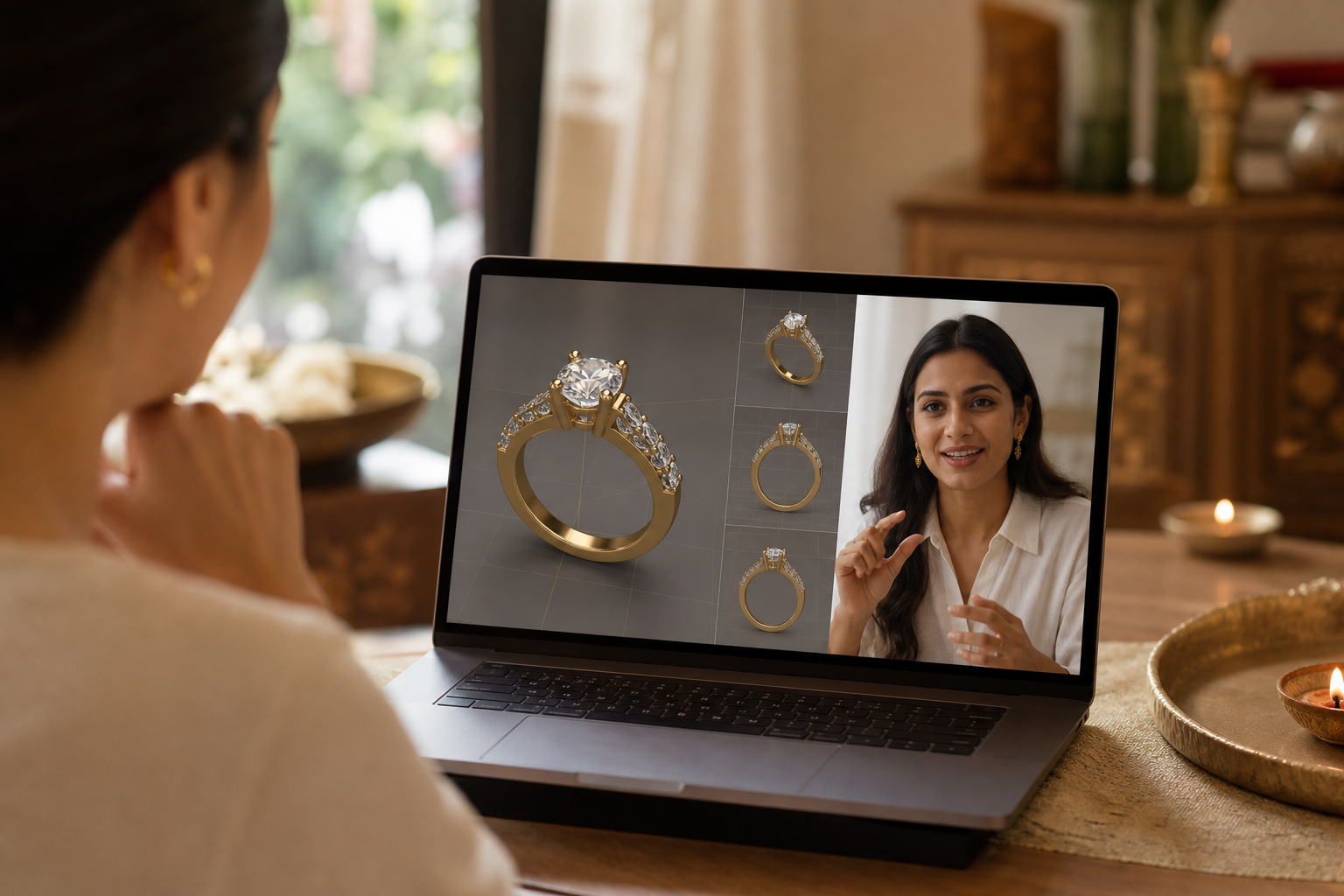
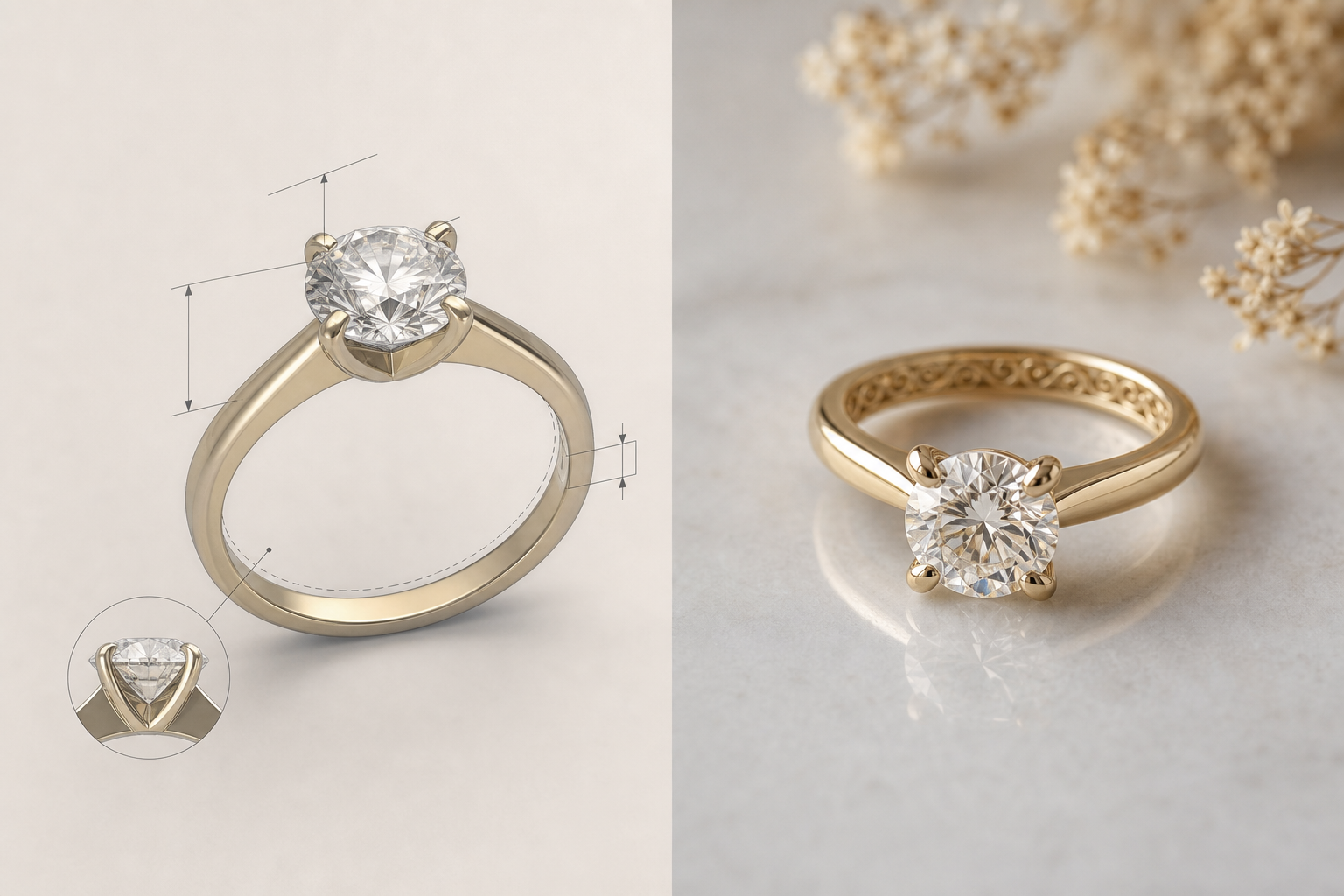
When you’re thousands of miles away, a 3D jewelry preview is your safety net. A designer builds a detailed CAD model, then renders life-like images that show exact proportions, stone layout, prong shape, engraving fonts, and even metal finish (mirror polish, matte, sandblast).
In short, you see what you’ll get, before a single gram of gold is cast.
Beyond still images, today’s previews include 360-degree rotations and short videos. During a live call, the designer can screen-share the model, zoom into a claw, and flip from top to side view in seconds.
Five years ago, you needed two or three store visits to get this level of clarity; now you can do it over a weekend while sitting comfortably in your home.
Live reviews from afar
For NRIs, that matters for three reasons. First, you avoid “surprise bulk” or under-built pieces.
Second, you cut down on rework and extra shipping, which adds both cost and stress.
Third, you gain confidence. You’re not wiring money based on a sketch. You’re approving a digital twin that shows how the piece hugs your finger, wrist, or neck.
Moreover, renders help you compare tiny details that shape daily wear. Will cathedral shoulders snag sweaters? Are the prongs low enough for an active routine? Is the meenakari panel deep enough to stand out?
You’ll spot mismatches now, not after production.
“I love that I can book a video consultation before buying. The designer walked me through three options over a call. Bought on the spot.” — Kavita Reddy, Hyderabad
What a good render includes
- True-to-scale dimensions (millimeters) with callouts
- Close-ups of prongs, bezels, and channel walls
- Side and gallery views for airflow and comfort
- Engraving placement with font previews
- Metal finish samples under neutral light
In practice, look for a jeweler that offers a live consultation with a designer before purchase, plus video consultation options across time zones.
That way you can resolve questions in real time and request tweaks on the call.
Also Read!
Best Custom Jewelry Design with 3D Preview for NRIs in 2026
How to Buy Indian Jewelry Online with International Shipping for Celebration Gifts
Step-by-Step: How to Commission Custom Jewelry from India as an NRI
You don’t need to guess your way through this. Use this seven-step path I share with friends who are planning weddings, milestone gifts, or heirloom refreshes.
The 7-step method
Plan, Materials, and Stones (Steps 1–3)
- Define your design intent
Gather 10–15 reference images. Save posts from Pinterest or Instagram, and scan family albums for an heirloom you want to echo.
Note what you like: stone shape, setting style (prong, bezel, pave), band width, and motifs (temple, meenakari, kundan, polki). Label each image with “Love”, “Maybe”, or “No” so your designer can read your taste fast.
- Choose your metal and purity
- 22K (916): rich yellow, perfect for traditional Indian designs, but softer for prong-heavy diamond work. – 18K (750): stronger and ideal for diamond-set and daily wear pieces. – 14K (585): most durable and budget-friendly for complex settings.
As an NRI, insist on BIS hallmarked metal. Check the unique six-digit HUID on the BIS CARE app to verify purity independently. Keep a screenshot of the match for your records.
- Select your stones
For natural diamonds, IGI or GIA certificates add third‑party assurance. Certification above 0.18 ct is a clean threshold: “IGI or GIA certification for natural diamonds above 0.18ct.
For melee (small diamonds), many jewelers grade in house, ask to see their grading notes. If you prefer gemstones, ask for ethically sourced material and the origin (e.g., Sri Lankan sapphire, Zambian emerald). Decide now whether you want lab-grown or natural diamonds, and keep that choice consistent across the design.
Review, Make, and Ship (Steps 4–7)
- Book a video consultation
Most reputable jewelers offer video consultations tailored to your time zone. Share your mood board ahead of time.
Prepare three priorities (e.g., “low profile ring,” “engraving dad’s initials,” “22K look”). Bring a budget range and a timeline, especially for wedding dates. A live designer consult before purchase helps you leave the call with a clear next step.
- Review the 3D mockup
Ask for 360-degree views and a side-by-side on a scale reference, like a ruler, coin, or virtual hand.
- Proportions versus your finger or wrist size
- Setting security: prong thickness, seat depth
- Visibility: do prongs cover the stone’s corners?
- Engraving: legibility at real-world size
Request changes now. It’s normal to go through two iterations. Approve only when the render matches your mental picture.
-
Approve and track production
Custom work usually runs 2–4 weeks from approval. Ask for in‑progress photos: wax model, casting, initial stone setting, and final polish. These keep you calm and create a memory trail you can share with family. -
Understand international shipping
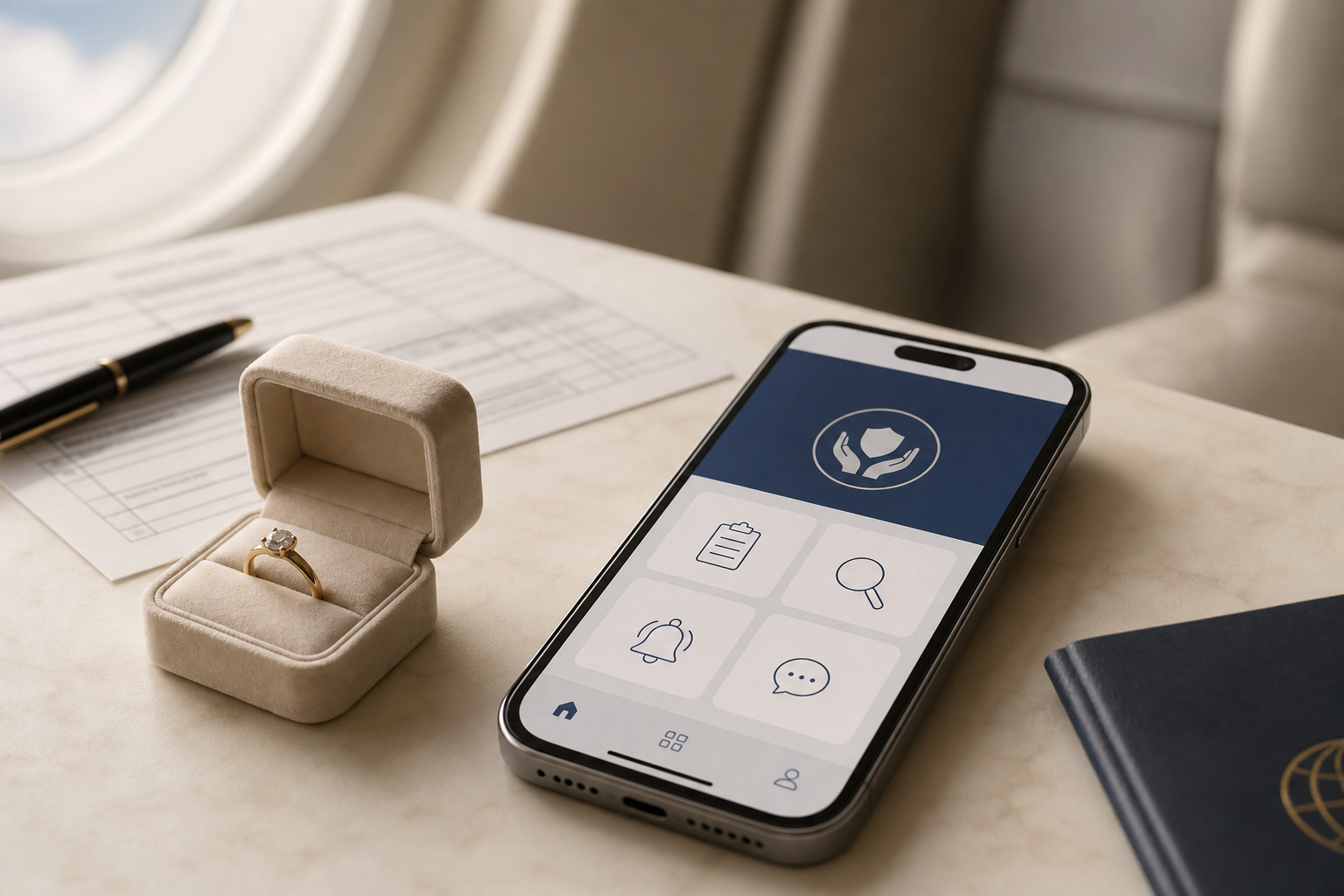
High‑value jewelry ships insured via specialized carriers such as Brinks. Confirm your jeweler ships to your country and provides end‑to‑end insurance. Ask about customs and import duties. The US, UK, UAE, Canada, Australia, and Singapore each have their own thresholds. Some allow personal-use exemptions below certain values, check your authority’s site before you order.
Furthermore, get pricing clarity up front. Price is calculated as: Total = Metal value (live rate x net weight) + Making charges + Stone charges + 3% GST on jewelry + 5% GST on making charges. Ask for transparent making charges in writing.
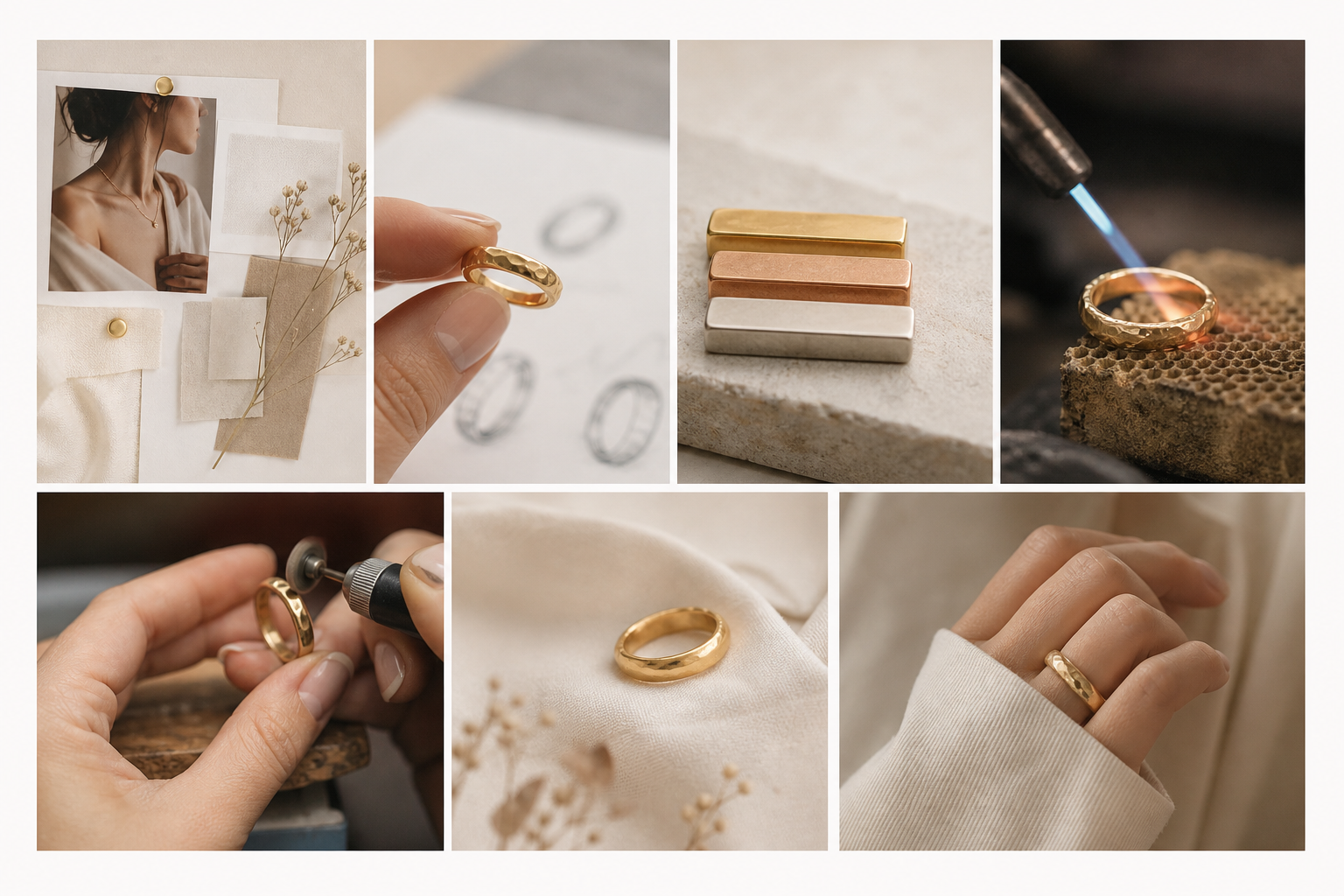 , stone selection with IGI/GIA label, video call with designer, 3D render on screen with 360 icon, workshop production photos, Brinks-insured shipping to NRI destinations)
**Book a free Caratflow consult today →
5 Costly Mistakes NRIs Make When Ordering Custom Jewelry from India
Skipping small checks can turn a dream piece into a headache. I’ve made a few of these; you don’t have to.
-
Skipping hallmark verification
Don’t trust a stamp you can’t verify. Use the BIS CARE app to check the six‑digit HUID on your invoice against the piece. Save the verification result. If numbers don’t match, stop the order. -
Ignoring time zone logistics
Late‑night calls lead to rushed approvals. Book during a clear overlap. Ask for the session to be recorded so you can replay prong and proportion notes. Then confirm decisions by email. -
Approving the 3D render without size context
A ring that looks perfect on a white background can feel bulky on your hand. Always review the render next to a ruler or on a virtual hand model. Ask for exact band width and head height in millimeters.
-
Not understanding import duties
A surprise customs bill can sour a great design. Look up jewelry duty rates and GST/VAT rules on your country’s customs site before you pay. Some places allow personal-use exemptions below defined limits, knowing the threshold can save real money. -
Choosing a jeweler without a safety net
Custom is a commitment. Shortlist only those with clear policies: insured returns (some offer 365‑day free insured returns), a lifetime exchange policy, and a buy‑back guarantee at the prevailing rate. If a brand commits to refund twice the difference if purity is below standard, that’s an extra layer of confidence you can point to in writing.
A quick pre-approval checklist
- Verify BIS HUID via the BIS CARE app
- Confirm IGI or GIA certificates for diamonds ≥ 0.
- Get a 360° render plus scale reference
- Align on production timeline and in-progress photos
- Confirm Brinks‑level insured shipping and duties
Also Read!
Best Insured International Indian Jewelry Shipping for Celebration Gifts in 2026
NRI’s Guide to Buying BIS Hallmarked Gold Jewelry Online from India
Tools and Resources for NRIs Designing Custom Jewelry Remotely
You can set yourself up with the same toolkit designers use. These resources make you faster and keep you safe.
Design inspiration
- Pinterest boards and Instagram hashtags: #indianjewelrydesign, #customjewelry, #bridaljewelry
- Digital archives of temple, kundan, polki, and meenakari styles—save motifs you want to echo
- Two deep dives worth reading: Best Custom Jewelry Design with 3D Preview for Jewelry Gifts in 2026
Verification tools
- BIS CARE app for hallmark checks and HUID verification
- GIA Report Check and IGI report portals for diamond certificates (search by report number)
- Keep PDFs of every certificate in your order folder
Pricing awareness
- Track live gold rates via the India Bullion and Jewellers Association or international trackers (note karat vs fineness)
- Use the fixed formula: Metal value (live rate × net weight) + Making charges + Stone charges + 3% GST on jewelry + 5% GST on making charges
- Ask for transparent making charges broken out by process (casting, handwork, stone setting)
Import duty calculators
- Check your government customs authority site for jewelry-specific duty rates and thresholds
- Screenshot the rule and keep it with your invoice so there are no surprises at delivery
CAD and design platforms
- RhinoGold and MatrixGold are popular among freelance CAD designers if you want to commission the model first and then have a jeweler manufacture it
- Ask for export files
Several Indian jewelers now support NRIs with custom jewelry design with 3d rendering, video consultation, and international shipping to 30+ countries via Brinks, fully insured. Tools like Caratflow combine BIS hallmarked metal, IGI & GIA certified diamonds, and transparent making charges into a single brief you can review on a call.
Still, verify every certificate yourself, no matter who you choose.
Key Takeaways
- A 3D preview is your “hold it in hand” moment before production, with 360° views and exact millimeter sizes.
- Protect yourself with BIS HUID checks, IGI/GIA certificates above 0.18 ct, and clear return/exchange/buy‑back policies.
- Price math is fixed: Metal value at the live rate × net weight + making + stones + 3% GST on jewelry + 5% GST on making.
- Use video consultations, recorded calls, and in‑progress photos to reduce risk and stress across time zones.
- Insured shipping via Brinks and a duty check on your country’s customs site prevent last‑mile surprises.
What to Do This Week: Your Custom Jewelry Action Plan
- Day 1: Create a mood board. Gather 10–15 images. Tag what you like, stone shapes, setting style, band width, metal color. Note “must‑have” vs “nice‑to‑have” so you can trade off later.
- Day 2: Research metals and stones. Pick 22K, 18K, or 14K based on wear and style. Decide lab‑grown or natural diamonds. Learn which certificates matter to you: BIS for metal; IGI or GIA for stones ≥ 0.18 ct.
- Day 3: Shortlist 2–3 jewelers. Look for 3D mockups, video consultation availability, BIS hallmarked claims with verifiable HUID, insured international shipping, and transparent making charges. Read return, lifetime exchange, and buy‑back policies.
- Day 4: Book your first video consultation. Share your mood board, budget range, and timeline. Ask for a live render review on the call and confirm follow-ups by email. Request recording access.
- Day 5: Review and compare. Compare clarity of communication, how well they “got” your design, how transparent the price breakdown felt, and the policies you’d rely on if the piece needs changes. Remember: with a 3D preview, you never need to commit until you’ve seen exactly what you’re getting.
**Get started with Caratflow today →
Finally, breathe. You’re designing a piece that ties places and people together. With custom jewelry design with 3d rendering, you keep your cultural roots in the details, stones set just right, a tiny engraving for your parents, and a finish that glows on the day it matters.