
To buy the right tennis necklace in 2026, follow this complete guide tennis necklaces: choose your stone (natural, lab‑grown, or gemstone), pick 18K/14K/platinum, test 16/18/20‑inch lengths, and verify IGI/GIA plus BIS HUID before you pay. Then compare line‑item quotes for metal, making charges, stones, and taxes to match your budget and lifestyle.
Visit Caratflow for certified pieces →
Gold prices move, but good choices last. Live rates show 18K gold at ₹5,464/g and 22K at ₹6,673/g in 2026, so smart planning matters before you buy. You’ll learn what it is, how to judge quality, what length and setting suit you, and how to shop with confidence.
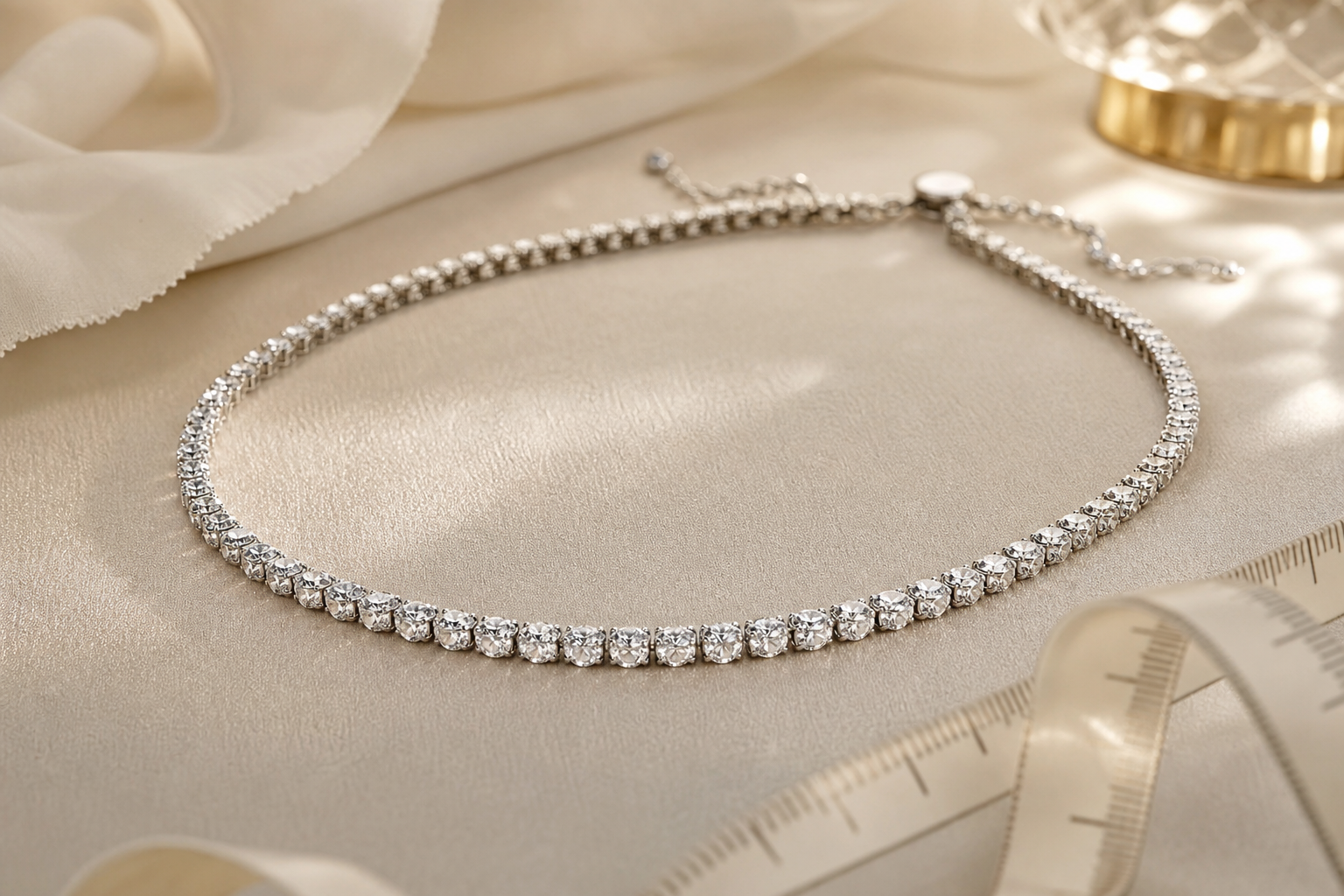
A tennis necklace is a continuous line of individually set diamonds or gemstones that wraps the neck in one unbroken sparkle. It’s loved for clean symmetry, day‑to‑night ease, and heirloom appeal. You’ll see why it endures, and you’ll leave with a step‑by‑step plan you can act on this week.
What Is a Tennis Necklace and Why Is It So Popular?
A tennis necklace is a strand of matched diamonds or gemstones, each set on its own, linked to form a fluid line. Because every stone gets its own seat and light, the look is crisp and bright. The style’s modern fame traces to the 1987 US Open, when Chris Evert’s line bracelet snapped mid‑match. She paused play to find it, and the “tennis” name stuck. That story spread from wrist to neck, and the line‑set silhouette became a staple for both.
More than a trend, it’s a uniform for shine. You can wear it with a T‑shirt at brunch or a sari at a wedding. It layers with a pendant, yet stands alone with a deep neckline. In 2026, the simplicity still feels fresh, which is rare in fine jewelry.
Versatility, value, and history
Importantly, a well‑made line necklace is durable when the links and clasp are strong. In addition, matched stones keep value better than mixed batches. If your diamonds are IGI or GIA certified above 0.18 ct and the metal is BIS hallmarked, you have objective proof of what you own. That adds peace of mind today and options later, like trade‑ins or buy‑backs.
Furthermore, history gives the piece cultural weight. You get a style with a clear origin you can point to, and a form that flatters almost every face shape and neckline. For the full backstory from the match that coined the term, see the Tennis bracelet entry on Wikipedia.
- Everyday to gala: one necklace fits both
- Proof of quality: IGI/GIA reports and BIS hallmark
- Long life: repairable links and secure clasps help it last
How to Choose the Right Tennis Necklace: A Step-by-Step Framework
Buying feels less hard when you break it into parts. Use this framework to make clear, confident calls, one step at a time.
Step 1: Pick your stone
First, choose between natural diamond, lab‑grown diamond, or colored gemstones. Natural diamonds have long resale and history. Lab‑grown unlock larger looks for the same budget. Gemstones (like sapphire, ruby, or emerald) add color and lower cost per carat. Moreover, ask that natural diamonds above 0.18 ct come with IGI or GIA reports, and that melee is graded in‑house to a stated standard.
Step 2: Choose your metal
Second, decide on 18K, 14K, or platinum. 18K offers rich color with enough strength for daily wear. 14K is tougher and more budget‑friendly, though a bit less warm in hue.
Platinum is hypoallergenic and dense, so settings feel secure, with a cooler tone. For yellow lovers, 22K is prized in parts of Asia; however, for stone security in prong work, 18K is a sweet spot. Ensure your piece is BIS hallmarked for purity and carries a unique 6‑digit HUID.
Step 3: Decide carat total weight (ctw)
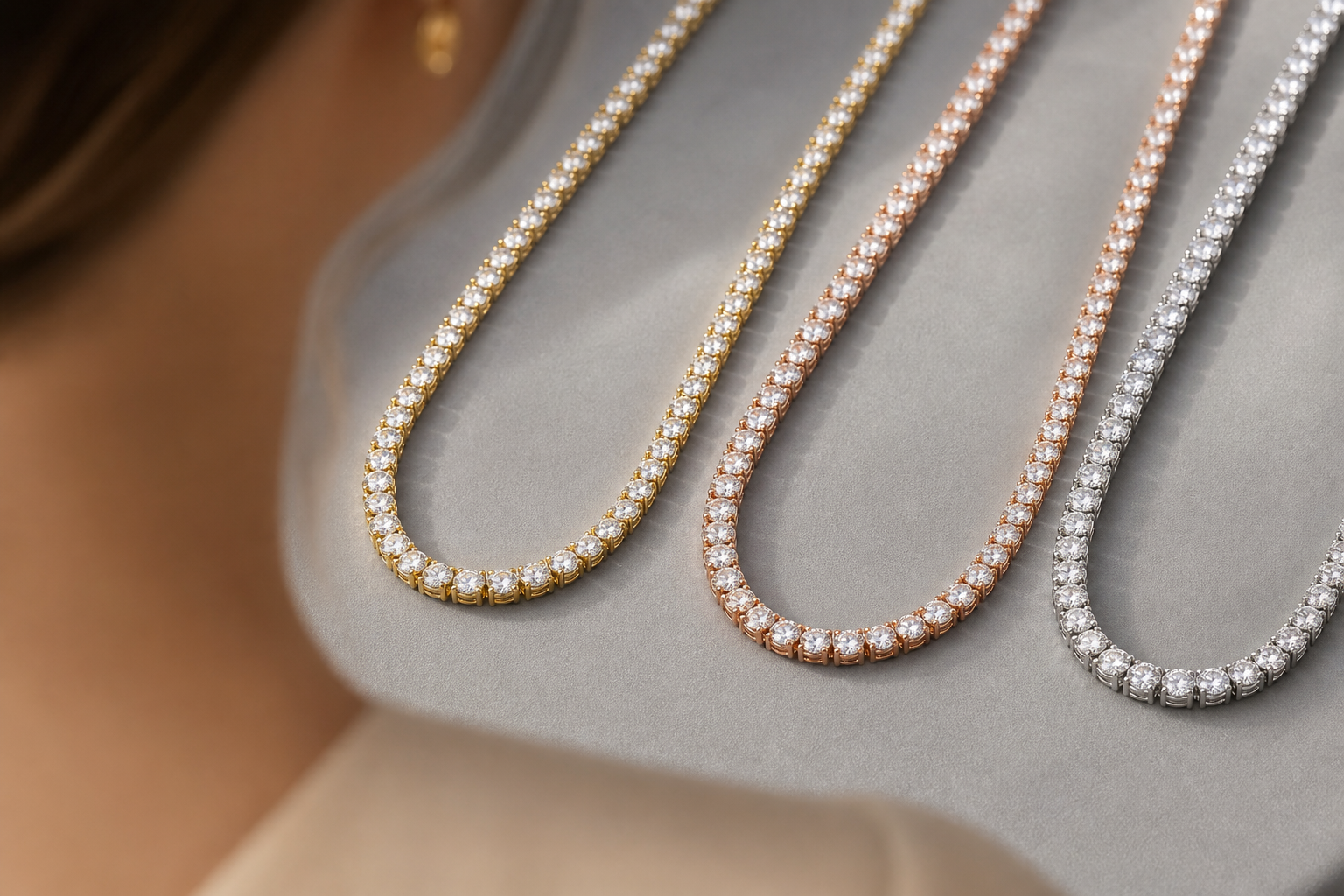
Third, pick a total weight that matches your lifestyle and frame. A 3–5 ctw strand reads light and easy. A 5–8 ctw strand feels luxe by day and classic by night. Above 10 ctw, you’re in red‑carpet territory. Balance total weight with quality grades; bright, well‑cut stones can outshine heavier but duller sets.
Dial in length, settings, and verification
Step 4: Select length
Fourth, try 16", 18", and 20" on your neck, not your table. A 16" sits high and layers well. An 18" lands near the collarbone on most and is the most chosen. A 20" drapes lower, great for broader shoulders or higher necklines. Therefore, measure with a soft tape and match to the clothes you wear most.
Step 5: Evaluate setting type
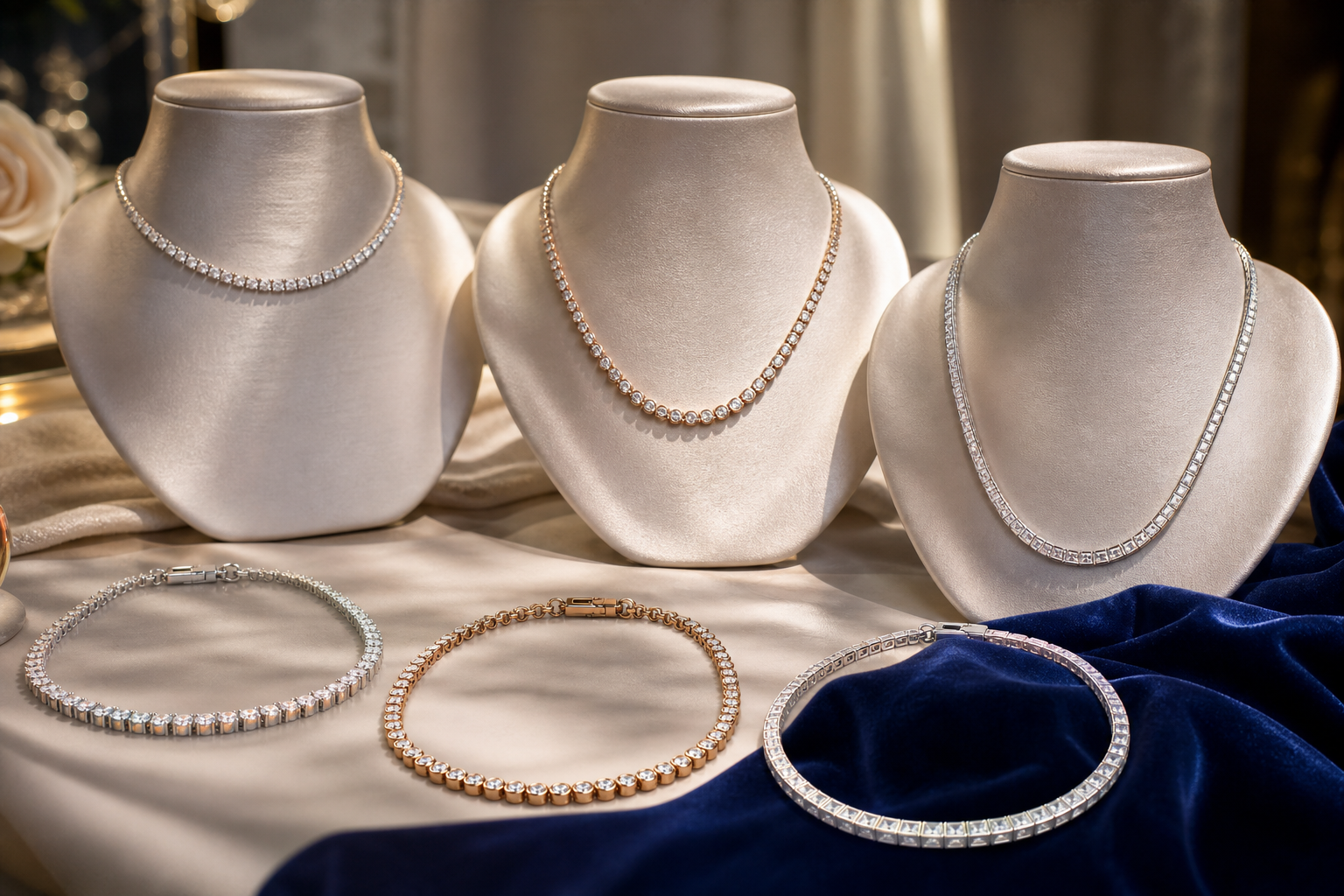
Fifth, choose how stones are held:
- Prong: maximum light and sparkle; classic and airy
- Bezel: a metal rim for sleek lines and strong protection
- Channel: streamlined look with stones nestled between metal walls
Specifically, run a fingernail along the line. It should glide without snagging. Check that prongs are even and that bezels have no gaps.
Step 6: Verify certification
Sixth, confirm paperwork. Ask for IGI or GIA certificates for natural diamonds ≥0.18 ct. Match report numbers to the stones. Also, confirm BIS hallmarking and the piece’s HUID in your invoice. You can verify hallmark purity via the BIS hallmarking portal or through the BIS CARE app.
Step 7: Set your budget range
Seventh, map your range to real choices. Entry looks use smaller, well‑matched stones under ~5 ctw. Mid‑tier builds around 5–10 ctw with strong cut and near‑colorless grades.
Statement pieces go 10+ ctw with high color and clarity. In addition, remember the formula that drives totals: metal value (live rate × net weight) + making charges + stone charges + taxes (3% GST on jewelry + 5% GST on making charges). Transparent making charges help you compare apples to apples.
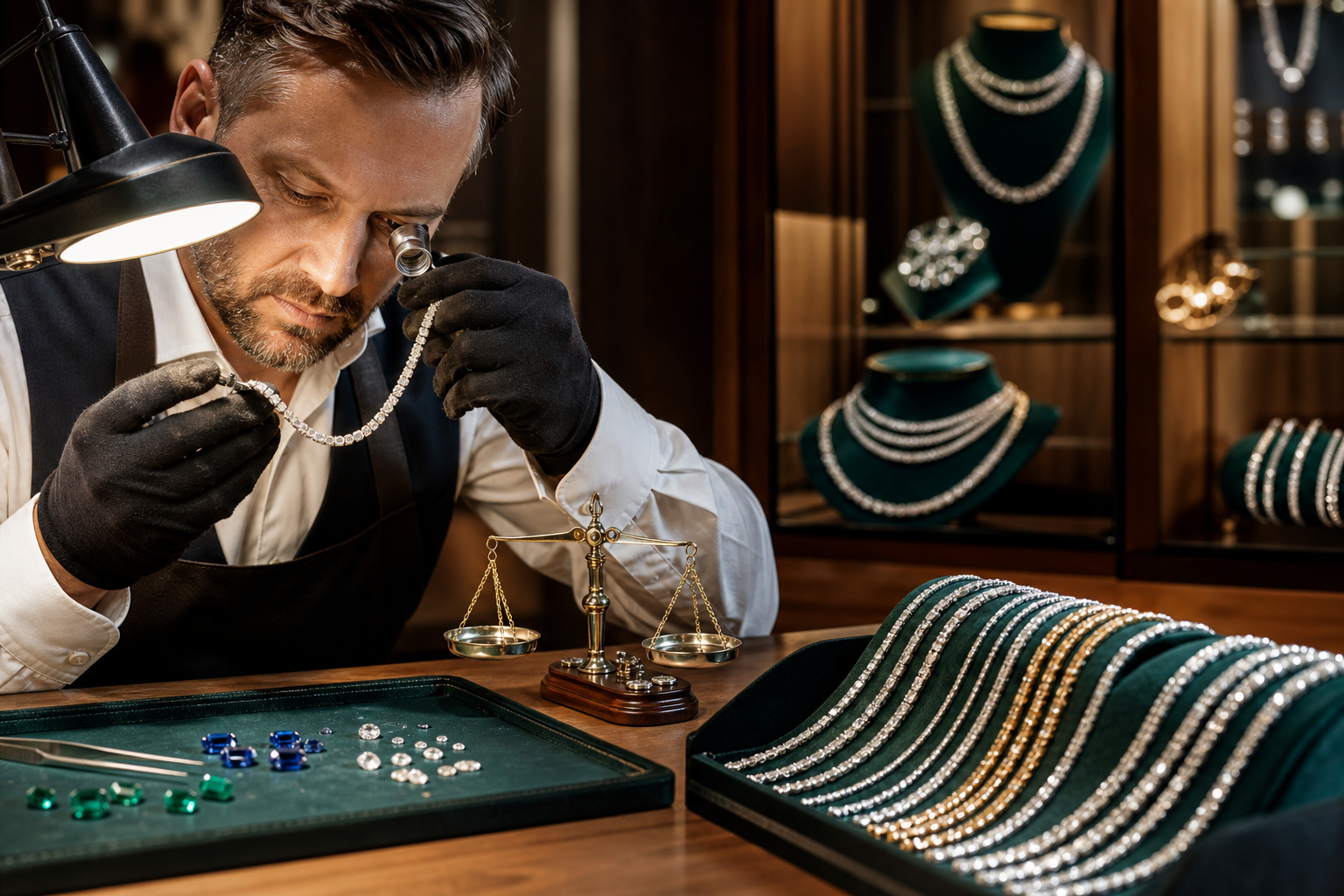
“I love that I can book a video consultation before buying. The designer walked me through three options over a call. Bought on the spot.” — Kavita Reddy, Hyderabad
Book a free video consult today →
Also Read!
The Complete Guide to Amethyst: How to Buy, Identify, and Care for This Purple Gemstone
How to Track and Understand Gold Prices Before Buying Jewelry
5 Common Mistakes People Make When Buying a Tennis Necklace
Even sharp shoppers trip on the same few issues. Here’s how to avoid them without stress.
Mistake 1: Skipping certification
Always demand IGI or GIA for natural diamonds above 0.18 ct. Without it, you can’t compare color, clarity, or cut grades across stores. Moreover, ask to see matching report numbers and a clear mention of BIS hallmarking and HUID on the invoice.
Mistake 2: Guessing your length
Neck size and clothing change the look a lot. Therefore, measure with a soft tape and try 16", 18", and 20" on your neck. If you shop online, request a try‑on video or a neck model photo with the actual piece.
Mistake 3: Chasing carat weight over cut and match
Five carats of so‑so stones can look dim next to four carats of well‑cut, well‑matched stones. In addition, ask for uniformity in color and clarity across the line and a cut that faces up bright.
Mistake 4: Ignoring the clasp and safety
A weak clasp ruins a great necklace. Check that the main lock clicks shut with a firm snap and that safety latches engage cleanly. As a result, you lower the risk of loss during use.
Mistake 5: Not reading return and exchange policies
Life happens. A fair policy removes risk. Look for 365‑day free insured returns if offered, plus a lifetime exchange policy for future upgrades. Ask for these in writing before you pay.
Tools and Resources for Finding Your Perfect Tennis Necklace
Good tools make hard choices simple. Start with diamond literacy. The Gemological Institute of America explains color, clarity, cut, and carat in plain terms; its GIA 4Cs education is the gold standard. For market context, many professionals benchmark with the Rapaport price list (plain text reference).
Furthermore, verify purity and hallmarking. In India, each BIS hallmarked piece carries a unique 6‑digit HUID that you can check on the BIS portal or the BIS CARE app. This gives you an official record that matches your invoice and peace of mind on metal fineness.
Verify purity and compare offers
Moreover, ask jewelers for video consultations if you can’t visit. Tools like live virtual try‑ons, 3D mockups, and clear pricing breakdowns help you see what you’ll get. Jewelers like Caratflow offer video consultation, custom jewelry design with a 3D mockup, BIS hallmarked metal, and transparent making charges, which make side‑by‑side comparisons easier.
- Learn grading basics: GIA’s 4Cs guide clarifies what affects price and sparkle
- Verify purity: check the HUID and BIS hallmark via the BIS portal
- Compare offers: request transparent making charges and line‑item quotes
- Try before you buy: ask for a video consult and neck model photos under normal light
What to Do Next: Your Tennis Necklace Action Plan
You’re close. Here’s a tight plan you can follow this week in 2026.
1.
Pick a range you’re happy with, then align it to ctw tiers: under ~5 ctw for light daily wear, 5–10 ctw for balanced shine, 10+ ctw for bold looks. Therefore, decide which tier feels right for your lifestyle.
2.
Spend 20 minutes with GIA’s 4Cs page. As a result, you’ll know which grades you can flex and which you want to hold.
3.
Choose stores that show IGI or GIA reports for natural diamonds ≥0.18 ct and BIS hallmarked metal. Furthermore, confirm they can share HUIDs and invoices before payment.
4.
Request an in‑store or video consult with a designer. Ask to see 16", 18", and 20" on a neck model, under daylight and warm indoor light. Also, test the clasp, run a snag check, and review the return and lifetime exchange policies.
5.
Ask for a breakdown: metal weight and karat, stone grades and ctw, making charges, taxes (3% GST on jewelry + 5% on making). Therefore, you can compare true totals, not just headlines.
6.
Match report numbers, verify hallmarking and HUID through BIS CARE, and save PDFs.
Get instant pricing clarity, free quote breakdown →
Key Takeaways: Buying a Tennis Necklace
- A tennis necklace is a line of individually set stones; it shines because of matched cut and a secure build.
- Use this complete guide tennis necklaces to choose stone type, metal, ctw, length, and setting with confidence.
- Demand IGI/GIA for natural diamonds ≥0.18 ct and BIS hallmarking with HUID; verify via BIS CARE.
- Compare two to three quotes with transparent making charges and clear return/exchange policies.
- Book a video consult to confirm length, brightness, and clasp quality before you pay.

What to Do This Week: From Research to Shortlist
Block one hour. First, read the GIA 4Cs page and jot down your must‑haves. Next, measure your neck and mark 16", 18", and 20" on a ribbon for a quick mirror test. Then, shortlist two to three certified jewelers and request video consultations and line‑item quotes with transparent making charges. Finally, verify hallmark purity and the HUID through the BIS portal before you say yes.
As you move ahead, remember the origin story that made this clean line famous at the 1987 US Open. You’re not just buying sparkle. You’re choosing a piece with history that you can wear with anything, in any year, including 2026 and beyond.
Start your custom 3D mockup, free consult this week →