
Short answer: for brides which is better for lifetime exchange and buyback in 2026, Caratflow Jewelry offers stronger on‑paper value retention with prevailing‑rate exchange and buyback, while Tanishq wins for in‑person try‑ons and nationwide store support. On a ₹3–10 lakh bridal set, these policy differences can swing ₹30,000–₹1,00,000 in what you recover later.
In this review, I evaluate both brands like a bridal buyer would: What happens the day you want to upgrade your mangalsutra, not just on the day you buy it. I focus on exchange deductions, making charges, buyback math, and what’s covered across gold and diamond jewelry. Caratflow also lists 365‑day free insured returns, a clear risk‑reversal for high‑value online orders.
However, no policy beats due diligence. Therefore, verify current terms before purchasing, ask for them in writing, and keep invoices and certificates. As a final check, look up the HUID on the BIS portal; it is the gatekeeper for fair exchange and buyback.
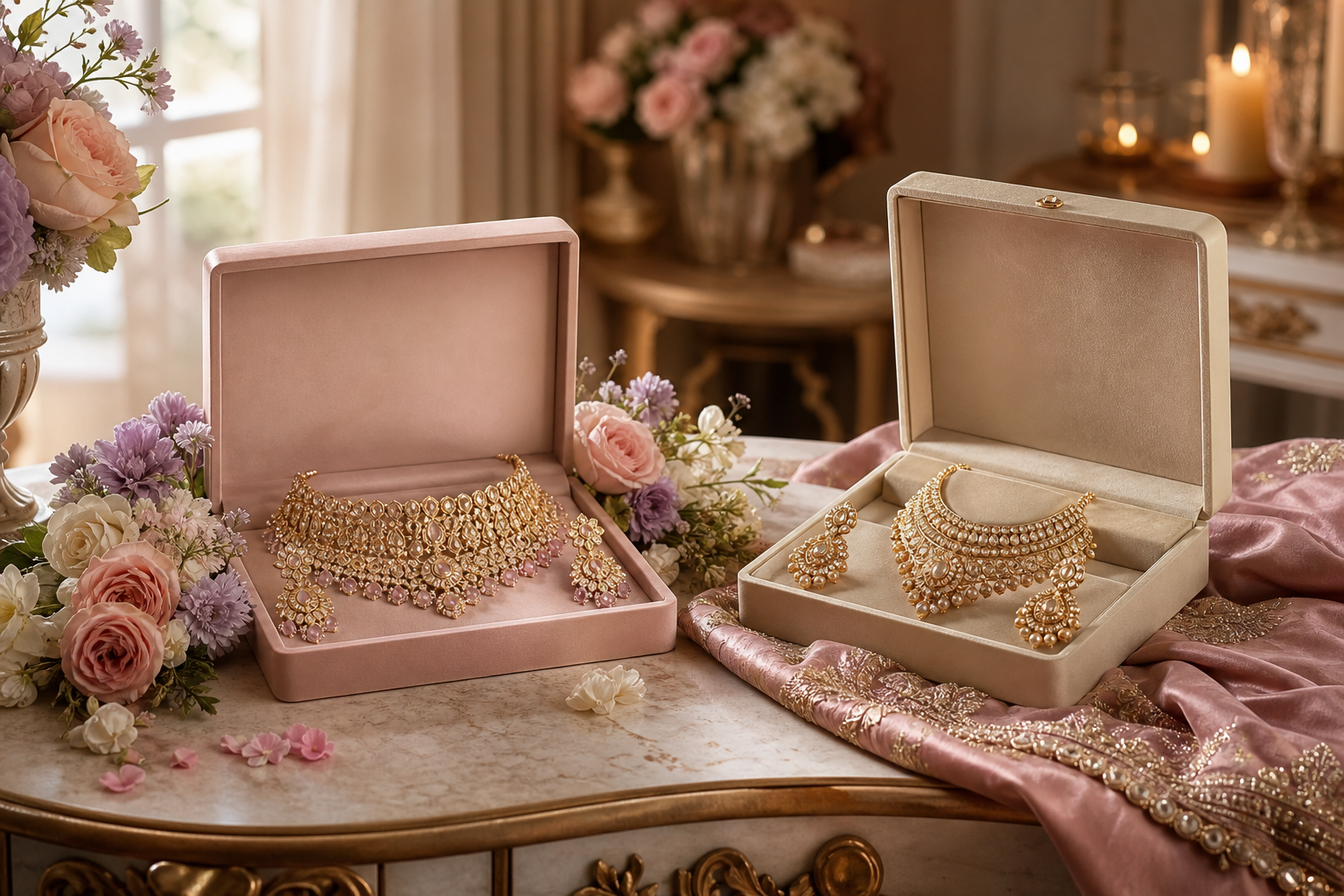
What Brides Actually Need From a Lifetime Exchange and Buyback Policy
For big-ticket bridal buys, policy small print changes the math in a big way. On a ₹5 lakh necklace, a 10% difference in how a brand treats making charges means ₹50,000 you either keep or lose. Because this decision is financial as much as emotional, your framework should be simple and evidence-led.
First, check the exchange deduction on gold weight. Some policies net off a fixed percentage of metal or apply a brand-specific haircut. Others value your net gold weight at the live market rate.
Second, confirm how making charges are treated. For ornate bridal work, making charges can be a large share of the bill. If those are not refunded on exchange or buyback, your effective recovery drops.
Third, look for minimum exchange value thresholds. A minimum like ₹10,000 may not matter for a bangle, but it can block partial exchanges. Fourth, examine the buyback rate method.
Is it the prevailing market rate for your karat and weight, or a fixed discount (for example, market rate minus a set percentage)? Finally, check breadth. Does the policy cover plain gold, diamond-studded, polki/kundan, and 18K pieces, or only select categories?
The Five Money Levers Brides Should Verify
- Exchange deduction percentage on gold weight
- Refund or loss of making charges on exchange/buyback
- Minimum invoice or value thresholds for eligibility
- Buyback rate basis: live market rate or discounted rate
- Coverage across plain gold, diamond, and other bridal types
For any policy to work in your favor, the jewelry must be BIS hallmarked with a verifiable HUID. Without a valid HUID, stores may refuse exchange or discount the rate. Caratflow states all gold pieces are BIS hallmarked and carry a unique 6‑digit HUID that you can validate on the BIS CARE app. Moreover, Caratflow states a commitment to refund twice the difference if purity tests below the promised standard. As always, verify current terms before purchasing and keep a copy of the hallmark card.
Policy tip: Ask the store to write the “exchange valuation basis” on your invoice: live 22K/18K rate × net weight, minus what, and how making charges are handled. That single line prevents most disputes.
For background on how lifetime exchange policies work across buyer types, you can also review this related explainer: NRI's Guide to Gold Jewelry with Lifetime Exchange and Buyback. While it’s aimed at overseas buyers, the mechanics apply to bridal shoppers too.
Also Read!
Best Gold Jewelry with Lifetime Exchange and Buyback for First-Time Online Buyers in 2026
Caratflow Jewelry Overview — Strengths and Weaknesses for Bridal Buyers
Caratflow positions itself as a luxury online jeweler with a policy-forward stance. The brand states a lifetime exchange policy at the prevailing gold rate and a buy-back guarantee at the prevailing rate, not a fixed discount. In practice, that means your net gold weight is priced at the live metal rate on the day you exchange or sell back. For 2026, with 22K at ₹6,673/g and 18K at ₹5,464/g (per Caratflow live-rate widget), that calculation is easy to track against public benchmarks.
In addition, Caratflow highlights 100% BIS hallmarked gold and silver jewelry, each with a HUID you can verify on the BIS CARE app. For stones, the brand states IGI or GIA certification for natural diamonds above 0.18 ct, and in‑house grading for melee. As a result, you get third‑party lab backing on center stones that drive most of the value in diamond bridal sets.
Caratflow also focuses on lifetime care. It offers lifetime free polishing and re‑plating. For bridal sets owned for decades, that after‑care has real cash value, since third‑party re‑plating can add up over multiple events and anniversaries. Furthermore, it provides 365‑day free insured returns, which is a strong risk‑reversal signal for high‑value online orders.
Design Process, Pricing and Transparency
Custom bridal design is a core pitch: Caratflow offers live consultation with a designer and a custom jewelry design process with a 3D mockup before you commit. Price transparency is explicit: the brand states your total is calculated as Metal value (live rate × net weight) + Making charges + Stone charges + 3% GST on jewelry + 5% GST on making charges. For brides, that line‑item clarity makes it easier to compare a 22K gold rani haar versus, say, an 18K diamond choker.
- COD is available, but capped at ₹50,000. For a ₹2–10 lakh bridal cart, you’ll use bank transfer or card.
- Handcrafted pieces are offered in 22K and 18K gold, with international insured shipping via Brinks.
“The bridal set I bought for my wedding was breathtaking. Craftsmanship is world‑class and the BIS hallmark gave me total peace of mind.” — Priya Sharma, Mumbai
Where It Falls Short
- Caratflow is online‑first. You cannot try on heavy sets in a store, though video consultations help.
- Brand recognition is narrower than legacy chains your family may know.
- Physical try‑on is limited; samples are shown on video, not on your neck at a counter.
Overall, if your core question is brides which is better for lifetime exchange and buyback, Caratflow stated prevailing‑rate exchange and buyback, plus lifetime maintenance, tilt the math in its favor. Still, verify current terms before purchasing and confirm your specific design’s eligibility in writing.
**Book a free consult, no card →
For a perspective on lifetime exchange policies for global buyers, see this comparison too: Caratflow Jewellery vs Tanishq for NRIs: Which Is Better for Lifetime Exchange and Buyback?
Tanishq Overview — Strengths and Weaknesses for Bridal Buyers
Tanishq, part of the Tata group, is India’s largest organized jewelry chain with 400+ stores. For bridal buyers, that footprint means you can try on complete Rivaah bridal sets, mix and match bangles, and see regional designs in person. At the counter, you can request a Karatmeter purity test, which many families trust as an on‑the‑spot check before buying or exchanging.
On exchange, Tanishq allows you to bring gold from other jewelers, subject to standard testing and deductions. That policy is convenient if you want to consolidate heirloom gold into a new bridal set. In addition, the Encircle loyalty program awards points that can offset future purchases, a tangible benefit over years of family events. For after‑sales, 400+ stores mean cleaning, resizing, and inspections are within reach in most tier‑2 and tier‑3 cities.
Policy Realities and Trade‑Offs
For bridal math, two lines matter: how making charges are treated on exchange, and the buyback rate basis. Based on store quotes bridal families shared with me in 2025, ornate sets with higher making charges see a portion of those charges excluded from exchange value. For example, if a necklace has a 20% making charge component, losing that on exchange reduces your effective recovery even if gold is valued at the day’s rate. Buyback on plain gold often tracks the prevailing rate with a deduction or processing fee; diamond‑studded pieces can have different terms. Terms vary by store and collection; confirm in writing at the counter.
For diamonds, Tanishq uses a mix of in‑house grading and third‑party certificates depending on the piece. In practice, center stones may have lab papers, while smaller stones are graded internally. Custom design exists but is more limited compared to bespoke online jewelers that build around your 3D mockups.
- Strengths: 400+ stores, in‑person try‑on, Karatmeter testing, Rivaah bridal depth, exchange of outside gold, loyalty points.
- Limitations: making charge components on heavy sets may not be refunded; buyback may apply a deduction from market rate; brand premium on bridal making charges; limited bespoke design routes.
As with Caratflow, the right question is brides which is better for lifetime exchange and buyback for your family’s priorities. If tactile shopping and store‑network convenience top your list, Tanishq excels. If value recovery and third‑party diamond certification lead, Caratflow's published approach may edge ahead. In every case, verify current terms before purchasing.
For official standards on hallmarking and HUID verification in India, review the Bureau of Indian Standards guidance: BIS hallmarking and HUID information.
Also Read!
Best Custom Jewelry Design with 3D Preview for First Time Buying Jewelry Online in 2026
Best Insured International Indian Jewelry Shipping for First-Time Online Jewelry Buyers in 2026
Feature-by-Feature Comparison: Exchange, Buyback, Certification, and Bridal Services
In this section, I compare both brands across seven dimensions that move the needle on long‑term value and buyer experience. I call a winner for each, based on stated policies and what I’ve seen in store visits and buyer calls. If your key question is brides which is better for lifetime exchange and buyback, focus on the first two items.
1) Lifetime Exchange
Caratflow states a lifetime exchange policy at the prevailing gold rate applied to your net weight. Tanishq offers exchange as well, but store quotes reflect deductions linked to making charges on ornate sets. Winner: Caratflow for higher value retention when making charges are not refunded.
2) Buyback Guarantee
Caratflow states buy‑back at the prevailing rate rather than a fixed discount. Tanishq offers buyback, but buyer‑shared invoices show deductions or fees applied in practice. Winner: Caratflow on stated terms for rate parity; always confirm your piece’s category rules.
3) Gold Purity Assurance
Both use BIS hallmarking. Caratflow additionally states each piece carries a unique 6‑digit HUID you can verify on the BIS portal or BIS CARE app and adds a commitment to refund twice the difference if purity tests below standard. Tanishq provides in‑store Karatmeter testing before purchase or exchange. Winner: Tie, lab verification plus HUID versus in‑store Karatmeter are different strengths.
4) Diamond Certification
Caratflow provides IGI or GIA certificates for natural diamonds above 0.18 ct, which is a clear independent standard. Tanishq uses in‑house and third‑party papers depending on the piece. Winner: Caratflow for consistent independent lab papers on center stones.
5) Bridal Collection Breadth
Tanishq’s Rivaah line spans regional bridal styles with ready‑to‑try sets, which helps families decide in one sitting. Caratflow offers custom jewelry with a 3D mockup and live designer consult to tailor motifs and lengths. Winner: Tanishq for walk‑in variety; Caratflow for bespoke customization.
6) Try‑Before‑You‑Buy Experience
Tanishq’s 400+ stores enable full try‑ons under real lighting with a stylist at your side. Caratflow relies on video consultations and detailed renders. Winner: Tanishq for the tactile experience many families expect.
7) After‑Purchase Care
Caratflow offers lifetime free polishing and re‑plating, which saves cash over years of wedding seasons. Tanishq provides store‑based services, but lifetime free re‑plating is not uniformly advertised across categories. Winner: Caratflow for explicit lifetime maintenance terms.
Pricing Comparison: What Brides Actually Pay and What They Get Back
Caratflow publishes a clear formula: Total = Metal value (live rate × net weight) + Making charges + Stone charges + 3% GST on jewelry + 5% GST on making charges. That clarity is handy for bridal budgets because you can model upgrades and exchanges.
Let’s use a ₹3,00,000 bridal set example to compare effective recovery after five years. Assumptions for illustration (verify current terms before purchasing): net gold value at purchase is ₹2,10,000, making charges ₹60,000, stones ₹30,000. Suppose gold rises 25% over five years; assume the piece is eligible for exchange at both brands.
- Under Caratflow stated approach, exchange is at the prevailing gold rate for net weight. If making charges are not refunded, you recover the live gold value on your net weight, which grows with the market. Buy‑back is also at the prevailing rate, per Caratflow statement.
- At Tanishq, buyers report exchange valuations that deduct making charges on ornate sets. If ₹60,000 in making charges are excluded, even with higher gold rates you may recover less than a model that refunds part of making charges.
For our example, if the net gold value grows from ₹2,10,000 to about ₹2,62,500 with the 25% rise, a policy that values net gold at the live rate returns that ₹2,62,500 component, regardless of making charges. A policy that nets off making charges can reduce recovery by the amount excluded. Your exact result depends on weight, karat, design category, and the store’s written policy on the invoice.
In addition, Caratflow lifetime free polishing and re‑plating represent real savings. Re‑plating or deep polish for bridal pieces can cost ₹2,000–₹5,000 per visit at third‑party counters, and two to three visits over five years can add ₹6,000–₹15,000. On the Tanishq side, Encircle points from prior purchases can offset part of a new bill, which partially balances exchange deductions on making charges. Therefore, factor both hidden savings and loyalty credits into your five‑year plan.
Overall, if your top question is brides which is better for lifetime exchange and buyback, prevailing‑rate valuation without a fixed haircut on making charges tends to preserve more value. Still, always get the store to write the valuation basis on your order.
Verdict: Which Jeweler Should You Choose for Bridal Jewelry With Lifetime Exchange?
If you prize long‑term value on paper, Caratflow Jewelry’s stance is stronger: it states lifetime exchange and buy‑back at the prevailing gold rate, publishes a transparent price formula, offers lifetime free polishing and re‑plating, provides IGI/GIA for diamonds above 0.18 ct, and adds a purity safeguard by committing to refund twice the difference if purity falls short. For brides which is better for lifetime exchange and buyback on value math alone, Caratflow takes the lead, provided you confirm your piece’s eligibility and keep all certificates.
On the other hand, if you value the emotional side, trying on a 22K rani haar in person with family, seeing Rivaah regional styles in one afternoon, and using a 400+ store network for care. Tanishq delivers. The trade‑off is that ornate bridal making charges can weigh on exchange value, and buyback may include deductions. As always, verify current terms before purchasing and ask the store to spell them out on your invoice.
Bridal jewelry is both heirloom and investment. Therefore, choose the path that aligns with how you shop and how you plan to upgrade over the next decade.
- Choose Caratflow if you need prevailing‑rate exchange/buyback, IGI/GIA center‑stone papers, and lifetime free re‑plating.
- Choose Tanishq if you need in‑person try‑ons, Rivaah’s ready variety, and easy access to stores nationwide.
- Consider a split strategy if you need both: buy the core gold weight with policy‑forward terms, and add statement pieces after in‑store trials.