Is a Real Diamond Ring Worth It?
A real diamond ring is worth buying in 2026 if you value rarity, tradition, and long-term sentimental significance. Buyers focused on size, affordability, and modern value may find lab-grown diamonds a smarter choice. The right answer depends entirely on what you’re actually buying it for.
What Exactly Is a Real Diamond Ring?
Here’s where most buyers get confused before they’ve even started shopping.
Natural Diamonds vs. Lab-Grown Diamonds
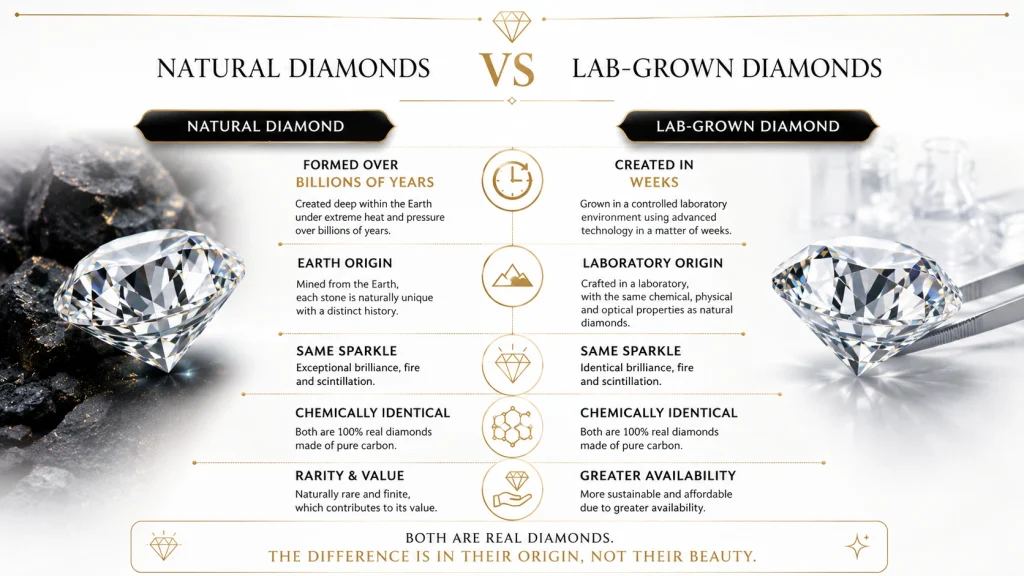
Both are real diamonds. That’s not a marketing claim. It’s chemistry. Natural diamonds and lab-grown diamonds share identical physical structure, optical properties, and hardness. The only difference is the origin. One formed deep in the earth over billions of years. The other was created in a controlled environment over weeks.
The Federal Trade Commission agrees. It updated its guidelines years ago to recognize lab-grown stones as genuine diamonds, not imitations.
Real Diamonds vs. Diamond Simulants
Simulants are a different story. Cubic zirconia and moissanite look like diamonds but are chemically distinct. They’re not diamonds at all. A trained gemologist can spot the difference immediately, and most lab equipment can too.
Confusing simulants with lab-grown diamonds is one of the most common mistakes buyers make. If someone tells you a moissanite ring is “basically the same as a real diamond ring,” that’s not accurate. It may look similar to the naked eye, but it isn’t the same material.
Why People Still Choose Real Diamond Rings
The Meaning Behind Natural Diamonds
Natural diamonds carry something lab-grown stones currently can’t fully replicate: provenance. Each one took billions of years to form and traveled miles through the earth to reach the surface. That geological rarity matters to certain buyers. It’s not just sentiment. It’s the knowledge that this particular stone is genuinely one-of-a-kind.
The Emotional Value Factor
Engagements, anniversaries, milestone gifts. These aren’t everyday purchases. The emotional weight behind a diamond ring often outweighs its dollar value. For many buyers, choosing a natural stone is part of honoring the significance of the occasion.
Perceived Exclusivity
Scarcity still drives behavior, even when people know it. Natural diamonds are finite. Lab-grown supply is theoretically unlimited. That distinction shapes how buyers feel about what they’re giving and receiving, whether they consciously acknowledge it or not.
The 2026 Reality Check: What Are You Actually Paying For?
Rarity vs. Appearance
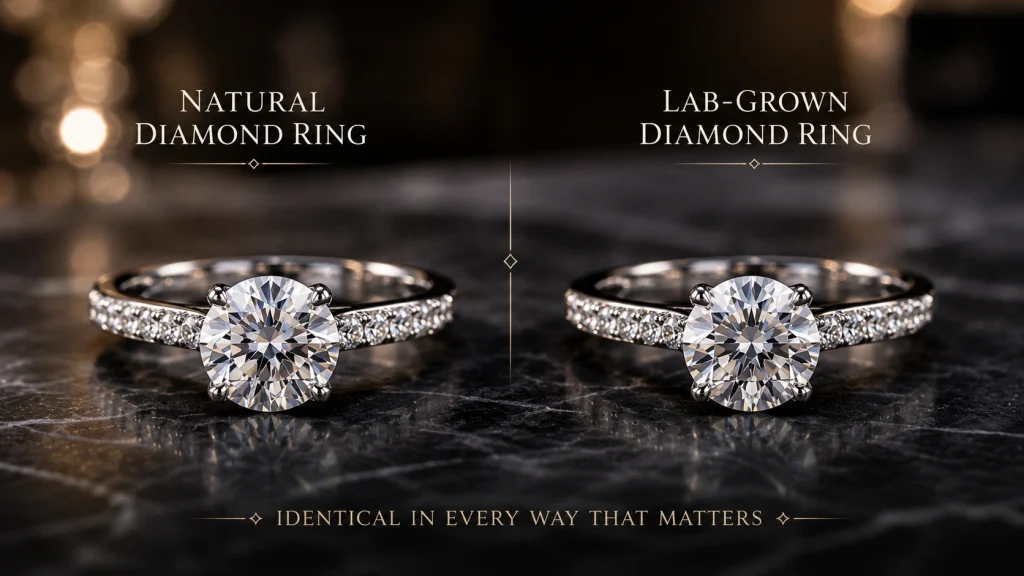
Two rings can look completely identical side by side. One is natural, one is lab-grown. You can’t tell the difference by looking. What you’re paying for with a natural stone isn’t appearance. Its origin, rarity, and the narrative attached to that.
Brand Markups vs. Diamond Value
A significant portion of what buyers spend at major retailers covers branding, retail overhead, and marketing. The stone itself may represent a smaller share of the final price than most people assume. Understanding this helps buyers make better decisions.
Why Two Similar Rings Can Have Very Different Prices
Certification, cut quality, and retail margins all play a role. A well-cut 0.9-carat stone from a certified source can outperform a poorly cut 1.2-carat stone in every visual category, yet cost less. The carat number alone tells you very little about what you’re actually getting.
Real Diamond Ring vs. Lab-Grown Diamond Ring
Appearance and Sparkle
Identical. Both have the same refractive index. Neither is more sparkly than the other by default. Cut quality determines brilliance, not origin.
Durability and Daily Wear
Both score a 10 on the Mohs hardness scale. Both are equally suitable for everyday wear. There’s no practical durability difference between the two.
Price Comparison
Lab-grown diamonds typically cost 60 to 80 percent less than natural diamonds of comparable size and quality. That gap has widened significantly over the last few years as production has scaled.
Resale Value Expectations
Natural diamonds hold resale value better, though neither is a strong financial investment by retail pricing standards. Lab-grown resale values have dropped sharply as supply has increased. If you’re buying with long-term resale in mind, natural is the more defensible choice. But if you’re buying because the ring means something to someone, resale is probably not your priority.
Which Option Makes More Sense for Different Buyers?
Budget-focused buyers who want maximum size and quality per dollar should seriously consider lab-grown. Buyers for whom tradition, rarity, and heritage matter most will likely prefer natural. First-time buyers should focus on cut quality and certification rather than chasing carat size. Anyone treating a diamond ring as a financial investment should recalibrate that expectation entirely.
How to Choose the Right Real Diamond Ring
Start With Your Budget
Set a firm number before you walk into any store or open any website. Prices vary enormously, and it’s easy to get anchored to a higher figure once you’ve seen it.
Understand the 4Cs Without Overcomplicating Them
Cut is the most important factor for visual appeal. Color and clarity have diminishing returns as you move up the grade scale. Most differences above a certain threshold are invisible to the naked eye. Carat is simply weight, not quality. A smaller, well-cut stone often outperforms a larger, poorly cut one.
Choose the Right Ring Setting
The setting affects how the stone looks, how secure it is, and how well it suits the wearer’s lifestyle. Prong settings maximize light exposure. Bezel settings offer more protection. The right choice depends on personal preference and daily activity.
Check Certification Before You Buy
Always ask for a grading report from the GIA (Gemological Institute of America) or IGI (International Gemological Institute). These are independent assessments of what the stone actually is, not seller descriptions. No certification means no verification.
Verify the Metal Quality
Gold and platinum are the standard choices. Check for hallmarks stamped into the band that confirm metal purity. 18K gold contains 75 percent gold. Platinum is denser and more durable. Both are legitimate options depending on budget and preference.
Common Myths About Real Diamond Rings
“Bigger Carat Means Better Diamond”
Not even close. A larger stone with poor cut, low clarity, or visible color grading can look worse than a smaller, well-graded stone. Chasing carat size at the expense of cut quality is one of the most common and costly mistakes buyers make.
“Lab-Grown Diamonds Are Fake”
They’re not. This is outdated thinking. Lab-grown and natural diamonds are chemically identical. What differs is origin, not authenticity.
“Every Expensive Ring Is Valuable”
Price reflects many things, including retail margins, brand positioning, and marketing. An expensive ring isn’t automatically a better diamond.
“You Can Always Tell a Real Diamond by Looking”
Even experienced jewelers can’t distinguish natural from lab-grown with the naked eye. Professional equipment is required. This myth leads buyers to trust appearance over documentation.
Red Flags That Suggest a Diamond Ring May Not Be Genuine
Missing certification is the biggest warning sign. Any legitimate seller of a quality diamond ring will have documentation.
Suspiciously low prices for natural diamonds should prompt skepticism. If the deal seems too good compared to market rates, question why.
Poor craftsmanship on the setting, rough prong work, or uneven metal finishing can indicate low-quality production that often accompanies lower-quality stones.
Missing metal hallmarks on the band suggest the metal type and purity haven’t been independently verified.
Sellers who avoid independent verification or discourage appraisals are another clear red flag. Reputable sellers welcome third-party confirmation.
Read More!
The 7 Tips That Actually Make Jewelry Online Shopping Worth It (Without Regret Or Risk)
How To Buy Diamond Rings Smartly: Complete 2026 Buyer Guide – Caratflow
How Caratflow Helps Buyers Make Smarter Diamond Decisions
Buying a diamond ring can feel overwhelming, especially when every option looks similar but comes with a very different price tag. Caratflow simplifies the decision-making process by helping buyers understand what they’re paying for and compare options with greater confidence.
Key features and benefits include:
- Compare diamond specifications side by side for easier evaluation
- Understand certification details without industry jargon
- Analyze value beyond carat size alone
- Track diamond pricing trends and market insights
- Identify quality differences across multiple options
- Simplify the buying process for first-time purchasers
- Make more informed decisions with objective data
- Reduce uncertainty before making a significant purchase
- Focus on value and quality rather than marketing claims
Instead of relying solely on sales advice, buyers can use Caratflow to evaluate diamonds more objectively and choose a ring that aligns with their budget, priorities, and long-term expectations.
Diamonds Are Emotional Purchases, Not Financial Investments
Most people buying a real diamond ring aren’t buying an asset. They’re buying a symbol. Research on long-term purchase satisfaction consistently shows that buyers who align spending with personal meaning report higher satisfaction than those who focus primarily on financial justification.
The best diamond ring purchases, the most meaningful gifts, and the mens diamond rings people keep for decades are rarely chosen based on resale projections. They’re chosen because of what they represented at the time of purchase.
Whether you’re considering a classic solitaire or a real diamond ring for men, sentimental ROI and monetary ROI are different measures. Understanding which one matters most to your situation is the clearest path to making a decision you’ll still feel good about years later.
Final Verdict: Who Should Buy a Real Diamond Ring in 2026?
Choose a natural diamond if rarity, tradition, and long-term heritage matter to you. If you want to give or receive something with deep historical significance, natural is still the right call.
Choose lab-grown if budget is a priority, you want maximum quality per dollar, or you’re less focused on geological origin and more focused on the stone itself.
A real diamond ring for men or women doesn’t need to be the most expensive option to carry meaning. The ring that fits your budget, suits your priorities, and reflects why you’re buying it in the first place is, by every useful measure, the right ring.
FAQ: Is a Real Diamond Ring Worth Buying in 2026?
1. Is a lab-grown diamond considered a real diamond ring?
Yes. Lab-grown diamonds are chemically and physically identical to natural diamonds. The FTC classifies both as genuine diamonds. The only difference is origin, not authenticity.
2. How can I tell if a diamond ring is real?
The most reliable way is to check for a GIA or IGI grading certificate. No certification means no independent verification. Home tests like the fog or scratch test are unreliable and can damage the stone.
3. Does a real diamond ring hold its value over time?
Natural diamonds retain resale value better than lab-grown, but neither is a strong financial investment at retail prices. Buy a diamond ring for its meaning, not as an asset.
4. What certifications should a real diamond ring have?
Always look for grading reports from the GIA (Gemological Institute of America) or IGI (International Gemological Institute). These confirm the stone’s cut, color, clarity, and carat weight independently.
5. How much should I spend on a real diamond ring in 2026?
There’s no universal answer. Set a firm budget first, then prioritize cut quality over carat size. A well-cut, smaller stone consistently outperforms a larger, poorly cut one in visual appeal and overall value.