Choosing your bridal set is easier when you start with independent lab certification from GIA or IGI, because you get objective grading, traceable hallmarks, and documentation you can verify. In 2026, the smartest brides ask for proof first and sparkle second, so let’s make sure you have both. This guide also compares IGI and GIA certified diamond jewelry so you understand how grading and documentation translate into real-world sparkle and value.
Book a Free Caratflow Design Consult → and bring your questions. Are the smaller stones graded to a stated range?
Is the gold purity hallmarked? Does the piece have a verifiable HUID you can look up? Each missing detail creates doubt, which is the last thing you need right now.
Quick answers you’ll find here
- How GIA and IGI grading compare for natural bridal diamonds
- What hallmarks (BIS and HUID) to look for and how to verify them
- The clean price breakup you should expect in India
- Which metal (22K, 18K, or platinum accents) fits daily-wear bridal pieces
- How to customize with confidence and avoid common pitfalls
The emotional layer
Finally, there’s the emotional side. Your ring or bridal set will be photographed, blessed, and passed down. You want it to reflect who you are. That drives high standards and honest questions: Is GIA better than IGI?
Do I need 22K or 18K gold? Can I trust what I’m reading online? These are smart questions, and they deserve clear, friendly answers about GIA- and IGI-certified diamond jewelry without sales pressure. Think of this as a calm companion while you make a decision that sits at the intersection of style, heritage, and science.
To honor the emotional weight, consider how your life plays into design:
- Daily habits: typing, gym grips, cooking, or gloves at work can influence ring height and prong type.
- Family traditions: combine heirloom motifs with modern settings (like a hidden halo or milgrain edges) to bridge generations.
- Photography: wider finger coverage or matched metals across the set can make your pieces pop in close-ups without overpowering your outfits.
The core stress points at a glance
- Inconsistent grading language across jewelers
- Fear of overpaying due to opaque making charges
- Worry about fake or vague certificates
- Confusion between GIA, IGI, and in-house grading
- The weight of getting it right the first time
What to Look for in GIA and IGI Certified Diamond Bridal Jewelry
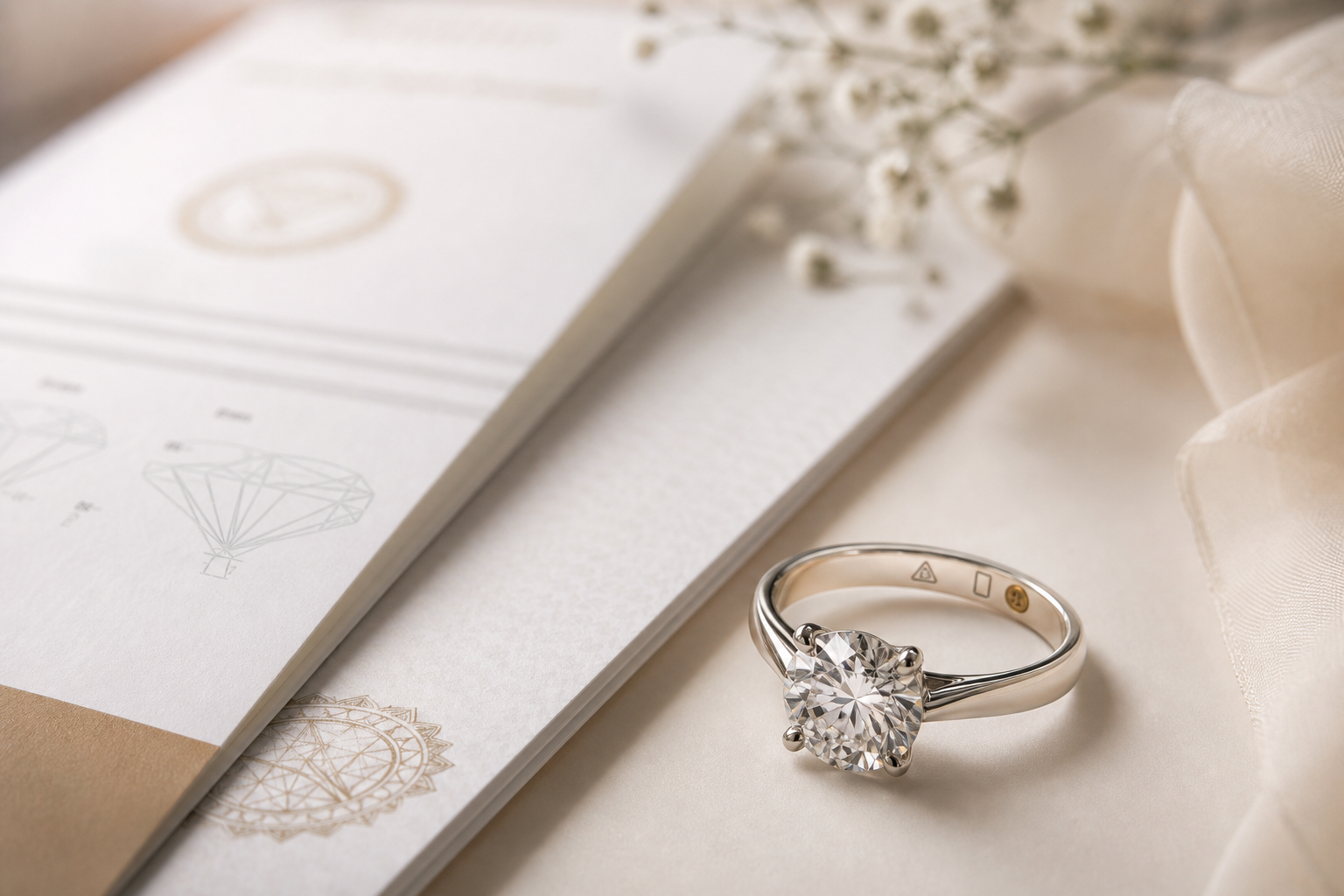
A GIA report is not a sales flyer. It’s an independent lab document that records the diamond’s 4Cs (cut, color, clarity, carat), proportions, fluorescence, and more. Often, the report number is laser-inscribed on the girdle so you can match the stone to the certificate. For background, see the Gemological Institute of America overview on Wikipedia: https://en.wikipedia.org/wiki/Gemological_Institute_of_America.IGI is also a recognized lab, widely used across Asia and Europe. In many Indian retail contexts, you’ll see GIA or IGI for natural diamonds above a set size, while melee stones are graded in-house to a consistent standard range for color and clarity. That split is normal. What matters is clear disclosure.
Key elements you’ll see on reputable grading reports:
- 4Cs with precise measurements and plotting (where applicable)
- Proportions and finish details like polish and symmetry
- Fluorescence noted (None to Very Strong), which you should view in different lights if Medium or above
- A unique report number that can be matched to a laser inscription on the diamond’s girdle
- For some report formats, a QR code or online “Report Check” link that verifies the data directly on the lab’s site
A lab report describes the diamond; it doesn’t sell it. Your eyes, a loupe, and clear disclosures complete the picture.
To go a level deeper when reading reports:
- Color: For bridal rings in yellow or rose gold, G–H often looks convincingly white once set. In platinum or white gold solitaires, you may prefer F–G for a crisp look. – Clarity: VS2 with a clean face-up often rivals VVS to the naked eye.
Request videos and ask a jeweler to point out inclusions at 10x so you can judge personally. 5%, crown and pavilion balanced). For fancy shapes, evaluate bow-tie effect and symmetry with light performance images when available.
Size thresholds and melee for certified diamonds
Furthermore, stone size affects certification. For natural diamonds above 0.18ct, insist on a GIA or IGI report. Below that threshold, single-stone lab reports are uncommon. Instead, ask for stated grading ranges for melee and confirm that the center stone’s report number is included on your invoice. For round brilliants, cut grade is a major driver of sparkle; for fancy shapes (oval, pear, emerald, etc.), labs do not assign an overall cut grade, so proportions and light performance images (if available) become important. Fluorescence is another note you’ll see on reports; it isn’t inherently “bad,” but you should view the stone in multiple lighting conditions if fluorescence is Medium or stronger.
Practical tip for small stones:
- For halo or pavé, request a consistent range like “F–G color, VS–SI1 clarity, excellent make.” Consistency ensures uniform sparkle across the piece.
- Confirm the total diamond weight and the approximate stone size used (e. g., 1.1mm, 1.3mm) so you know exactly what’s set.
Hallmarking and metal choices you’ll live with
- BIS hallmark: This mark verifies metal purity in India. You should see the BIS logo and a unique 6-digit HUID on the piece.
- 22K vs 18K: 22K (916) is traditional and rich in color but softer. 18K (750) is more durable and ideal for diamond-set rings and bangles that face daily wear.
- Skin sensitivities: If you have nickel sensitivity, discuss 18K yellow or rose gold alloys with lower nickel content, or consider platinum for prongs where skin contact is frequent.
- Finish options: High polish dazzles, but satin, brushed, or sandblasted finishes can hide micro-scratches on wedding bands.
- Rhodium tips: White gold is typically rhodium plated. Expect re-plating every 12–24 months depending on wear for a bright, white finish.
How to verify BIS details step by step:
- Locate the BIS stamp and 6-digit HUID on the inner shank or clasp.
- Open the BIS CARE app or visit the BIS portal.
- Enter the HUID exactly as stamped (letters and numbers).
- Confirm the matching metal type, karatage, and jeweler details.
- Take a quick photo for your records; keep it with your invoice and certificates.
Red flags that should slow you down
- “In-house” certificate for a center stone above 0.
- No BIS hallmark or missing HUID
- “All-inclusive” price with no breakup of metal, making, stones, and taxes
- Pressure to skip documentation because of a “special” discount
- Vague diamond descriptions like “premium quality” without a clear color/clarity range or report number
Why transparent pricing protects you
A clean price breakup lets you compare apples to apples.
- Total = Metal value (live rate × net weight) + Making charges + Stone charges + 3% GST on jewelry + 5% GST on making charges
For context, live reference rates recently included 22K at ₹6,673/g and 18K at ₹5,464/g. Since rates move, a transparent structure lets you lock value without hidden margins. It also helps if you plan a custom design or want to adjust carat weight, color, or clarity for budget control. As illustration only, these reference rates are subject to change by the day; always confirm the day’s posted price when placing an order.
Two worked examples:
- Example A (engagement ring, 18K): Net gold weight 4.5g × live 18K rate + making charges (per gram or fixed) + center diamond priced by carat and quality + side stones + GST lines. If you lower color from F to G and clarity from VVS2 to VS1, you might keep the same center-stone budget while upgrading cut precision.
- Example B (necklace, 22K with diamond accents): Net gold weight 28g × live 22K rate + making charges + melee priced per carat + GST lines. Choosing a textured finish can reduce visible wear while preserving the rich 22K look.
Before you go further, you may find this guide helpful: First-Time Buyer's Guide to GIA Certified Diamond Jewelry Online. It breaks down report reading and shopping steps in plain language and pairs well with this bridal-focused article on GIA- and IGI-certified diamond jewelry.
Pro tip: Keep a simple notes doc with your preferred color/clarity range, ring size, and a link to your chosen lab report so you can compare offers quickly.
Additional budgeting levers:
- Finger coverage vs. carat: A well-designed halo or hidden halo can add visual spread without jumping to the next carat bracket.
- Metal color fit: Warmer stones (I–J) can look whiter in yellow or rose gold; very white stones (D–F) shine in white metals.
- Maker’s complexity: Hand engraving, filigree, and micro-pavé add labor. Decide where detail matters most to you.
Also Read!
Bride’s Guide to Choosing GIA Certified Diamond Jewelry for Your Wedding
How Our GIA/IGI Certified Bridal Collection Meets Every Criterion
Education comes first. Then the piece. Here’s how the collection addresses each buying point from the section above, point by point, so you can breathe easier.
Certification you can verify (GIA/IGI reports)
Every natural diamond above 0.18ct is GIA or IGI certified. The report number is shared and, when applicable, laser-inscribed on the stone for you to verify. For smaller diamonds (melee), in-house grading keeps the overall look consistent across your halo, band, and matching earrings. When you receive your piece, you’ll also get a quick guide on where to find the inscription under magnification and how to cross-check the number on the corresponding lab’s database.
Fast verification steps you’ll follow on delivery:
- Locate the laser inscription on the girdle under 10x magnification
- Match the inscription to the printed certificate number
- Run an online “Report Check” on the lab’s website to confirm shape, measurements, and grades
- File photos of the inscription, report, and invoice together for future reference
Beyond the basics, we help you interpret:
-
Are inclusions white or dark? Near the edge or center? Can they be hidden by a prong?
-
For ovals and pears, how’s the bow-tie effect? A short video under multiple lights helps. – For emerald cuts, we check step symmetry and hall-of-mirrors brightness rather than fire alone.
Hallmarking, metals, and craftsmanship
All gold settings are BIS hallmarked, and each piece carries a unique 6-digit HUID you can verify via the BIS portal or BIS CARE app. That’s not just a stamp, it’s traceable proof. In addition, you get handcrafted pieces in both 22K and 18K gold, so you can choose the richness of 22K or the day-to-day strength of 18K for diamond-heavy designs. Settings are engineered for durability, with prong options that balance security and light performance. If you prefer a lower profile for comfort (especially under gloves or in active work), your designer can adjust head height while preserving brilliance.
Craftsmanship details you can request:
- Claw, talon, or rounded prongs depending on style and snag resistance
- Comfort-fit inner shank for long wear during wedding events
- Under-gallery designs to sit flush with guards or contour bands
- Hidden personal engravings (names, dates, coordinates) and matching motifs across the set
Pricing you can audit
Pricing is transparent. Your quote follows the live-rate model you saw earlier: metal value based on the day’s rate and net weight, plus disclosed making charges, stone charges, and GST line items. There’s no “bundled surprise” at checkout. Moreover, diamonds and colored gemstones are natural and ethically sourced, so you can wear your bridal pieces with pride.
“The bridal set I bought for my wedding was breathtaking. Craftsmanship is top and the BIS hallmark gave me total peace of mind.” — Priya Sharma, Mumbai
To make comparisons easier, you’ll see:
- Metal weight estimates pre- and post-setting
- Separate lines for center stone and melee
- Any optional upgrades (e. g.
- Lead-time and shipping insurance specifics spelled out on the quote
Made-for-you customization
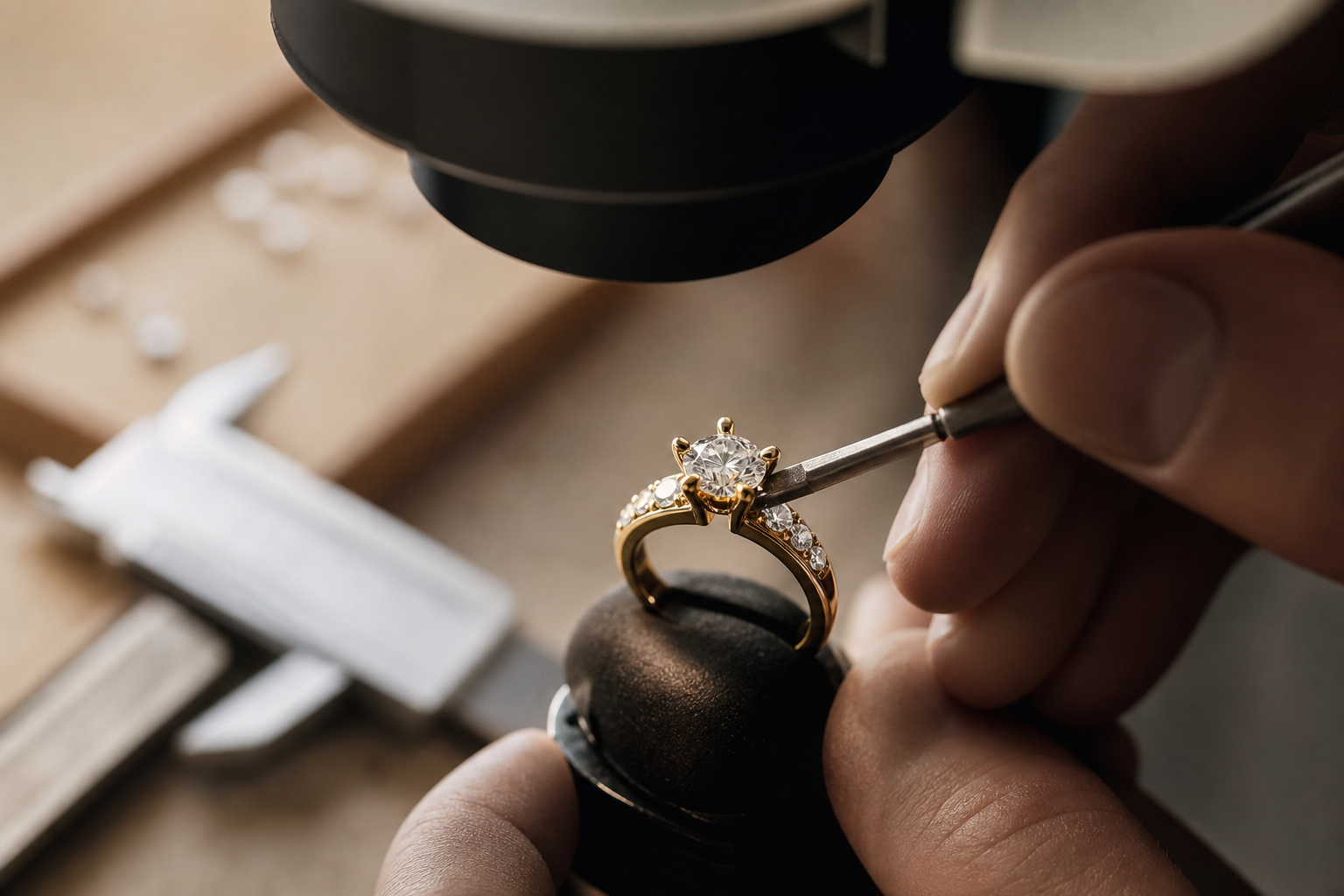
For brides seeking something only they will wear, there is a custom design service. You’ll meet a designer over a live video consultation and receive a 3D mockup to approve or refine before production starts. That single step eliminates the fear of the unknown and lets you tune prong style, height, width, and diamond layout. You can also discuss comfort-fit inner shanks, hidden halos, matching guards, and engraving so the piece feels tailored from day one.
Helpful customization timeline:
- Design consult: 30–45 minutes to align on shapes, metals, and budget
- CAD/3D render: 2–5 business days; you’ll receive front, side, and on-hand views
- Revisions: Typically 1–2 cycles; complex engravings may need an extra day
- Production: 10–21 business days depending on complexity
- Quality checks: Hallmarking, stone setting verification, report matching, and final polish before dispatch
Guarantees that de-stress your decision
Finally, purity is guaranteed. If metal purity is ever found below the stated standard, the retailer commits to refund twice the difference. That’s real risk reversal that reduces anxiety at the point of decision for certified bridal diamond pieces.
Get Live Pricing at Caratflow →. It shows where price clarity and documentation standards converge, and where they don’t, in 2026.
Also Read!
Best Insured International Jewelry Shipping for NRIs in 2026
NRI’s Guide to Buying Indian Jewelry Online with Insured International Shipping
Trust Signals: Certifications, Guarantees, and Verified Quality
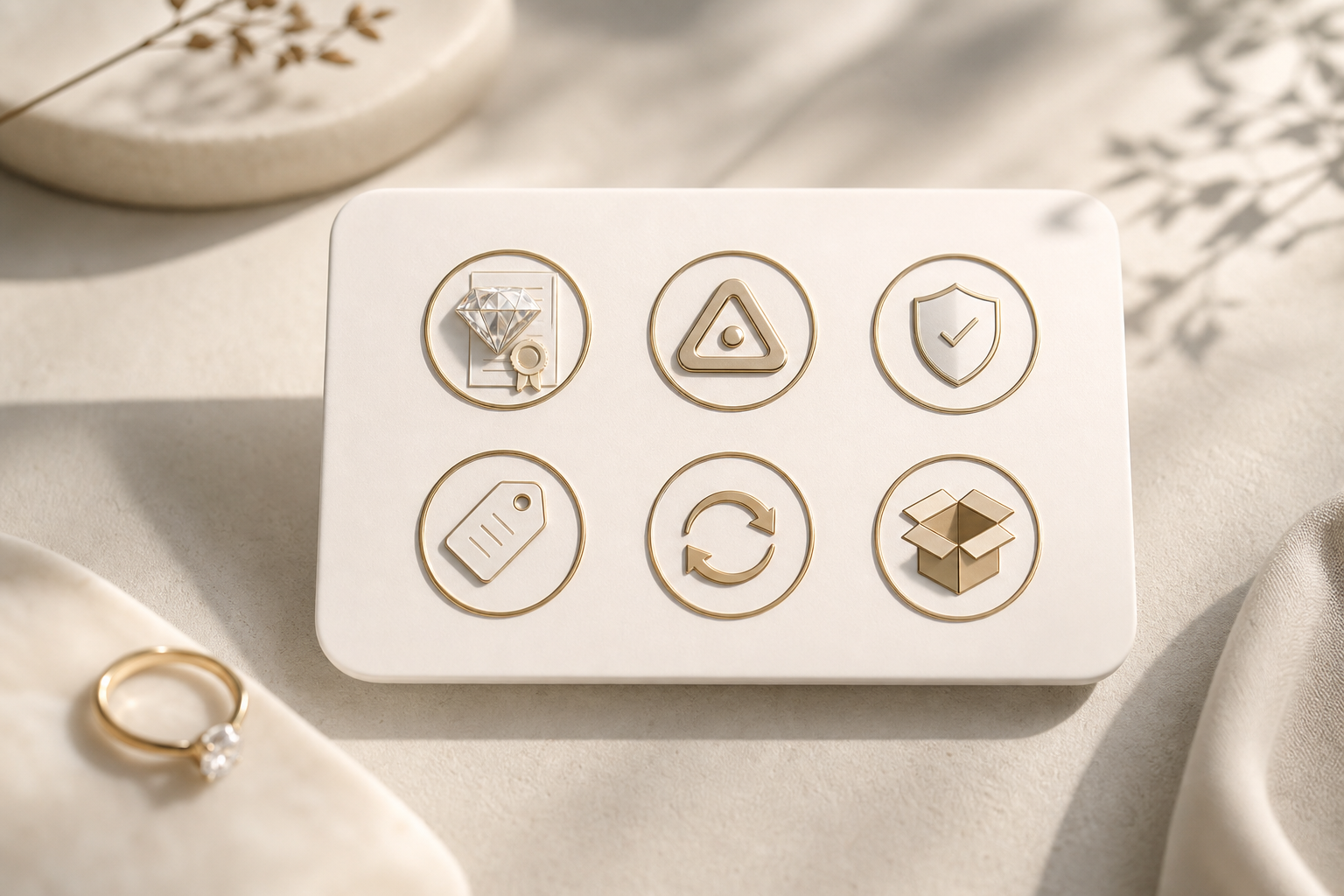
Trust is proof you can hold, scan, or claim. First, diamonds above 0.18ct are GIA or IGI certified, so you can match a report number to your stone. Metal purity is 100% BIS hallmarked across gold and silver pieces, and each item carries a unique 6-digit HUID. You can verify the HUID through the BIS portal (https://bis.gov.in/) or the BIS CARE app on your phone.
Second, risk reversal is real. If purity is ever found below the stated standard, the retailer will refund twice the difference. That promise stands next to a buy-back guarantee at the prevailing rate, a lifetime exchange policy, and lifetime free polishing and re-plating. As a result, your bridal set keeps its shine, and your investment stays flexible.
“Ordered a diamond pendant for my mother's 60th. It arrived beautifully packaged, with a certificate and a personal handwritten note.” — Ananya Iyer, Bengaluru
Third, shipping and presentation matter. International orders ship to 30+ countries via Brinks with full insurance, so your ring or set is protected door to door. Packaging is FSC-certified, which makes the unboxing feel as good as the sparkle looks.
Finally, pricing follows the live-rate model you saw earlier: metal value (live rate × net weight) + making charges + stone charges + 3% GST on jewelry + 5% GST on making charges. There’s no space for hidden fees in that structure, and you can check live rates before you buy GIA/IGI-certified bridal jewelry.
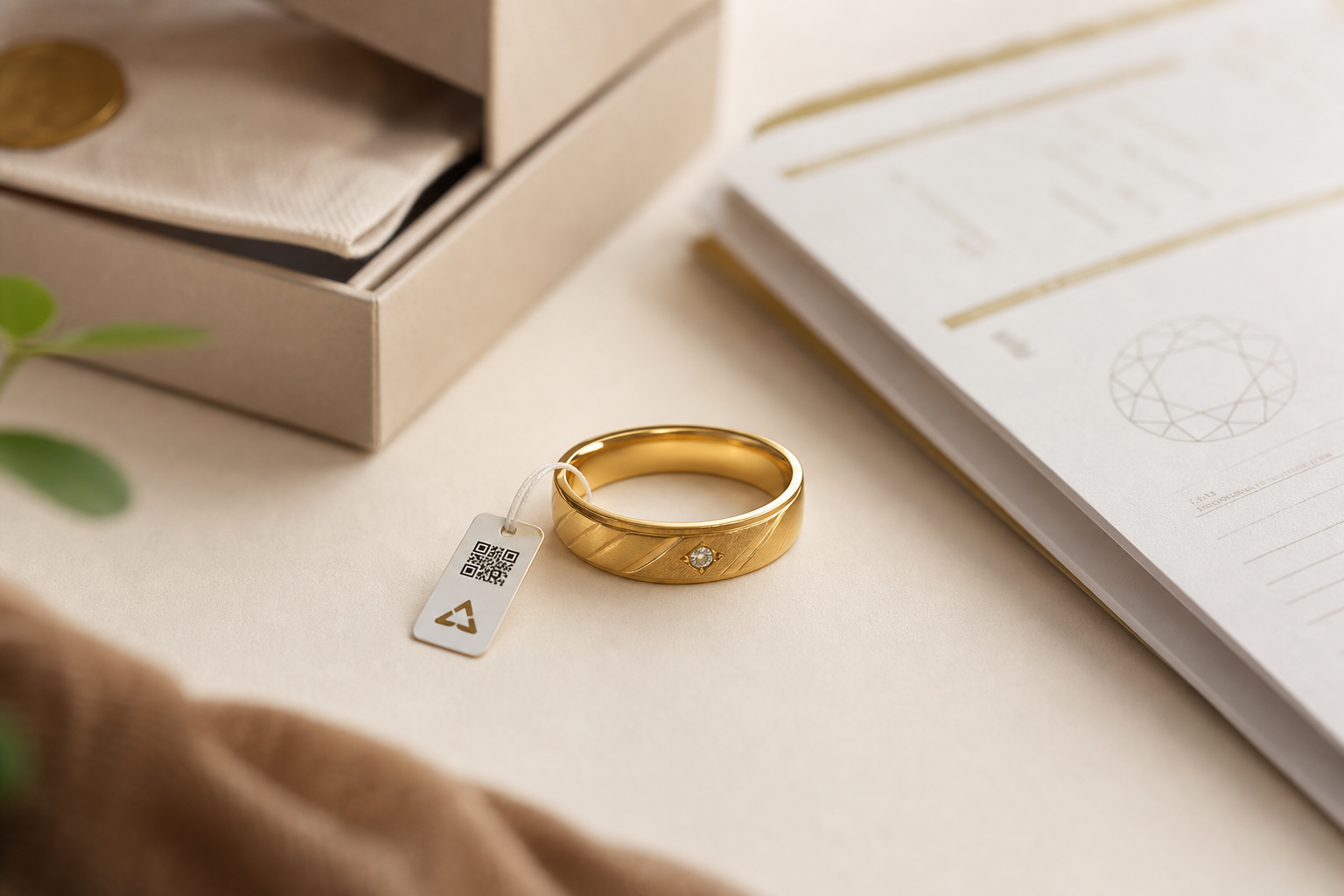
Extra layers of authenticity you can expect:
- Photographed inscription: We can share a loupe photo of the laser inscription upon request.
- Side-by-side stone videos: If you’re deciding between two graded options, brief clips under daylight and spotlight help you see contrast and fire.
- Valuation for insurance: A formal valuation document can be provided for your insurer post-purchase.
How to Start Shopping for Your GIA/IGI Certified Bridal Diamonds
You don’t need to rush. Follow a simple flow and keep control at every step.
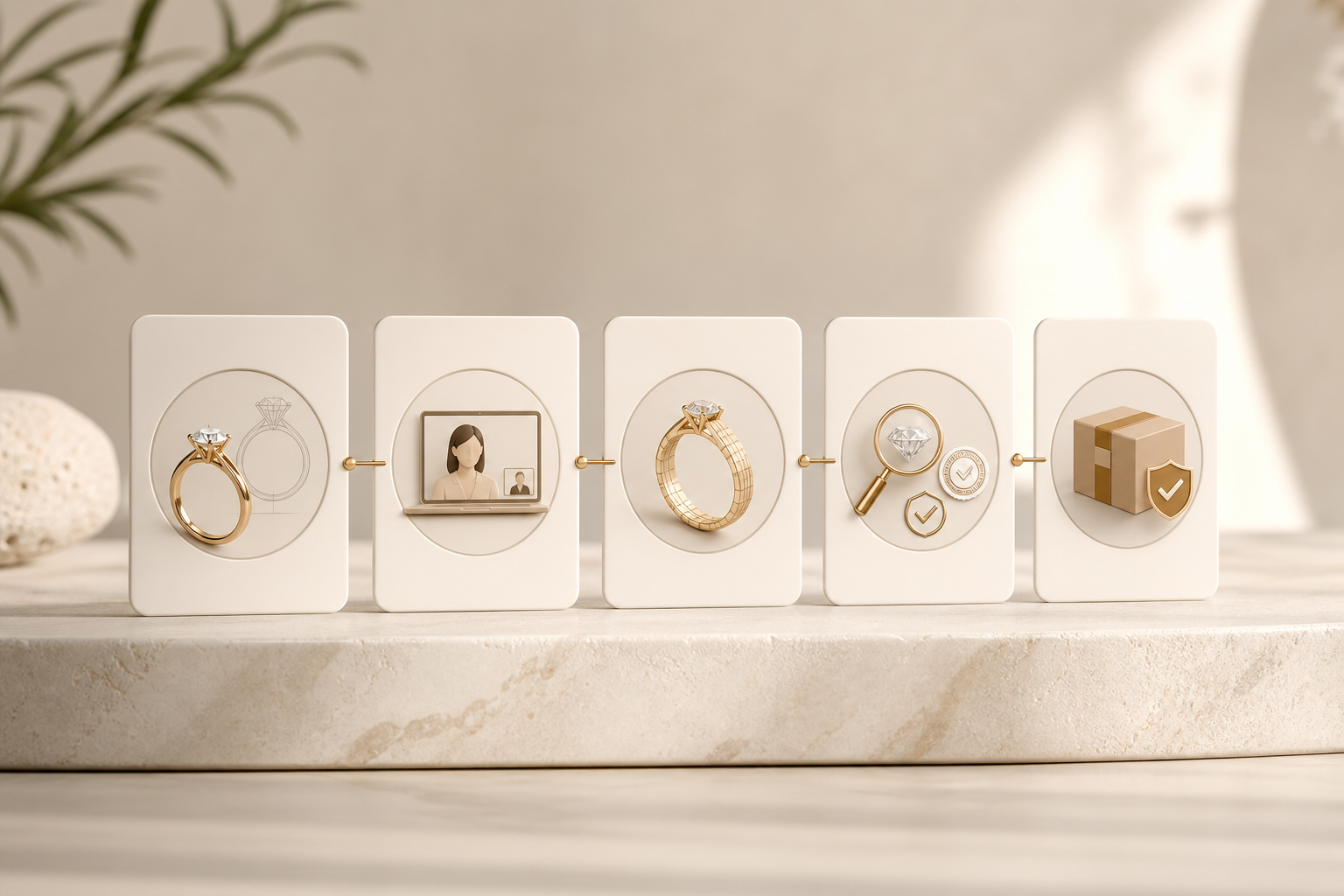
Step 1: Browse by category and filter hard. The site displays 12 designs in categories such as gold, silver, diamonds, platinum, gemstones, and kundan. Use filters for metal type, purity, price, and weight to get a shortlist that matches your taste and budget. Add-to-compare is your friend, save three favorites and review them side-by-side.
Step 2: Book a free video consultation. A designer will walk you through metal colors, prong styles, ring width, and stone options. You can see pieces live on camera and ask every question on your mind, from carat trade-offs to wearability. Bring inspiration images; a quick mood board speeds up decisions.
Step 3: Go custom if you want a one-of-a-kind heirloom. The custom service includes a 3D mockup before production. Approve the design or request tweaks until the look and fit feel like you. Discuss wedding timelines early so your ring is ready for key events like engagement photos, sangeet, and the ceremony.
Step 4: Review the documentation. For any natural diamond above 0.18ct, you’ll get a GIA or IGI certificate. Check that the metal is BIS hallmarked and note the 6-digit HUID so you can verify it later. Keep a digital folder with PDFs, invoices, and snapshots of hallmarks for quick access.
Step 5: Buy with safety nets. You have 365-day free insured returns, a lifetime exchange policy, buy-back at the prevailing rate, and lifetime free polishing and re-plating. For global brides, shipping is via Brinks to 30+ countries, fully insured. For domestic convenience, COD may be available up to a stated limit where serviceable.
If you’re still scoping basics, this piece is a great primer: Best GIA Certified Diamond Jewelry for First Time Buying Jewelry Online in 2026. It complements this bridal guide with examples and first-buyer tips.
Field notes for confident comparisons:
- Ask for daylight, office light, and spotlight videos. Stones can look very different across environments.
- Confirm if fluorescence affects transparency. Most often it doesn’t; in rare cases Very Strong can cause haziness.
- Verify that the setting design doesn’t block light paths—especially for step cuts and elongated shapes.
Also Read!
NRI’s Guide to Gold Jewelry with Lifetime Exchange and Buyback
BKO Jewellery vs Tanishq for NRIs: Which Is Better for Lifetime Exchange and Buyback?
Frequently Asked Questions
Q: What is the difference between GIA and IGI certification for bridal diamonds?
A: GIA is widely viewed as the most stringent grading lab, and IGI is also reputable and used broadly, especially in Asia. Both certify the 4Cs and include detailed measurements. This retailer offers GIA or IGI for natural diamonds above 0.18ct, so you can choose based on preference and budget. As a result, you can balance report rigor, availability, and price for your center stone. If you’re comparing similar grades, request side-by-side videos and the full report PDFs to spot nuance in proportions and clarity features.
Q: How much does GIA certified bridal diamond jewelry cost?
A: Pricing follows a clear formula: Total = Metal value (live rate × net weight) + Making charges + Stone charges + 3% GST on jewelry + 5% GST on making charges. Live rates move, but recent references include 22K at about ₹6,673/g and 18K at about ₹5,464/g.
Because every part is disclosed, there are no hidden fees. You can adjust carat, clarity, or metal purity to meet your budget. For example, going from D–F to G–H color or from VVS to VS clarity can free budget for a better cut or a more intricate setting.
Q: Can I return or exchange bridal jewelry if it doesn't meet my expectations?
A: Yes. You get 365-day free insured returns, a lifetime exchange policy, and a buy-back guarantee at the prevailing market rate.
That’s far more flexible than the 7–30 day windows you see at many jewelers. Therefore, you have time to try the piece, plan events, and decide with full confidence. Return shipping is insured, and assistance is provided for safe packing and pickup.
- Budget levers at a glance:
- Shift color from D–F to G–H for value without a visible drop in tint in most settings
- Prefer Excellent cut for rounds, even if you drop clarity from VVS to VS
- Consider 18K for prong-heavy rings and 22K for larger surfaces like necklaces
Q: Is 22K or 18K gold better for bridal diamond jewelry?
A: 22K (916) is loved for its rich hue and tradition, while 18K (750) is harder and well-suited for diamond-set designs that face daily wear, like engagement rings. Both are BIS hallmarked.
A quick designer consultation can match the metal to your lifestyle and the piece type. For heavy diamond pavé or tall prongs, 18K usually holds its shape better. If you prefer the look of higher-karat gold but need strength, consider 22K for larger surfaces (bangles, necklaces) and 18K for prong-intensive rings.
Q: Can I get a custom-designed bridal jewelry piece with GIA certified diamonds?
A: Yes. You can work with a designer via a live consultation, receive a 3D mockup to approve, and proceed only when you’re happy.
Above 0.18ct are GIA or IGI certified. This path is ideal for heirloom-worthy pieces that reflect your exact style and proportions. You can also align wedding dates with production timelines; typical lead time is shared up front, with expedited options when feasible.
Pro tip: When customizing, lock the center-stone specs first, then design the setting around it. That keeps balance, finger coverage, and budget aligned.
Q: How do I verify that my bridal jewelry is genuinely hallmarked and certified?
A: Every piece carries a unique 6-digit HUID that you can verify through the BIS portal or the BIS CARE app. Your diamonds come with their respective GIA or IGI certificates.
In addition, the retailer commits to refunding twice the difference if metal purity is ever found below standard. Keep all documents together for easy future checks. For lab reports, use the lab’s online “Report Check” to validate that the report number, shape, and measurements match your stone.
Q: Can I order GIA certified bridal jewelry if I live outside India?
A: Yes. The retailer ships to 30+ countries via Brinks with full insurance. Your GIA/IGI certificate and BIS hallmark details travel with the piece. Duties and taxes depend on destination country; you’ll receive guidance on typical thresholds and any paperwork needed.
For peace of mind if you’re within India, COD is available for orders up to Rs. 50,000. That makes first-time purchases feel safer.

Q: What after-purchase services are included with bridal jewelry?
A: You receive lifetime free polishing and re-plating to keep prongs, settings, and bands bright. There’s also a lifetime exchange policy and a buy-back guarantee at prevailing rates.
As a result, your bridal jewelry stays cared for well beyond the wedding week. That helps your set look the way you love, year after year. Complimentary prong checks and cleaning are recommended annually or after any hard knocks.
Q: Are lab-grown diamonds also certified by GIA or IGI, and should I consider them for bridal jewelry?
A: Yes, both labs grade lab-grown diamonds, and reports are clearly marked as laboratory-grown. They can offer significant savings for a given size and clarity. If you compare natural and lab-grown, keep cut quality high in both cases, and confirm that your invoice and certificate explicitly state the diamond type to avoid confusion in the future.
Q: How do I spot a fake or altered certificate?
A: Cross-check the report number on the lab’s official “Report Check.” Confirm that shape, measurements, and grades match your document. Beware of mismatched fonts, low-resolution logos, or typos on printed copies. When in doubt, ask the jeweler to share the official PDF or give you a direct verification link.
Q: What ring-size and comfort tips should I know for daily wear?
A: Your morning and evening finger size can differ slightly. Measure at two times of day and consider the season (heat and humidity can swell fingers). For wide bands or stacked sets, go a quarter to half size up for comfort. Discuss inner tapering or comfort-fit edges if you type or use your hands extensively.
Q: Can I insure my bridal set, and what documents do insurers need?
A: Yes. Most insurers accept your invoice, a valuation document, and lab certificates for the primary stones. Keep clear photos of the piece, the BIS hallmark, and the HUID. International shipping documents can also serve as proof of ownership and value.
The Gentle Close: What to Remember Before You Buy
- Certification is your compass. For natural center stones above 0.18ct, choose GIA or IGI, and pair it with a BIS hallmarked setting and a verifiable 6-digit HUID.
- Clarity beats hype. Demand a transparent price breakup tied to live metal rates so you can compare fairly and adjust variables to fit your plan.
- Care lasts. Returns for 365 days, lifetime exchange, buy-back at the prevailing rate, and lifetime free polishing mean your ring’s glow and value keep going.
Your bridal jewelry should feel like you, look brilliant, and come with proof you can hold. If you want a calm second set of eyes, a designer can meet you on video, share 3D mockups, and help you decide in your own time.
A final reminder on choosing confidently:
- Match lifestyle to design. If you use your hands a lot, a lower-profile setting with protective prongs reduces snags. – Balance beauty and value.
A superbly cut G–H, VS stone often outshines a higher-color grade with weaker light return. – Keep records handy. Invoice, lab reports, BIS/HUID verification, and photos make future servicing, upgrades, or insurance simple.
**Explore Caratflow Bridal Designs →
Add-on glossary for quick reference:
-
4Cs: Cut, Color, Clarity, Carat—core grading factors on every reputable lab report. – Fluorescence: A glow under UV light; typically harmless and sometimes value-positive at faint to medium levels. – HUID: A unique 6-digit hallmarking ID you can verify on BIS platforms; ties your piece to official records. – Pavé: Rows of small diamonds set closely together for a continuous sparkle.
-
Halo: A border of small diamonds circling the center stone; boosts visual size and brilliance. – Polished girdle: The outer rim of the diamond; inscriptions are laser-etched here for report matching. – Exchange vs. buy-back: Exchange credits value toward another piece; buy-back pays out at prevailing rates, per store policy.