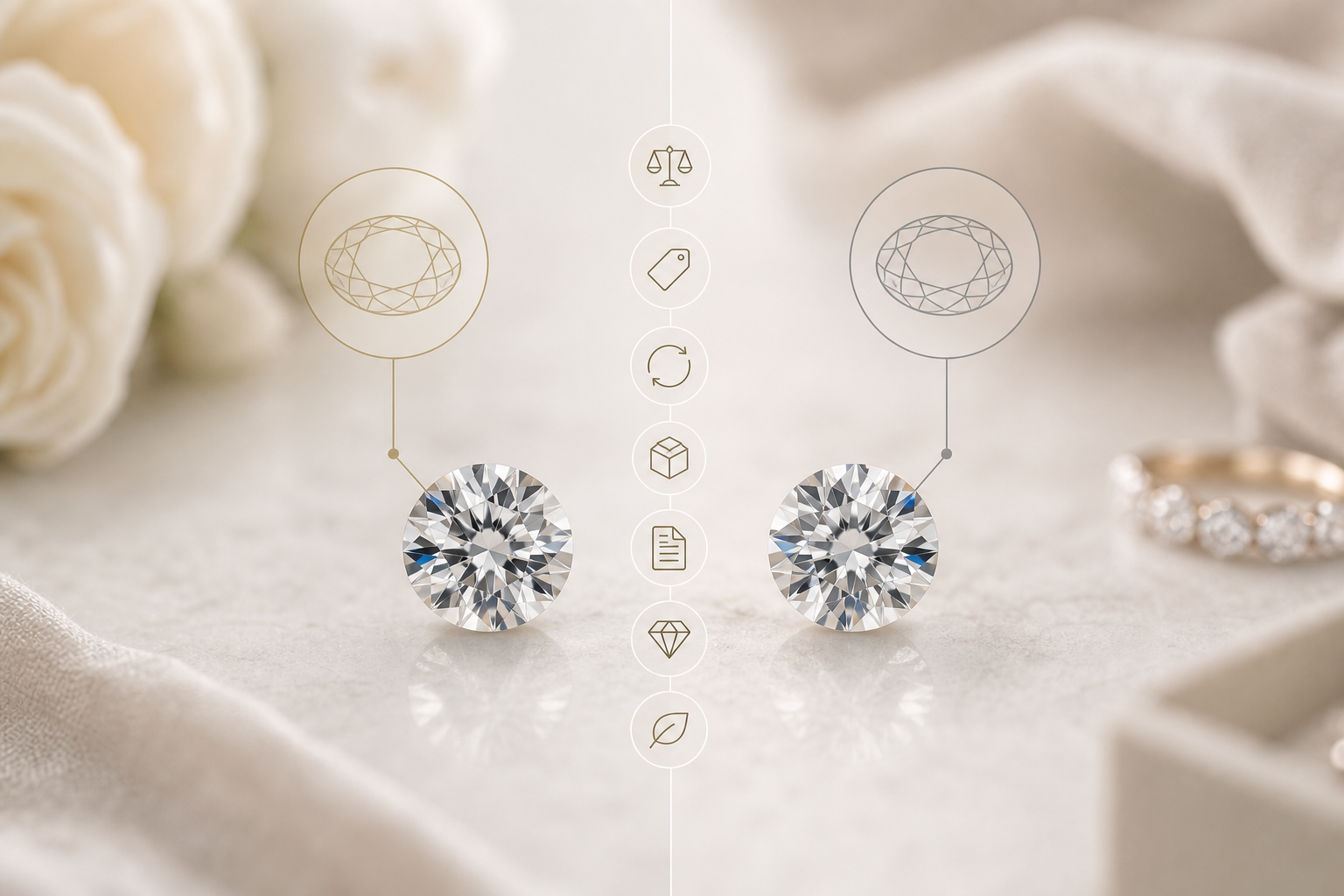
Choosing IGI and GIA certified diamond jewelry in 2026 can swing your budget by 10–20% on the same stated grades. For a bridal set or a 1 ct solitaire, that gap is real money.
For brides, the lab name on the report is not a logo to frame. It’s a confidence contract: that the diamond is what the paper says it is and that your investment will hold up under a loupe five years from now. Both GIA and IGI are respected. The right pick depends on how you balance price, certainty, style range, and future resale.
If you’re new to diamond shopping, you may find it helpful to scan a GIA-focused explainer first. See this practical primer: First-Time Buyer's Guide to GIA Certified Diamond Jewelry Online. Then come back to weigh both labs side by side for bridal needs.
Moreover, the jeweler you choose matters as much as the lab. Look for BIS hallmarked gold with a verifiable HUID, clear return and exchange policies, and the option to speak with a designer before you commit. That mix turns a lab report into a complete bridal decision, not just a line item.
What Brides Actually Need From Certified Diamond Jewelry
Bridal jewelry is different from daily studs or a work pendant. You’re buying an heirloom, a focal point in photos, and often your single largest jewelry purchase. Because stakes are higher, third-party grading is more than paperwork, it’s how you lock in quality, value, and peace of mind.
Specifically, both GIA and IGI grade the 4Cs (cut, color, clarity, carat), fluorescence, and key proportions such as table %, depth %, crown and pavilion angles. For round brilliants, GIA adds a cut grade (Excellent to Poor). IGI provides cut grades and full measurements as well. As a rule of thumb across reputable Indian retailers, natural diamonds above 0.18 ct ship with an IGI or GIA report, and the metal is BIS hallmarked.
The Five Decision Criteria Brides Should Use
- Grading consistency and accuracy: How tight are grades across labs and locations?
- International recognition and resale value: Will a buyer abroad respect the report?
- Price premium vs actual visual difference: Does a 10–20% jump look 10–20% better?
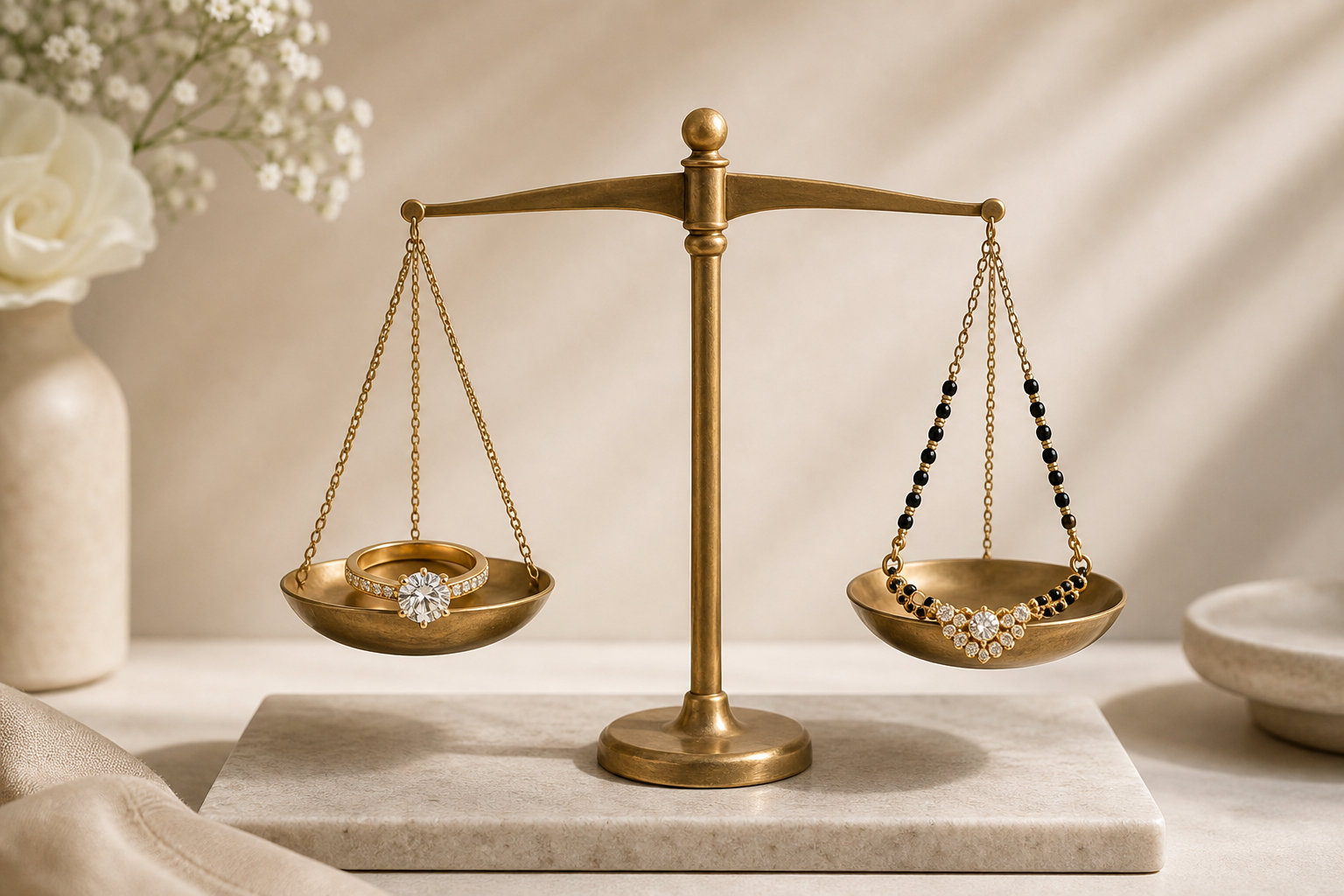
- Availability in bridal forms: Can you get engagement rings, mangalsutras, sets, and pendants in your preferred lab?
- After-sale protections: Are lifetime exchange and buy-back (at prevailing rates) in place?
In addition, ask the jeweler about documentation and accountability. For example, BIS hallmarking on 22K or 18K gold with a unique 6‑digit HUID (verifiable on the BIS portal or BIS CARE app) proves metal purity. On diamonds, match the report number to a laser inscription when possible. As a safety net, features like a lifetime exchange policy and a buy-back guarantee at the prevailing rate reduce long-term risk for bridal buyers.
“The bridal set I bought for my wedding was breathtaking. Craftsmanship is top and the BIS hallmark gave me total peace of mind.” — Priya Sharma, Mumbai
Also Read!
Best Insured International Jewelry Shipping for NRIs in 2026
NRI’s Guide to Buying Indian Jewelry Online with Insured International Shipping
GIA Certified Diamond Jewelry: Strengths and Limitations for Brides
The Gemological Institute of America literally wrote the modern diamond grading language. Its 4Cs framework is the bedrock of how stones are described and traded. Because of that legacy, GIA’s inter-lab consistency is regarded as the benchmark. A GIA “Excellent” cut on a round brilliant, paired with tight proportions, gives strong confidence in brightness, fire, and scintillation. For a high-value solitaire, that certainty matters.
Moreover, GIA reports are recognized in resale markets worldwide. If you think you may upgrade or sell a 1.5 ct or 2 ct center stone later, GIA tends to support stronger secondary pricing. As a result, many designers and retailers source GIA-graded center stones for engagement rings while maintaining BIS hallmarked 22K and 18K settings and offering natural, ethically sourced gemstones in side details.
For background on the institute itself, see the neutral overview on Wikipedia: Gemological Institute of America.
Strengths for Brides (Where GIA Shines)
- Consistency: Tight grading across labs; less variance between reports on the same stone.
- Resale: Universal recognition, especially above 1 ct, helps on upgrades and trade-ins.
- Cut confidence: “Excellent” round cuts from GIA align well with top light performance.
- Assurance for big stones: For 1 ct+ solitaires, the precision premium feels justified.
Limitations to Weigh
- Price premium: Expect about 10–20% more than an IGI stone with the same stated grades.
- Fewer labs: With a smaller global footprint, certification logistics can take longer.
- Overkill for accents: For melee and small accents in a bridal set, the premium rarely changes the look.
For Indian brides, GIA-graded options are common through retailers who stock GIA center stones alongside IGI alternatives. As you compare, seek practical add-ons from any jeweler: BIS hallmarked settings for purity, a live consultation with a designer before purchase, and documentation that matches stone to report. If you want more GIA-focused shopping tips, this piece lays out smart first steps: Best GIA Certified Diamond Jewelry for First Time Buying Jewelry Online in 2026.
“I love that I can book a video consultation before buying. The designer walked me through three options over a call. Bought on the spot.” — Kavita Reddy, Hyderabad
IGI Certified Diamond Jewelry: Strengths and Limitations for Brides
IGI has the largest lab network globally, with a strong presence in India and across Asia. That reach means fast access to certified stones in the full spread of bridal forms: engagement rings, mangalsutras, bangles, necklace sets, and solitaire pendants. In 2026, many Indian retailers list both labs side by side, but you’ll see a broader shelf of IGI-graded options day to day.
On price, IGI reports usually come in 10–20% below GIA for the same stated color, clarity, and carat. For a bridal set with dozens of stones, that gap can add up to a sizable saving without giving up third-party verification. In addition, IGI has invested in grading consistency, and stones above 0.50 ct with IGI reports now provide reliable results for most bridal use cases. If you’re exploring lab-grown diamonds, IGI is also the dominant grader for that category.
Strengths for Brides (Where IGI Fits Best)
- Availability: Wider inventory in India; easy to find IGI stones across bridal styles.
- Price-to-value: About 10–20% lower than GIA on like-for-like paper grades.
- Set efficiency: Ideal for multi-stone bridal sets where certified assurance still matters.
- Lab-grown coverage: Broad experience and dominance in LGD grading.
Limitations to Weigh
- Slight leniency: Some pros see IGI a touch softer than GIA on color/clarity at times.
- Resale discount: Secondary markets may price IGI reports a bit below GIA.
- Ultra-high value: For 2 ct+ hero stones, the market may reward a GIA report more.
As you shop IGI, look beyond the report to retailer policies. Transparent making charges, custom jewelry design with a 3D mockup before fabrication, and in-house grading for melee diamonds help lock the full package. For example, clear exchange terms and buy-back at the prevailing rate protect you even if you later change your mind on the wedding set design.
“Ordered a diamond pendant for my mother's 60th. It arrived beautifully packaged, with a certificate and a personal handwritten note.” — Ananya Iyer, Bengaluru
Also Read!
NRI’s Guide to Gold Jewelry with Lifetime Exchange and Buyback
BKO Jewellery vs Tanishq for NRIs: Which Is Better for Lifetime Exchange and Buyback?
Feature-by-Feature Comparison: GIA vs IGI for Bridal Diamond Jewelry
Here’s a simple, honest scorecard to help you decide which lab fits each part of your bridal plan. Both are legitimate. The “win” below reflects practical bridal priorities, not blanket praise.
| Dimension | Winner | Why It Matters for Brides |
|---|---|---|
| Grading Consistency | GIA | Stricter, well-documented inter-lab alignment; less variance on key grades. |
| Price-to-Value Ratio | IGI | 10–20% savings on stated grades keeps wedding budgets on track. |
| International Resale Value | GIA | Universal recognition tends to support stronger secondary pricing. |
| Availability in Indian Bridal Styles | IGI (slight edge) | Larger India presence; more IGI options for mangalsutras, bangles, sets. |
| Report Detail & Transparency | Tie | Both cover 4Cs, proportions, fluorescence, and inclusion plotting. |
| Suitability: Center vs Accents | GIA for 1 ct+ centers; IGI for accents | Pay the premium where it counts; save on side stones and small centers. |
| Ethical Sourcing Verification | Tie | Labs grade stones; sourcing ethics depend on the retailer’s policy. |
As a guardrail, prioritize jewelers who pair either lab’s report with metal assurance. 100% BIS hallmarked gold and silver jewelry, a unique 6‑digit HUID on each piece (verifiable via the BIS portal or BIS CARE app), and a commitment to refund twice the difference if purity is below standard together create a complete trust stack. That way, the stone grade and the metal purity both stand on independent evidence.
Get an instant price breakdown →
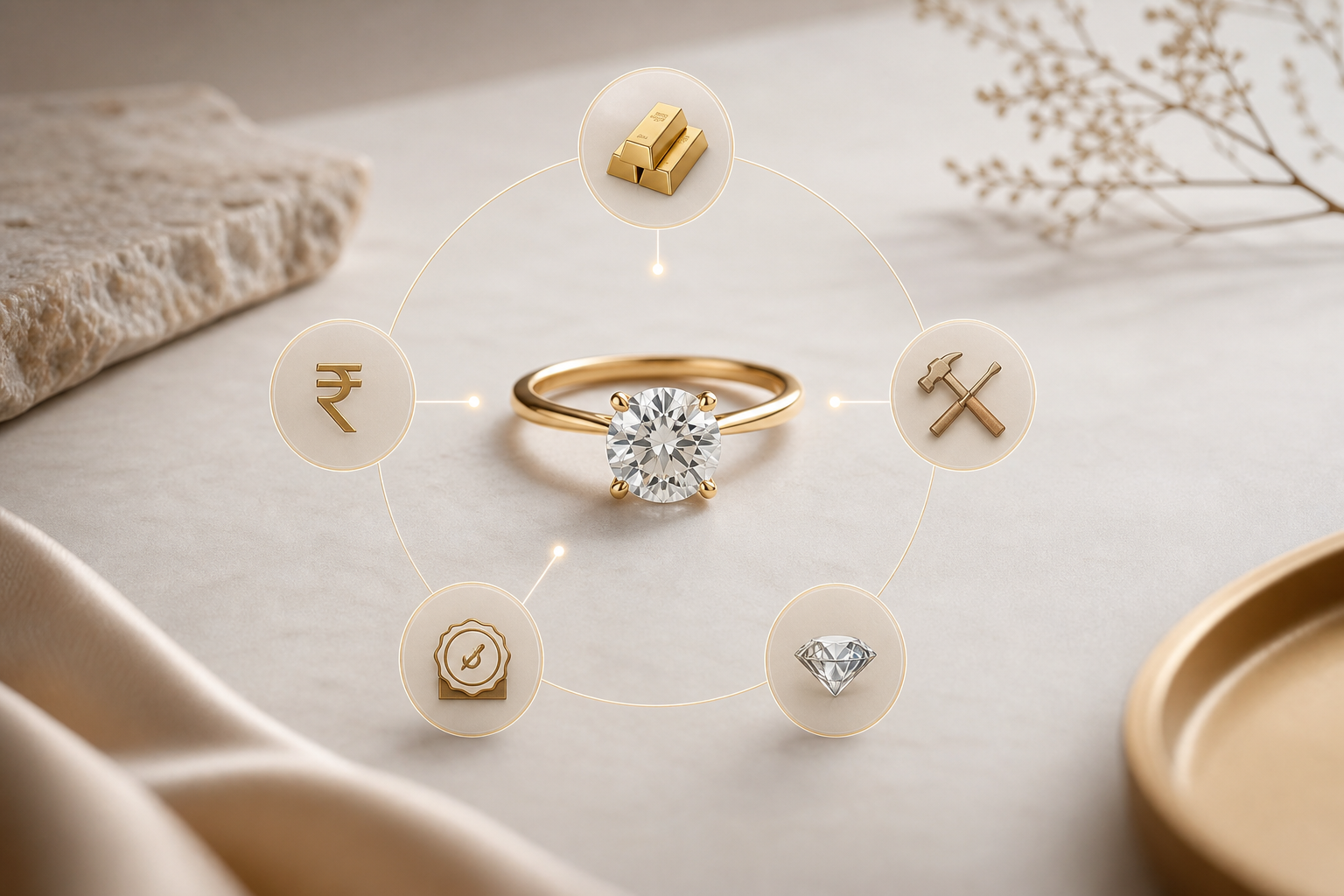
For broader shopping context on GIA options online, this head-to-head explainer is useful for first-time buyers: GIA Certified Diamond Jewelry Online: This Retailer vs Blue Nile for First-Time Buyers. Which Is Better?: Total = Metal value (live rate x net weight) + Making charges + Stone charges + 3% GST on jewelry + 5% GST on making charges. For context, current 18K (Gold 750) stands at ₹5,464/g with a change of +0.59%. That line goes straight into the metal value math for an 18K solitaire ring or a 22K mangalsutra chain.
For a representative 0.
- IGI scenario: Diamond price = ₹D
- GIA scenario: Diamond price = ₹D × 1.10 to 1.
- Metal, making, and GST: unchanged between scenarios
In practice, if your IGI stone is ₹120,000, a like-for-like GIA stone tends to be ₹132,000–₹144,000. The exact gap depends on cut precision and market stock that week, but the 10–20% range is a solid planning guide. Across a full bridal suite, say, engagement ring, band, pendant, studs, bangles, and a necklace set, choosing IGI on everything except the hero center can keep six-figure rupee savings in your budget with no visible trade-off on supporting stones.
Moreover, retailer protections smooth both paths. 365-day free insured returns, a lifetime exchange policy, and a buy-back guarantee at the prevailing rate reduce downside if you change your mind or upgrade later. Transparent making charges help you see where each rupee goes, independent of the lab name.
Verdict: Which Certification Should Brides Choose — and When It Matters Most
There isn’t a single “better” choice for every bride. Instead, match the lab to the role each stone plays and the outcomes you care about most.
If you’re buying a high-value solitaire (1 ct+), GIA is the stronger pick. The tighter grading and universal recognition support long-term confidence and potential resale. For everything else, accent diamonds, half-carat centers, and complete bridal sets. IGI is the smarter value. You get third‑party verification, broader in‑stock options in India, and prices that run 10–20% lower at the same stated grade, which frees budget for design or metal upgrades.
For Indian brides in 2026, both labs are widely available through reputable jewelers who provide BIS hallmarked 22K and 18K gold, video consultations, custom 3D mockups, lifetime free polishing and re‑plating, COD up to ₹50,000, and international shipping to 30+ countries via Brinks, fully insured. In short, pick the jeweler for service and protections; then pick the lab per stone.
Quick Decision Guide:
- Choose GIA if you need ironclad confidence for a 1–2 ct center and care about global resale.
- Choose IGI if you want certified assurance across a full bridal set without overspending on accents.
- Consider a hybrid if you want GIA for the engagement center and IGI for side stones and sets.
Book your free bridal consult →
“The designer helped us fine-tune our ring over video, and the BIS hallmark plus the GIA/IGI certificates made everything clear.” — A real outcome many brides now expect in 2026.