
Emerald ranks 7.5–8 on the Mohs hardness scale, yet its internal features can make the stone chip if it’s set without care (Source: Emerald. Wikipedia). To choose emerald ring complete, focus on color first, accept natural inclusions as part of the gem’s charm, pick a protective setting, and demand full treatment and lab report disclosures.
This direct approach works for first-time buyers and stands up in 2026, when more rings are bought sight-unseen via video than ever.
Most emeralds show inclusions. Jewelers even have a friendly word for this garden-like pattern: jardín. That’s normal. In fact, high clarity at large sizes is rare and priced at a steep premium.
However, you don’t need to chase perfection. Instead, you can weigh color, clarity, cut, and carat in a way that suits your style, budget, and lifestyle. The goal is a ring you’ll love to look at and love to wear.
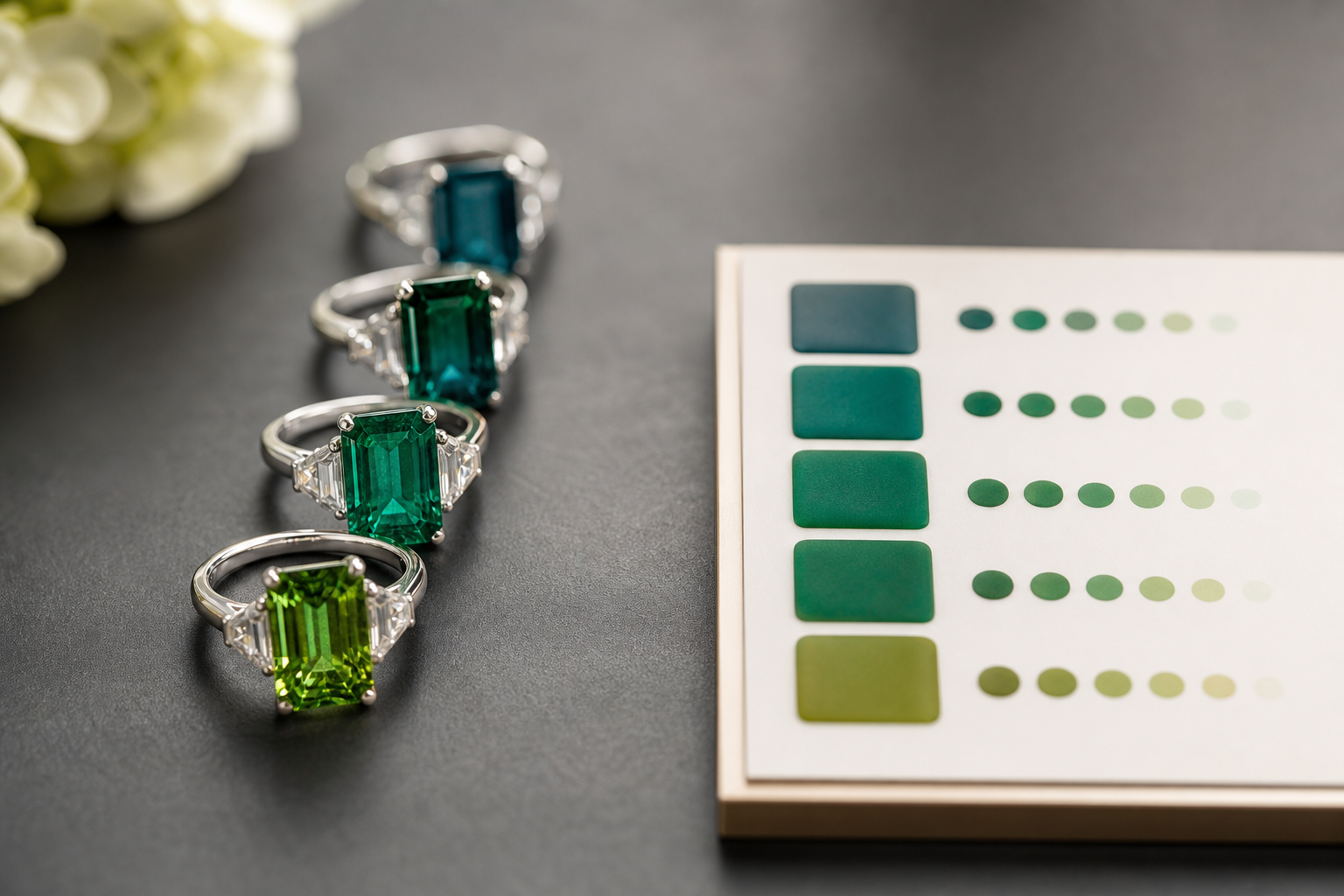
What Makes a Great Emerald Ring (And Why It's Not the Same as Buying a Diamond)
Emerald quality rests on four factors: color, clarity, cut, and carat. Yet the weight of each factor is not the same as it is for diamonds. For emeralds, color is king.
A vivid, evenly distributed green with medium to medium-dark tone and strong saturation stands out across a room. Too light and the gem looks washed out; too dark and it turns inky.
Clarity is next, but with a twist. You should expect inclusions. Tiny "feathers," tubes, or veils form their signature jardín.
As a result, you judge emeralds "eye-clean enough" for beauty and durability rather than by the letter grades used for diamond clarity. Small, well-placed inclusions are fine. Large surface-reaching fractures can risk chipping and lower value.
Cut and Carat: Balancing Beauty and Budget
Cut aims to show the richest color while protecting the stone. The classic "emerald cut" with clipped corners does exactly that. However, emeralds come in ovals, pears, and rounds too.
Look for symmetry, bright facets, and minimal "windowing" (a see-through area in the center). A well-cut emerald hides some inclusions and boosts face-up color.
Carat weight affects price steeply. A 1.50 ct emerald with great color can cost more than a 2.00 ct with weak color.
Therefore, if you prioritize beauty over a number on paper, you’ll stretch your budget further. For accent stones, natural diamonds that are IGI & GIA certified diamonds add sparkle without stealing the show, and ethically sourced gemstones round out an heirloom-grade piece.
Emerald vs. Diamond: How Grading Differs
- Color outranks clarity for emeralds; for diamonds, it’s often the reverse after cut.
- Inclusions are expected in emeralds; diamond clarity grades are stricter.
- Treatments (like oil) are standard for emeralds and must be disclosed; diamond treatments vary and are documented on reports.
For authoritative background on formation, inclusions, and cultural history, see Emerald. Wikipedia once, then rely on lab reports and your eyes. To truly choose emerald ring complete, let color, structure, and honest disclosures guide you.
Also Read!
The Complete Guide to Tennis Necklaces: How to Choose, Style, and Buy One
The Complete Guide to Amethyst: How to Buy, Identify, and Care for This Purple Gemstone
Step-by-Step: How to Choose the Right Emerald Ring
You can move from vague wish to ring-on-hand with a simple plan. Follow these seven steps, and you’ll make a confident choice without pressure.
- Set a budget: Start by sizing the metal and stone costs. In 2026, live rates matter.
For example, the total price of a ring is: Metal value (live rate x net weight) + Making charges + Stone charges + 3% GST on jewelry + 5% GST on making charges. If your 18K ring weighs 3.5 g, the metal value from ₹5,464/g is ₹19,124. Add making charges, emerald cost, and taxes to plan ahead. 2.
Prioritize color over clarity: Aim for a medium to medium-dark green with strong saturation. A slightly included gem with vivid color will look richer than a cleaner, pale stone of the same size. View the stone under different light sources to avoid surprises. 3.
Choose origin (Colombian vs Zambian vs Brazilian): Origin can influence color flavor and price. Colombian stones tend toward warm, slightly bluish-green with lush saturation. Zambian material can be cooler and cleaner-looking.
Brazilian gems range widely. Rather than chase a passport, compare color and transparency stone-by-stone. Ask for origin on the lab report if it affects your decision. 4. Pick the right setting (bezel vs prong): Emeralds measure 7.5–8 on the Mohs scale but can chip at corners.
For daily wear, a partial or full bezel shields edges better than delicate prongs. If you love prongs, choose six or more fine prongs with protective V-caps at the corners. 5. Select metal (gold vs platinum): Handcrafted jewelry in 22K & 18K gold offers classic warmth; 18K balances strength and color. Platinum is tougher and holds prongs firmly but adds weight and cost.
Ensure your piece is BIS hallmarked for purity and, if diamonds are included, ask for IGI or GIA documents where applicable. 6. Verify certification: Request a gemstone report for the emerald from a respected lab. A ring with IGI & GIA certified diamonds plus an emerald report gives you confidence. Keep copies of all papers with the ring’s HUID or hallmark details.
- Check treatment disclosures (oiling is standard): Oil treatment reduces the look of surface-reaching fractures and is common for emeralds. Moderate, well-done oiling is acceptable and should be disclosed on the report. Heavily filled stones or polymer-heavy treatments can affect durability and value, ask directly.
 budget, 2) color first, 3) origin, 4) setting type, 5) metal choice, 6) certification, 7) treatment disclosure; clean icons; brand-neutral colors)
“I love that I can book a video consultation before buying. The designer walked me through three options over a call. Bought on the spot.” — Kavita Reddy, Hyderabad
Because you want to choose emerald ring complete, consider custom jewelry design with 3D mockup before finalizing. A 3D render helps you judge proportions, bezel height, and how side diamonds frame the center.
**Get a free 3D design mockup →
5 Common Mistakes Emerald Ring Buyers Make
Buying an emerald ring is different from buying a diamond. You can skip stress by avoiding these five missteps.
First, expecting diamond-level clarity. Emeralds have jardín. Chasing an "eye-clean" look at large sizes sends the price soaring and may still fall short. Instead, pick a stone where inclusions don’t break the surface at corners or dominate the face.
Second, ignoring treatment disclosure. Ask, “What treatment? How much?” Light to moderate oiling is standard.
Heavy enhancements reduce value and may need more care. Request that the treatment grade appear on the lab report.
Third, choosing prong-only settings for daily wear. Prongs leave corners exposed. For daily use, pick a bezel or half-bezel. If you must have prongs, use V-prongs on corners and a low profile to reduce knocks.
Reports and Return Policies
Fourth, buying without certification. A proper report documents the gem and lists treatments. Ask for a GIA or IGI gemstone report, and if the ring includes diamonds above 0.18 ct, confirm IGI or GIA certification for those as well.
Fifth, not asking about return/exchange policies. Life happens. You may change your mind or notice something under home lighting.
Look for generous policies, 365-day free insured returns and a lifetime exchange policy reduce risk. Moreover, a commitment to refund twice the difference if purity is below standard adds peace of mind when you’re investing real money.
Quick Reminder: Mistakes at a Glance
- Expecting diamond-grade clarity in emeralds.
- Skipping treatment disclosure on reports.
- Wearing fragile prong corners every day.
- Buying without a recognized lab report.
- Overlooking returns and exchange terms.
If you aim to choose emerald ring complete, treat each point above as a non-negotiable checkpoint.
Tools and Resources for Buying an Emerald Ring With Confidence
Independent labs are your best friend. The Gemological Institute of America (GIA) offers gemstone reports that may include origin opinions and treatment disclosure, start at GIA. IGI also issues colored stone reports; ask your jeweler which lab they use and why. For further study, Gem-A provides education materials on colored stones (mention in plain text).
In addition, look at the retailer’s standards. For example, confirm IGI or GIA certification for natural diamonds above 0.18ct if your emerald ring includes diamond accents. Then check metal assurances, such as BIS hallmarked metals with a unique HUID you can verify via the BIS portal or the BIS CARE app.
Remote Tools and Transparency
Modern shoppers rely on remote tools. Video consultation available before you buy helps you compare color under different lights. A live consultation with a designer before purchase lets you adjust prongs, bezels, and band width in real time. If you’re abroad, international shipping to 30+ countries via Brinks, fully insured, keeps your purchase safe door-to-door.
Finally, pick a jeweler who is transparent about making charges, stone sourcing, and lab paperwork. Retailers offering ethically sourced gemstones and hallmarked metals. Caratflow is one option among several, can share invoices that list each cost line. That clarity makes it easier to choose emerald ring complete with confidence and zero guesswork.
Also Read!
What to Do Before You Buy Your Emerald Ring
Before you commit, pause and prepare. A short checklist saves you money and stress, and it helps you focus on what you actually love.
- First, research color and origin without bias. Compare side-by-side videos of stones labeled Colombian, Zambian, and Brazilian. However, let your eyes decide. If a Zambian stone shows richer color at your budget than a pale Colombian, pick the better-looking gem.
- Second, request certification and treatment notes. Ask for a gemstone report and ensure oiling is graded (e.g., minor, moderate). If the ring includes diamonds above 0.18ct, request IGI or GIA certificates for those stones as well.
- Third, match setting to lifestyle. For daily wear, shortlist half-bezel or full-bezel designs, or sturdy prongs with V-caps and a lower profile. For occasional wear, you can go bolder on height and prong delicacy.
Preview the Design and Pricing
Fourth, ask for a custom jewelry design with 3D mockup. Seeing your chosen stone inside the exact bezel, with your preferred band width and accent layout, prevents regrets.
Fifth, set a realistic budget range using real numbers. Start with live metal rates (e.g., 22K Gold ₹6,673/g; 18K Gold ₹5,464/g; Silver ₹89/g; Platinum 950 ₹3,150/g) and the formula: Metal value (rate x net weight) + Making charges + Stone charges + 3% GST on jewelry + 5% GST on making charges. Transparent making charges let you stress-test options before you pay.
- Checklist recap:
- Compare color first, origin second.
- Secure lab reports and treatment grades.
- Choose protective settings for daily wear.
- Get a 3D mockup and confirm proportions.
- Build your budget from live rates and line-item costs.
Because you intend to choose emerald ring complete, take this prep seriously. A one-hour video call can resolve weeks of doubt.
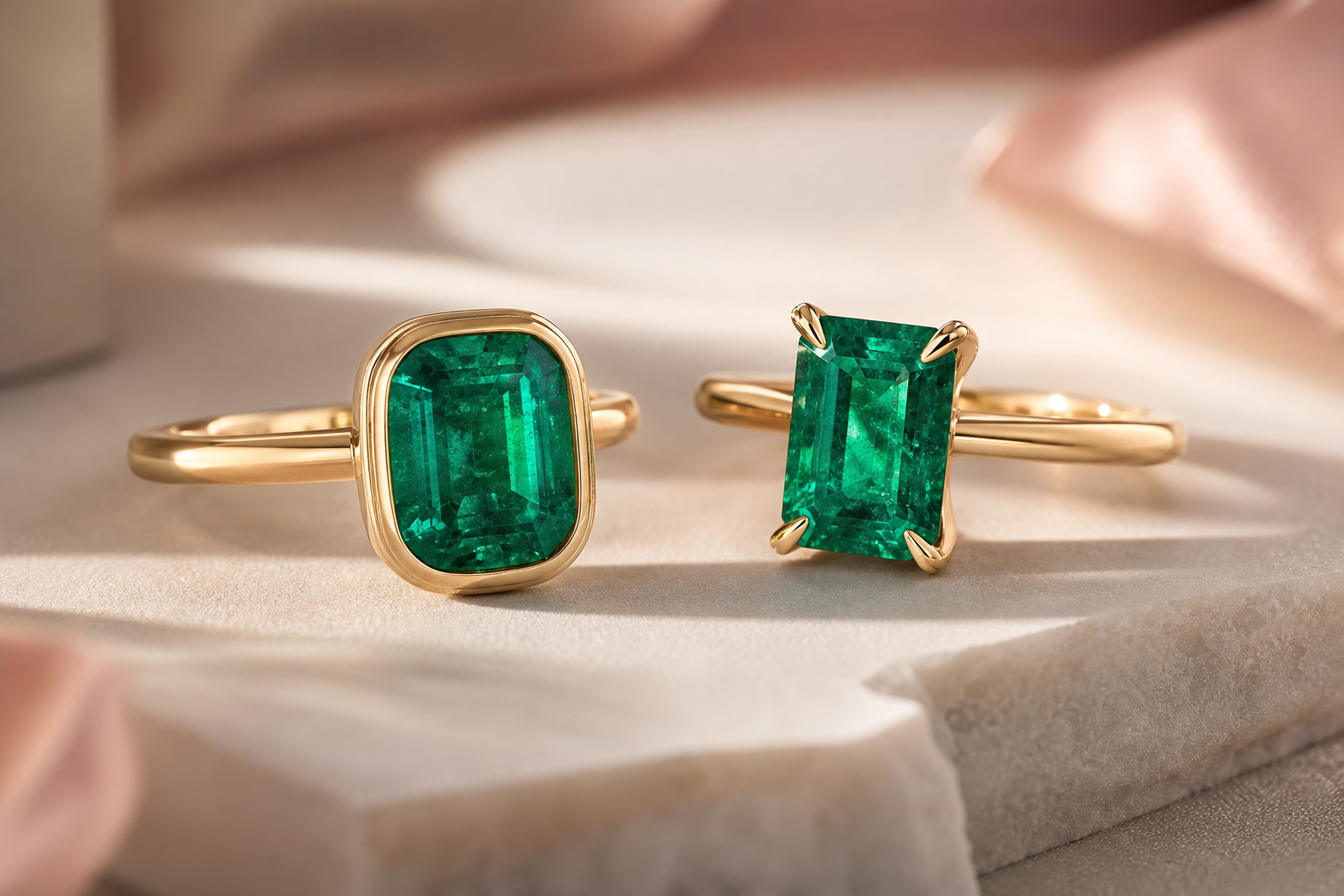
Key Takeaways for a Complete Emerald Ring Choice (2026)
Emeralds are graded differently from diamonds. You should prize color, rich, even green with lively saturation, over near-perfect clarity. Inclusions (jardín) are expected, and light oiling is standard and must be disclosed on a lab report.
- Color first: a medium to medium-dark, strongly saturated green looks best across most lights.
- Embrace jardín: aim for "eye-pleasing," not diamond-style flawless.
- Protect the stone: bezels or V-prongs and lower profiles reduce chips.
- Verify on paper: get a gemstone report; confirm IGI or GIA for any qualifying diamonds.
- Price with math: use live metal rates and a clear formula, then compare line items.
Moreover, use modern tools to reduce risk. Video consults, 3D mockups, and insured global shipping make remote buying practical in 2026. Generous policies, 365-day free insured returns, lifetime exchange, and promises like refunding twice the difference if purity is below standard, turn a big decision into a calm, informed one.
What to Do This Week
- Day 1: Shortlist three stones based on color. Ask for daylight and indoor videos, plus the gemstone report drafts showing treatment disclosure. Note whether the tone is too dark or too light, and eliminate any stone with large surface-reaching fractures near corners.
- Day 2: Compare settings against your lifestyle. If you type, lift, or commute daily, mark at least two bezel or half-bezel designs. If you prefer prongs, require V-prongs and a lower seat. Request a custom 3D mockup with your top stone to confirm bezel height, band width, and side-diamond spacing.
- Day 3: Build the price from the ground up. Use live rates (e.g., 18K Gold ₹5,464/g) and the formula: Metal value (rate x weight) + Making charges + Stone charges + 3% GST on jewelry + 5% GST on making charges. Ask for transparent making charges and a clear return/exchange policy in writing.
- Day 4: Book a live video consultation. Review the 3D mockup, confirm certification plans (GIA or IGI where applicable), and discuss origin notes. If the retailer offers international shipping to 30+ countries via Brinks, fully insured, confirm timelines.
Decision Time
Day 5: Decide with confidence. Pick the stone that looks best to your eyes, the setting that fits your life, and the seller who documents every promise. That’s how you choose emerald ring complete without second-guessing.