Carat weight is overrated; face-up size, cut, and sparkle drive what your eye loves. Use this your complete guide oval to weigh trade-offs with calm, clear steps in 2026.
Here’s the short answer up front: Oval engagement rings flatter most hands, offer near-round brilliance, and give strong finger coverage. Aim for a length-to-width ratio between 1.35 and 1.50, watch the “bowtie” in videos, choose H color or better, and only buy IGI/GIA-certified stones set in BIS hallmarked metal.
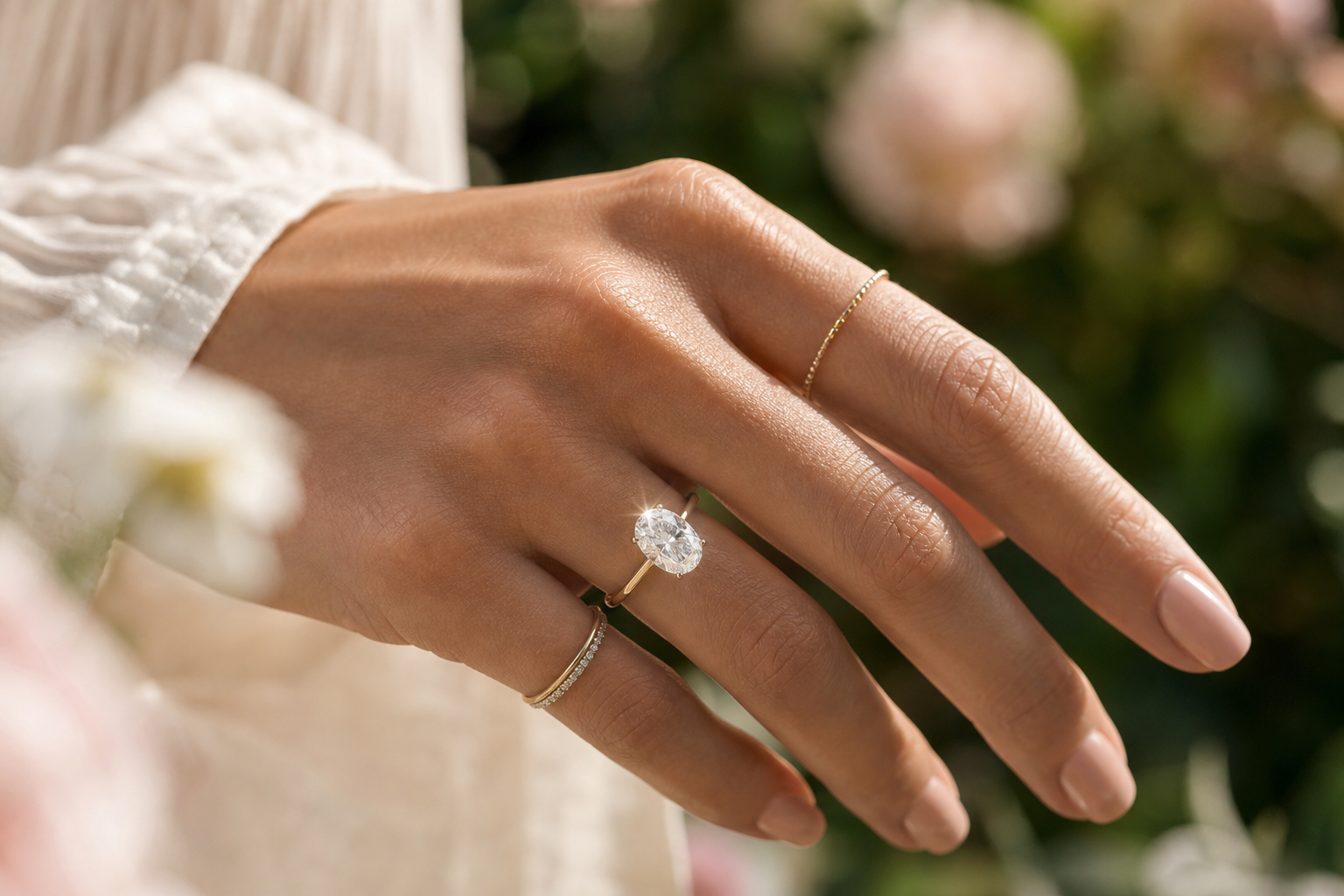
In addition, oval cuts have an elongating effect that makes fingers look slimmer and longer. Moreover, they pack brightness thanks to brilliant-style faceting. As a result, you can get a lively stone with a face-up shape that looks larger per carat, which helps stretch a set budget in a sensible way.
What Makes Oval Engagement Rings So Popular — And Are They Right for You?
Oval cuts look elegant and intentional. Because the stone is elongated, it draws the eye along the finger and creates a slimming line. If you like a clean look that still sparkles, the oval’s brilliant faceting checks that box with fire and scintillation that’s close to a round. For context, the round brilliant sets the benchmark for light return, per Diamond cut, yet well-cut ovals can look dazzling while covering more finger real estate for the same carat.
Celebrities helped fuel demand. However, trend alone should not drive your choice. Instead, think about your day-to-day style.
Do you want a center that feels airy in a thin solitaire, or a bolder halo? Ovals adapt well to both. They also play nicely with pavé bands and bezel settings if you need more protection.
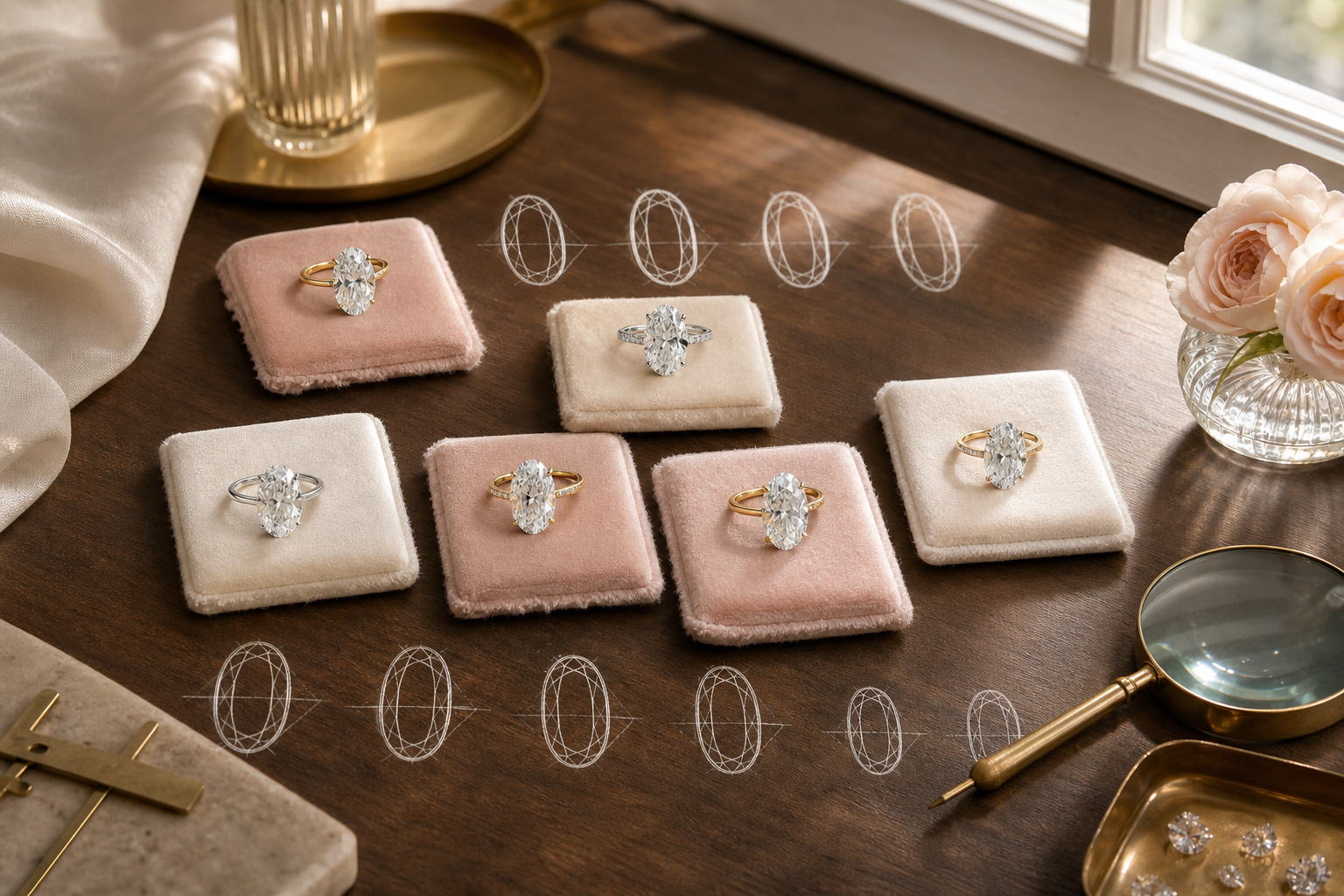
Length-to-width ratio shapes the vibe. Ratios from 1.35 to 1.50 strike a sweet spot, balanced, not too stubby, not too skinny.
- Around 1.35: more rounded, romantic outline.
- Around 1.45: classic “textbook” oval look.
- Around 1.50: sleeker, elongated silhouette.
Who an oval flatters
- Shorter fingers: the elongated shape adds length visually.
- Wider fingers: the spread offers coverage without bulk.
- Minimalists: a slim band with an oval feels refined, not stark.
- Active lifestyles: low-set solitaires and bezels in 18K gold keep the look practical.
Furthermore, if ethical sourcing matters to you, choose natural diamonds and ethically sourced gemstones from a jeweler that puts this in writing. Look for IGI & GIA certified diamonds and BIS hallmarked metal so your center stone and metal purity are independently verified. Bookmark this your complete guide oval reminder: choose the shape for your hand first, then optimize specs to fit your budget.
Also Read!
The Complete Guide to Amethyst: How to Buy, Identify, and Care for This Purple Gemstone
How to Choose the Perfect Oval Engagement Ring: A Step-by-Step Framework
Buying a ring is a big financial choice. Therefore, break it into six clear steps so you control trade-offs without regret.
Step 1: Decide on carat weight vs. face-up size
Carat is a weight, not a size. Ovals “face up” larger per carat due to their spread. To judge size, look at the stone’s measurements in millimeters, not just the carat. In addition, compare stones by their visible length and width on a finger, not in isolation. If you’re between half-carat marks, you can often save by choosing a stone slightly under a “magic” number while keeping the same look on hand.
Step 2: Evaluate the bowtie effect
Most ovals show some bowtie, a dark bow-tie shaped shadow across the middle. The goal is not “zero bowtie,” which can signal a watery, glassy look, but a faint, even bowtie that doesn’t kill the center. Always inspect videos in diffuse light and bright light. Moreover, rotate the stone; a bowtie that disappears and reappears gently is fine. A stark, static dark bar is not.
Step 3: Pick your length-to-width ratio
Choose the mood first. A 1.35–1.50 ratio hits classic to sleek. Ratios under 1.35 start to feel “chubby.” Ratios above 1.50 feel very slender and can make the ends more prone to chipping if set poorly. As a result, many buyers land near 1.45 for balance. Confirm the actual millimeter dimensions match your visual goal.
Step 4: Choose color grade (H+ recommended)
Because ovals can show body color near the tips, aim for H color or better for a bright white look in most metals. In yellow or rose gold settings, you may accept one grade lower since the warm metal masks tint. However, if you want icy white in platinum, staying at H or above is a safer pick. Keep symmetry and polish at Very Good or Excellent to support sparkle.
Step 5: Select the setting style
Match setting to lifestyle and shape:
- Solitaires let the oval breathe and look larger.
- Halos add coverage and protect edges.
- Bezels offer maximum protection and a sleek line.
- For prongs, consider two prongs on each end (north/south) to secure the points.
Moreover, balance the band. A whisper-thin band can make a big oval feel top-heavy. Aim for a shank that’s proportional: around 1.6–2.0 mm works for many mid-size ovals. Ensure prongs shield the pointed ends without crowding the face.
Step 6: Verify certification and metal purity
Ask for IGI or GIA certification for natural diamonds above 0.18ct so grading is independent and consistent. Then check the report number against the lab’s online database. For metal, insist on BIS hallmarked for purity, which includes a unique 6-digit HUID you can verify via the BIS portal or BIS CARE app. Therefore, your center stone and metal both have third-party proof.
To keep decisions straight, note this your complete guide oval step: confirm the lab report first, then the setting specs, then final polish and fit.
5 Common Mistakes When Buying Oval Engagement Rings
You don’t need to learn the hard way. Avoid these avoidable errors and you’ll keep both beauty and value intact.
Mistake 1: Ignoring the bowtie in photos
Flat studio photos hide movement. Always ask for unedited videos in mixed light and in motion. If the bowtie dominates in every angle, move on. However, a gentle bowtie that shifts is fine and can even add character.
Mistake 2: Over-prioritizing carat over cut quality
Chasing a round number can backfire. An extra 0.10ct with dull sparkle looks worse than a slightly lighter stone with strong light return. Moreover, brilliance and contrast make the stone “read” larger to the eye. If budget is tight, protect cut quality first.
Mistake 3: Choosing too-thin a band for the stone
A 2-carat oval on a 1.2 mm band can twist, bend, or feel top-heavy. Therefore, scale the band and setting height to the stone’s spread so it wears well. In addition, add a hidden halo or bridge if you need extra lateral support without changing the front view.
Mistake 4: Skipping independent certification
Only buy IGI & GIA certified diamonds for natural centers. The report maps clarity features and locks in color and proportions, which protects you on resale and upgrades. As a backstop on metal, choose a brand that’s BIS hallmarked and, if purity falls below standard, offers a clear remedy, such as a commitment to refund twice the difference if purity is below standard.
Mistake 5: Not checking prongs protect the pointed ends
Ovals have more exposed tips than rounds. Ensure prongs cup the endpoints and the seat matches the pavilion. Furthermore, run a fingertip test; if the tip feels sharp, ask for adjustment before shipping.
“I love that I can book a video consultation before buying. The designer walked me through three options over a call. Bought on the spot.” — Kavita Reddy, Hyderabad
Finally, put a pin in this your complete guide oval reminder: your eyes, not the spec sheet, should control the final pick, specs get you to a great short list, then video seals it.
Also Read!
Bride’s Guide to Choosing GIA Certified Diamond Jewelry for Your Wedding
Tools and Resources for Finding the Right Oval Ring
Smart tools cut through guesswork. Use them to validate reports, see light behavior, and plan a setting that suits your day-to-day life.
First, verify grading. Use the GIA online report search (see the Gemological Institute of America on Wikipedia) and the IGI database to match the report number, measurements, and clarity map to the stone shown in videos. If anything is off, pause the deal. As of 2026, this five-minute check saves a lot of back-and-forth.
Second, assess light performance. The Holloway Cut Adviser (HCA) can be helpful input for rounds; for ovals, it’s more about videos in mixed light and skilled eyes. Therefore, prioritize real-life movement clips and a live walkthrough.
Third, see stones in motion. Video consultations from jewelers like Caratflow let you compare two to three candidates side by side, in the same lighting, with a designer guiding the view. Moreover, custom jewelry design with 3D mockup helps you preview prongs, band width, and height before you commit.
Your oval research toolkit
- GIA or IGI online databases: verify report numbers, measurements, and inscriptions.
- Ask for daylight and spotlight videos: check bowtie, brightness, and contrast.
- Live consultation with a designer before purchase: decide on prongs and band balance.
- Video consultation available: compare multiple ovals in one call.
- International shipping to 30+ countries via Brinks, fully insured: safe, global delivery.
To keep this efficient, set a shared folder for reports, videos, and notes. Then, label each candidate with ratio, color, clarity, and a one-line bowtie note. This your complete guide oval habit keeps choices clear.
What to Do Next: Your Oval Ring Shopping Action Plan
Here’s a concrete plan you can follow this week. Keep your budget, hand feel, and long-term value aligned.
First, measure ring size right. Use a ring-size kit or ask a local jeweler for a snug-fit measurement at room temperature. Then check comfort across the day. If you stack bands, size with the stack.
Second, set a budget range with room for the setting. Decide a center-stone target range and leave headroom for metal and prongs that protect the oval’s tips. Therefore, you avoid last-minute compromises on security.
Third, shortlist 3–5 certified stones online. Only include IGI or GIA-certified stones above 0.18ct with reports you can verify. In addition, note their ratios (aim 1.35–1.50) and color targets (H+ if you want white-on-white).
Fourth, request videos of each stone in motion. Ask for daylight, office light, and spotlight. Then rank bowties: Acceptable, Borderline, or Pass. Moreover, reject any stone with a heavy, fixed dark bar.
Fifth, compare settings in person or via video call. Try a classic four-prong, a bezel, and one halo to feel scale and protection. Ensure prongs shield the ends and the band suits daily wear.
Sixth, ask about policies and metal verification. Look for BIS hallmarked metal with a unique 6-digit HUID. Confirm risk-reversal terms such as 365-day free insured returns, a Lifetime exchange policy, and a Buy-back guarantee at the prevailing rate. Consequently, your downside is protected if needs change.
Seventh, decide and schedule final checks. Confirm sizing, engraving, and delivery timeline. If shipping, ask for international insurance if you’re outside the country.
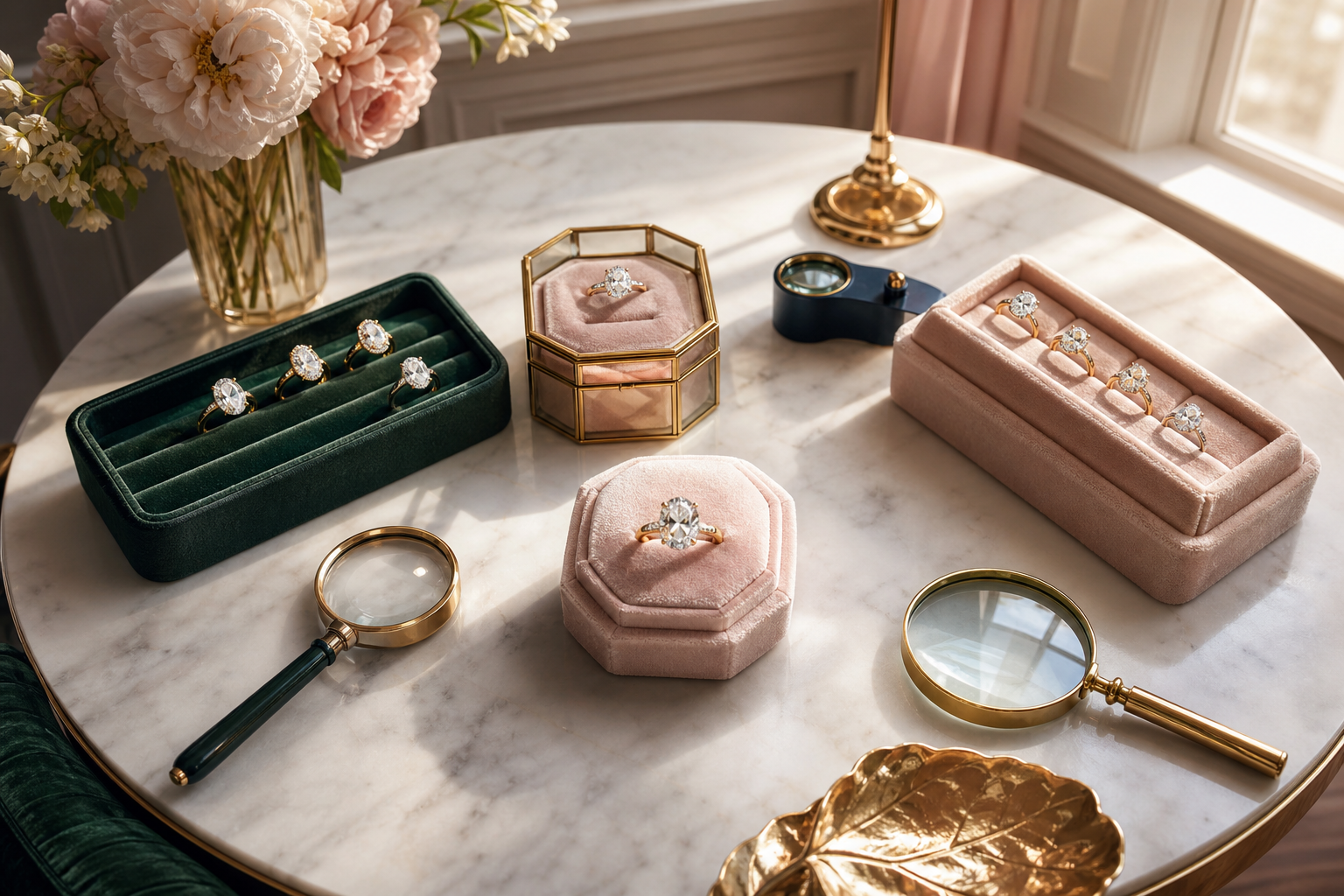
Finally, keep your complete guide oval notes handy during the final call. A clear checklist beats second-guessing at the last minute.
Key Takeaways
- Choose a 1.35–1.50 length-to-width ratio for a balanced oval look with great finger coverage.
- Verify IGI/GIA reports and BIS hallmarked metal; match report numbers and HUIDs before you pay.
- Judge bowtie in videos, not photos; aim for a faint, even bowtie that shifts with motion.
- Protect the tips with smart prongs or a bezel, and size the band to the stone’s spread.
- Use risk-reversal and insured shipping to lower stress on a big 2026 purchase.
What to Do This Week
Shortlist three certified ovals, request videos, and book a 20-minute consult to compare them live. Then pick the setting that protects your stone and suits daily wear. If you want a fast path, schedule a designer call, ask for a 3D mockup, and lock in BIS hallmarked metal with documented returns and exchange terms.